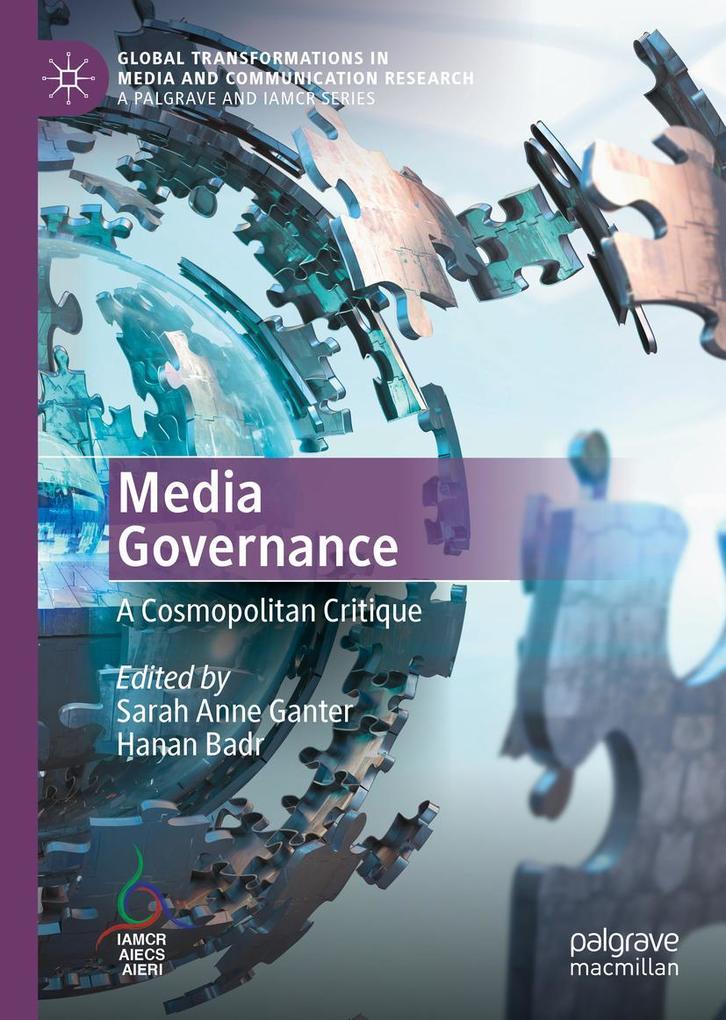
The book offers a critical map to navigate the field of media governance. A thread of cosmopolitan critique connects the fourteen chapters to enhance media governance literature beyond the West and regional foci. The first part addresses the epistemological and ontological flaws in the use and adaptation of media governance. The second part opens pathways for critique and provides a thorough understanding of the ambivalences that scholars encounter when addressing media governance as a field of study. The third part highlights shortcomings like geographical narrowness and tensions in the use of media governance concepts. The scholarly contributions show that media governance as a field of study is far from being established: its conceptualizations are in flux and need scholarly self-reflection, and ongoing discussions need to leave behind universalist conceptualizations and methods of analysis. The chapters reflect on hegemony, power, sovereignty, and identity as conceptual center points in media governance research. The book uniquely breaks with self-referential Western academia and is part of ongoing collaborative scholarly efforts towards epistemic transformation through dialogue.
Inhaltsverzeichnis
The distinctive contribution of this book lies in the contextualization it offers on the limits and pitfalls of the field to address the problem . the editors offers a masterful reading that not only threads together the chapters and their different approaches through the recognition of differences and inequalities, but also, they offer some guidance to move forward in the debate along different diemensions: scholarly, pedagogical and institutional. (Ana Bizberge, Global Media Journal, globalmediajournal. de, Vol. 13 (2), 2023)
Es wurden noch keine Bewertungen abgegeben. Schreiben Sie die erste Bewertung zu "Media Governance" und helfen Sie damit anderen bei der Kaufentscheidung.









