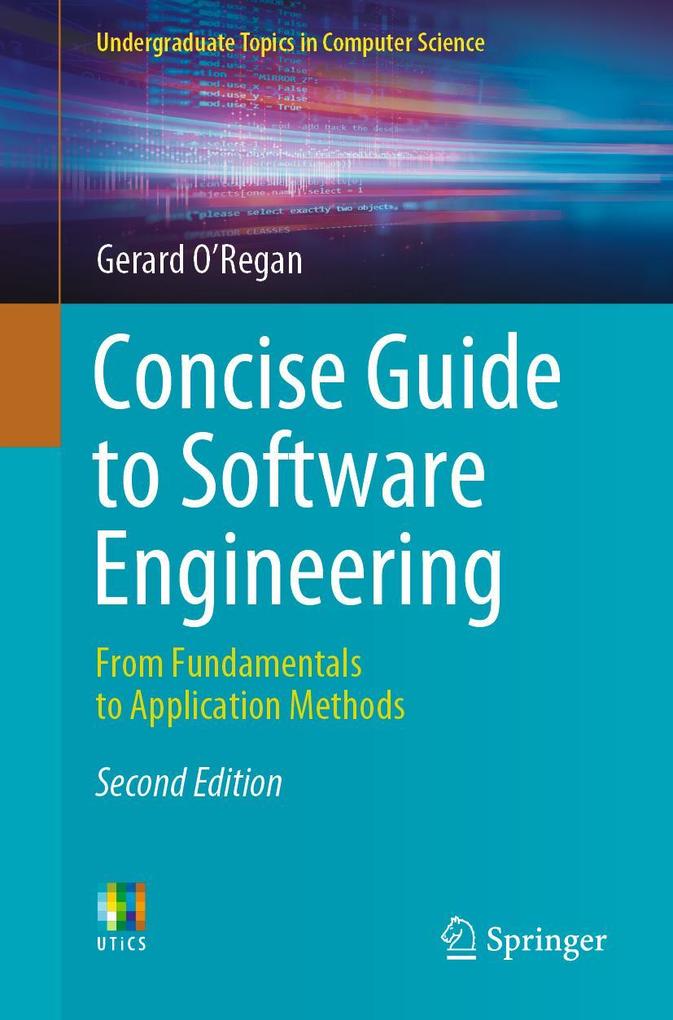
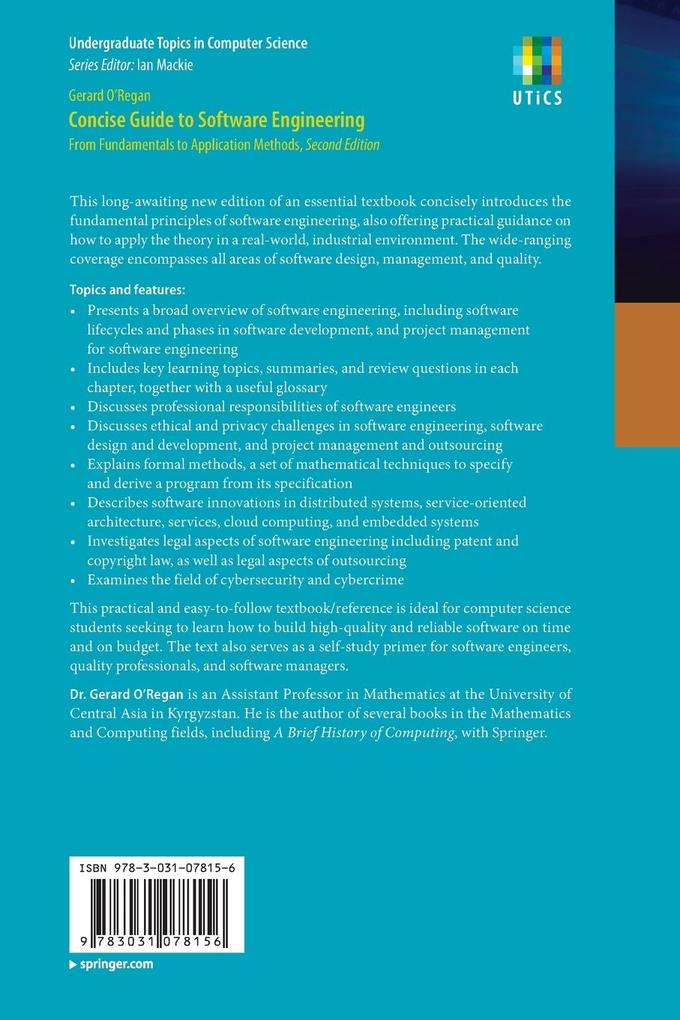
This textbook presents a concise introduction to the fundamental principles of software engineering, together with practical guidance on how to apply the theory in a real-world, industrial environment. The wide-ranging coverage encompasses all areas of software design, management, and quality.
Topics and features: presents a broad overview of software engineering, including software lifecycles and phases in software development, and project management for software engineering; examines the areas of requirements engineering, software configuration management, software inspections, software testing, software quality assurance, and process quality; covers topics on software metrics and problem solving, software reliability and dependability, and software design and development, including Agile approaches; explains formal methods, a set of mathematical techniques to specify and derive a program from its specification, introducing the Z specification language; discusses software process improvement, describing the CMMI model, and introduces UML, a visual modelling language for software systems; reviews a range of tools to support various activities in software engineering, and offers advice on the selection and management of a software supplier; describes such innovations in the field of software as distributed systems, service-oriented architecture, software as a service, cloud computing, and embedded systems; includes key learning topics, summaries and review questions in each chapter, together with a useful glossary.
This practical and easy-to-follow textbook/reference is ideal for computer science students seeking to learn how to build high quality and reliable software on time and on budget. The text also serves as a self-study primer for software engineers, quality professionals, and software managers.
Inhaltsverzeichnis
1. Fundamentals of Software Engineering. - 2. Ethics and Professional Responsibility. - 3. Ethical Software Engineering. - 4. Software Project Management. - 5. Requirements Engineering. - 6. Software Design and Development. - 7. Software Inspections. - 8. Software Testing. - 9. Data Science and Privacy. - 10. Software Metrics and Problem Solving. - 11. Supplier Selection and Management. - 12. Configuration Management. - 13. Software Quality Assurance. - 14. Agile Methodology. - 15. Software Reliability and Dependability. - 16. Formal Methods. - 17. Z Specification Language.