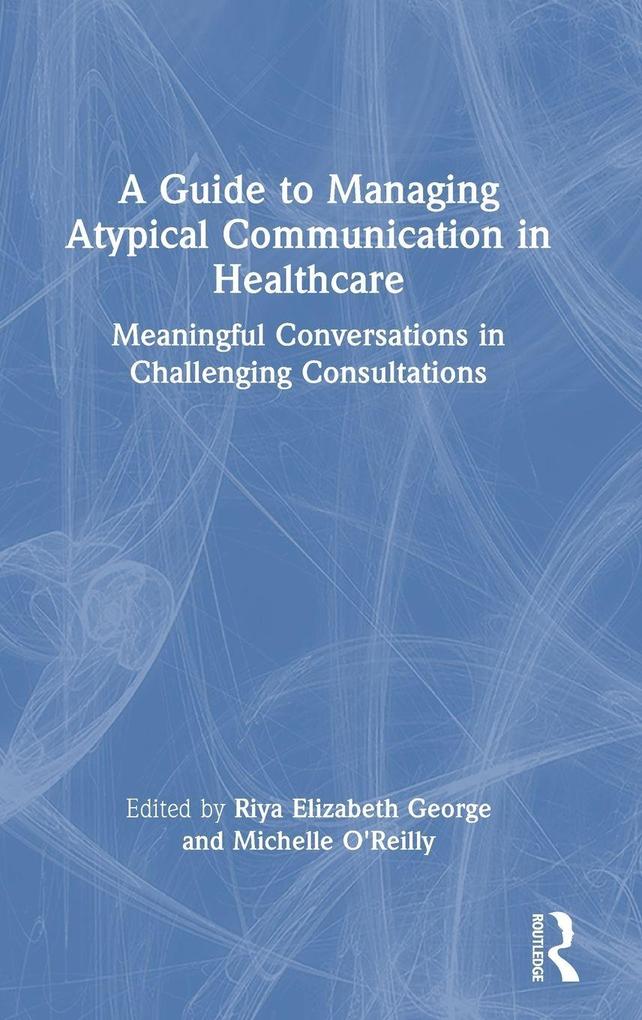
This book presents a supportive and practical guide for healthcare professionals ¿and trainees in a way that considers a wide spectrum of atypical communication conditions, their impact on everyday healthcare interactions, and the social and cultural contexts in which interactions with atypical communicators take place.
Inhaltsverzeichnis
Introduction Part I: Theoretical And Social Debates In The Field Of Atypical Communication 1. Considering The Spectrum Of Typical To Atypical Communication: Deficit Or Difference? 2. The Social And Cultural Context Of Meaningful Conversations 3. Finding Meaning Through Storytelling In Healthcare 4. Technology And Atypical Communication: A Healthcare Context Part II: Practical Guidance For Working With Children And Families 5. Children And Young People With Atypical Communication In Healthcare 6. Communicating With Children And Young People With Speech, Language, And Communication Needs 7. Conversing With Families Of Atypical Communicators 8. Communicating With People With Tracheostomies And Head And Neck Cancers Part III: Atypical Communication In Progressive Neurological Disorders 9. Atypical Communication In Parkinson's Disease, Multiple Sclerosis, And Motor Neuron Disease 10. Dementia And Conversation Patterns Helpful To Practitioners Part 4. Practical Guidance On Specific Conditions Resulting In Atypical Communication 11. Supporting Meaningful Conversations In Stroke-Induced Aphasia 12. Communication And People With Learning Disabilities 13. Communication With Autistic Adults 14. Improving Engagement With People Who Stammer 15. Communication, Hearing Loss, and Deafness 16. Conclusion And Reflections 17. Tribute to Professor Jame Law, OBE