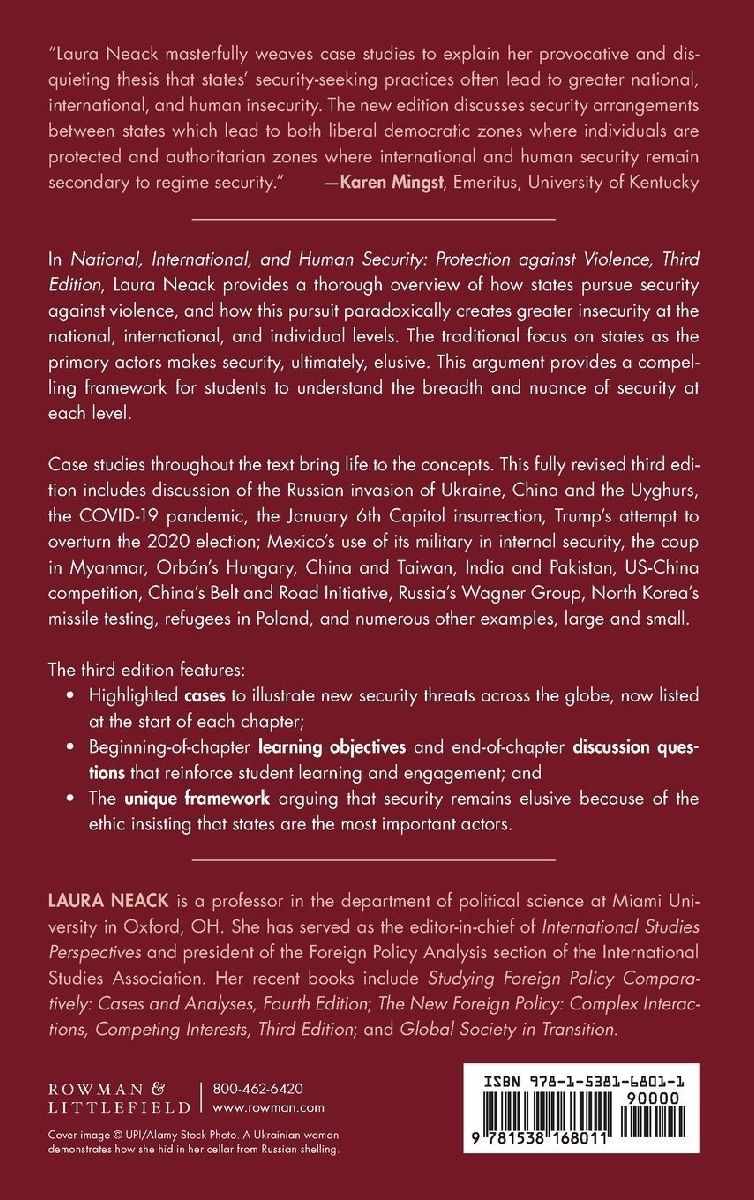
Neack provides a thorough overview of how states pursue security against violence, how this pursuit puts those same states and others in the international system into more or less constant threat of violence, and the implications of state-security practices for human beings who are, always, the victims of this violence.
Inhaltsverzeichnis
Preface< BR> Chapter 1. The Elusive Nature of Security< BR> A First Case: China and the Uyghurs< BR> Elusive Security: States First, People Last< BR> What Does It Mean To Be Secure? < BR> Defining Security< BR> A Second Case: Australia and the Afghan Boat People< BR> States First, International Obligations Second< BR> National, International, and Human Security< BR> Chapter 2. National Security< BR> What is Security? < BR> National Security: States, Not Nations< BR> The Sovereign State< BR> What Sovereignty Allows< BR> Limits on Internal and External Security Practices< BR> States Resurgent< BR> Chapter 3. Internal Security< BR> Defining Internal Security< BR> Who is the State? < BR> What is the Purpose of the State? < BR> All States Tend Toward Maximalism When Threatened< BR> Signs of Trouble< BR> Chapter 4. The Unilateral Pursuit of External Security< BR> The Security Dilemma< BR> Defense and Deterrence< BR> Preemptive Self-Defense< BR> Preventive Force< BR> Gray Zone and Hybrid Conflict< BR> Preventive War< BR> Chapter 5. International Security< BR> International Security and Order< BR> The Liberal International Security System< BR> The Great Power Balance-of-Power International Security System< BR> Competing Orders: The United States versus China< BR> Chapter 6. Bilateral and Multilateral Security Arrangements< BR> Security Arrangements Within the UN Security System< BR> Liberal Security Arrangements< BR> Imposed Security Arrangements< BR> Transactional Security Arrangements< BR> Chapter 7. The United Nations International Security System< BR> Protecting International Peace and Security< BR> The Security Council and Measures Short of Force< BR> The Security Council and Collective Security Actions< BR> General Assembly Emergency Meetings< BR> United Nations Peacekeeping< BR> UN-Approved Peace Enforcement Operations< BR> UN-Regional Organization Hybrid Peace Operations< BR> Chapter 8. Human Security< BR> Defining Human Security< BR> The Geneva Conventions< BR> The Post-Cold War Human Security Agenda< BR> Protecting People from Large-Scale Killing< BR> Civilian Protection< BR> The Future of Human Security< BR> Chapter 9. Conclusion: Democracy, Resilience, and Imagination< BR> About the Author