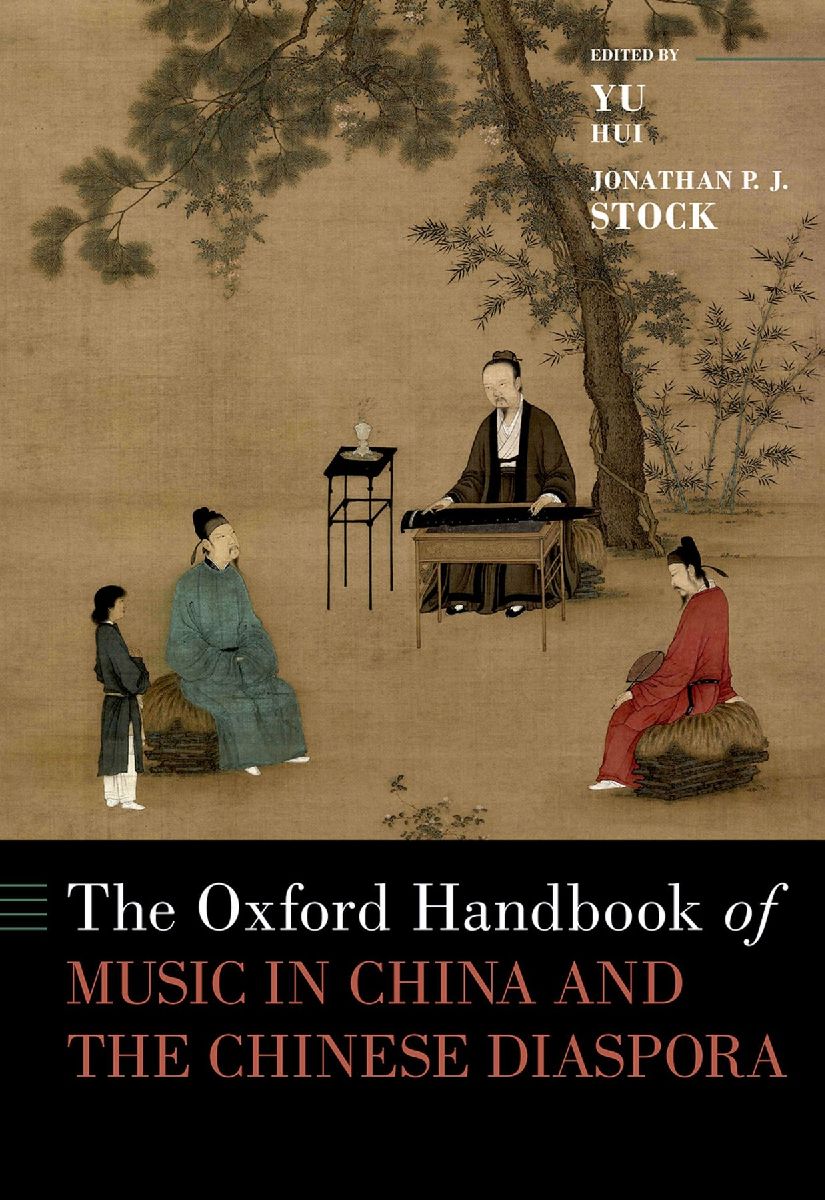
In The Oxford Handbook of Music in China and the Chinese Diaspora, twenty-three scholars advance knowledge and understandings of Chinese music studies. Each contribution develops a theoretical model to illuminate new insights into a key musical genre or context.
This handbook is categorized into three parts. In Part One, authors explore the extensive, remarkable, and polyvocal historical legacies of Chinese music. Ranging from archaeological findings to the creation of music history, chapters address enduring historical practices and emerging cultural expressions. Part Two focuses on evolving practice across a spectrum of key instrumental and vocal genres. Each chapter provides a portrait of musical change, tying musical transformations to the social dimensions underpinning that change. Part Three responds to the role that prominent issues, including sexuality, humanism, the amateur, and ethnicity, play in the broad field of Chinese music studies. Scholars present systematic orientations for researchers in the third decade of the twenty-first century.
This volume incorporates extensive input from researchers based in China, Taiwan, and among Chinese communities across the world. Using a model of collaborative inquiry, The Oxford Handbook of Music in China and the Chinese Diaspora features diverse insider voices alongside authors positioned across the anglophone world.
Inhaltsverzeichnis
- Acknowledgements
- List of Figures
- List of Contributors
- 1. Introduction: Frames of Reference for the Study of Music in China and Its Diaspora
- Yu Hui and Jonathan P.J. Stock
- PART I NEW DIRECTIONS IN HISTORY AND THEORY
- 2. Musical Archaeology and the Prehistory of Chinese Music
- Yang Yuanzheng
- 3. Theorizing "Natural Sound": Ancient Chinese Music Theory and Its Contemporary Applications in the Study of Guqin Intonation
- Yu Hui and Chen Yingshi
- 4. The Huxuan and Huteng Dances: Foreign Musical Dances in Chinese History
- Zhao Weiping
- 5. Kunqu from Analytical Perspectives: A Focus on Feng Ru Song
- Kar Lun Alan Lau
- 6. Why and How do Chinese Sing Shijing Songs?
- Joseph S.C. Lam
- 7. Music History and Historiography in the Chinese Context
- Hon-Lun Helan Yang
- 8. Chinese Music Modernities
- Frederick Lau
- PART II MUSIC GENRES AND PRACTICES IN EVOLVING CONTEXTS
- 9. Traditional Instruments and Heterophonic Practice
- Alan R. Thrasher
- 10. Jiangnan Sizhu in the Greater Suzhou Area: Context, Repertoire, and Sustainability
- Mercedes M. Dujunco
- 11. Social Change and the Maintenance of Music Tradition Among the Western Yugurs
- Du Yaxiong
- 12. The Making of a Musical Community as a Manifestation of Nationalism: The Jinyu Qinshe Society in 1930s China
- Yu Hui
- 13. A Multimodal and Interdisciplinary Approach to Luo Yusheng's Video Performance of "At Break Of Day"
- Francesca R. Sborgi Lawson
- 14. The Emergence of Taiwanese New Xiqu: A Case Study on Chichiao Musical Theater
- Hsieh Hsiao-Mei
- 15. Hybridity in the Modern Chinese Orchestral Music (Guoyue) of Taiwan
- Ching-Yi Chen
- 16. Trends in the Globalization of Pipa Music
- Ben Wu
- PART III Cross-Cutting Issues in Contemporary Settings
- 17. Humanism in Red: A New Mainstream Narrative in the Pop Songs of 1980s' China
- Lijuan Qian
- 18. Staging Race and Sexuality Across Borders: Marketing Pop Singer Coco Lee
- Grace Wang
- 19. Re-Imagining China's Female Pianists: Yuja Wang and Zhu Xiao-Mei
- Shzr Ee Tan
- 20. Liveness and Mediation in Chinese Art Music: From The Map to The Qingming Festival
- Germán Gil-Curiel
- 21. The Professional and Amateur in Wuhan's Park Pop
- Samuel Horlor
- 22. Minorities and the Mainstream: The Musical Place of the Non-Han Peoples in Modern China
- Chuen-Fung Wong
- 23. "Kita Anak Malaysia" [We are the Children of Malaysia]: Performing Multicultural Chinese Identities
- Tan Sooi Beng
- 24. Conclusions: New Directions in Chinese Music Research
- Jonathan P.J. Stock
- Index