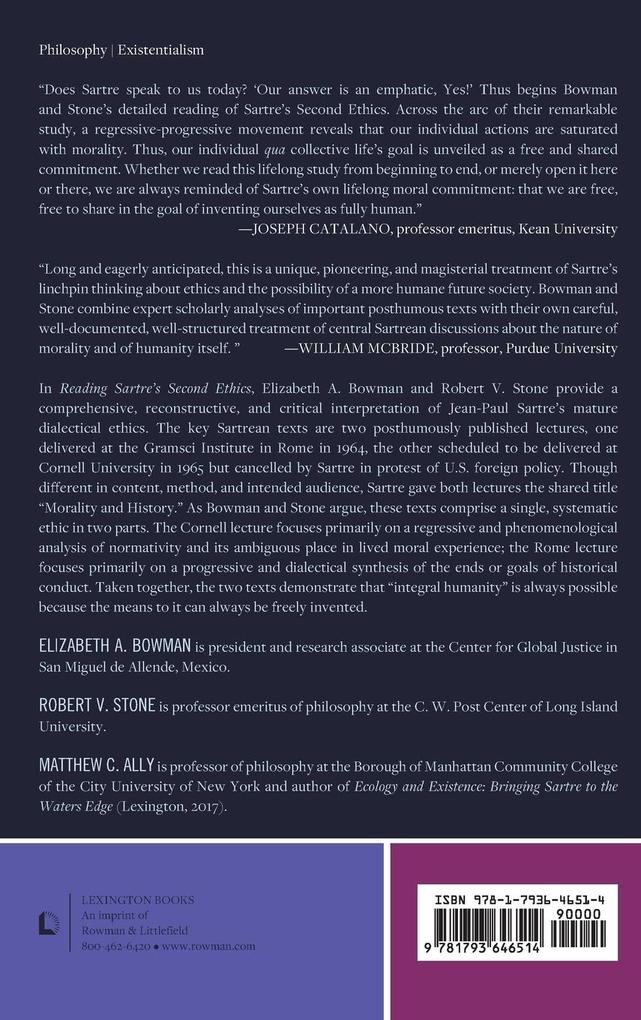
This book provides a reconstructive and critical interpretation of Sartre’s mature dialectical ethics. Taken together, as Sartre intended, the posthumously published key texts demonstrate that the ultimate goal of praxis is "integral humanity" and that "making the human" is always possible because the means to humanity can always be invented.
Inhaltsverzeichnis
Introduction: Reading Sartre's Later Ethical Writings Today
Abbreviations
Part I: The Second Ethics: A Heuristic and Critical Prospectus
Chapter 1: Unveiling Socialism's "Ethical Structure"
Part II: The Phenomenological Moment: What Morality is Made of
Chapter 2: The Everyday Experience of Morality
Chapter 3: The Types of Norms and What they Share
Part III: The Regressive Moment: How Morality is Lived
Chapter 4: The Livability of Norms I: Casuistry and Moral Comfort
Chapter 5: The Livability of Norms II: Morality Is Impossible Today
Chapter 6: Invention I: The Moral Moment in Historical Action
Chapter 7: Invention II: The Vocation of Praxis for the Ethical Unconditional
Part IV: The Progressive Moment: The Paradox of Ethos and the Means Beyond It
Chapter 8: The Paradox of Ethos I: The Two Sides of Norms
Chapter 9: The Paradox of Ethos II: The Actuality and Historicity of Norms
Chapter 10: The Root of Ethics I: Colonist Morality as Alienated Humanity
Chapter 11: The Root of Et