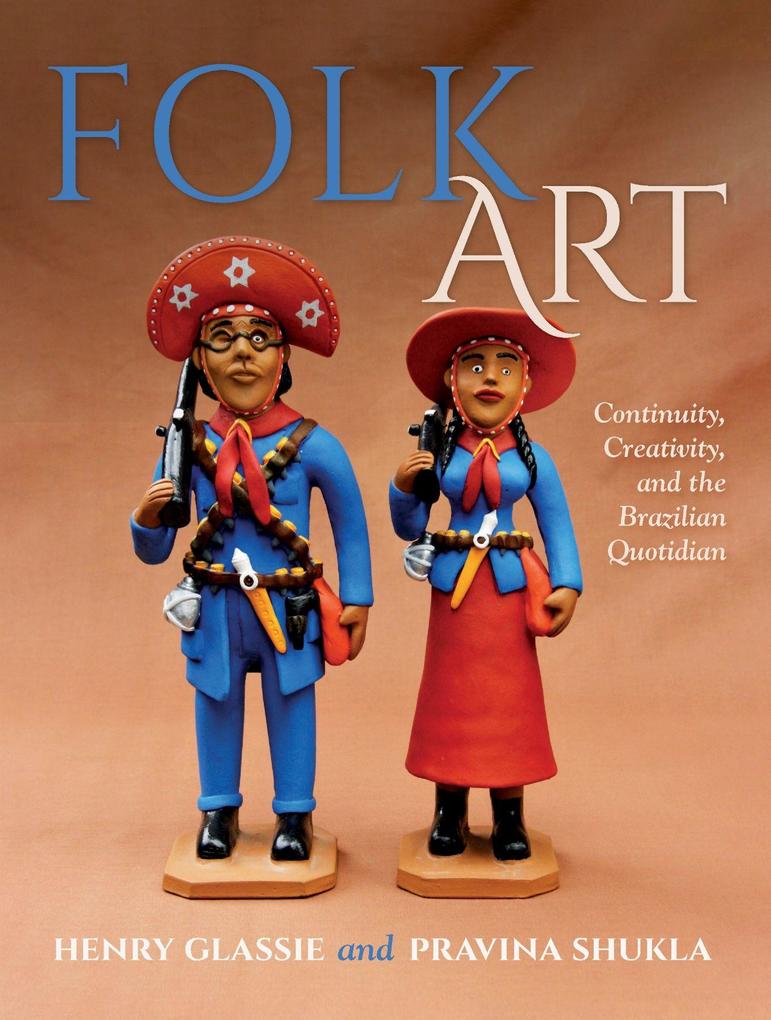
"It begins with sincere dedication and a cordial meeting of minds. Artists in place, at home in the shop, concentrate on their tasks, shaping clay or carving wood, weaving wool or painting canvas. Folklorists in motion, away on the road, concentrate on their tasks, watching, listening, learning. In time, differences diminish, friendships develop, and people unite in collaborative records of thought and action. Now listen to the artists of the Brazilian Northeast. Their work, they say, comes of continuity and creativity. Continuity runs along lines of learning toward social coherence. Creativity brings challenges and deep personal satisfaction. What they say and do in Brazil aligns with ethnographic evidence from throughout the world. This book is about that, about folk art as a sign of human unity. Folk Art by Henry Glassie and Pravina Shukla joins their earlier book, Sacred Art: Catholic Saints and Candomble Gods in Modern Brazil (2018), to describe the contemporary art of northeastern Brazil and exemplify a method for the study of traditional creation"--
Inhaltsverzeichnis
An Introduction
1. Caruaru
2. The Vitalino Family
3. Elias Vitalino
4. Emanuela and Emanuel
5. Vitalino Neto
6. The Manuel Eudocio Family
7. Luiz Carlos and Genilda
8. Ademilson and Elisoneide
9. Helton
10. The Ze Caboclo Family
11. Socorro and Carmelia
12. Paulo, Antonio, and Emerson
13. Amanda
14. Luiz Antonio and Odete
15. Leonildo
16. Terezinha
17. The Galdino Family
18. Luis and George
19. J. Borges
20. J. Miguel
21. Severino and Ana Maria
22. Pablo and Bacaro
23. The Work Goes On
24. Performance
25. Art
26. Production in Place
Acknowledgments
Notes
Bibliography
Index