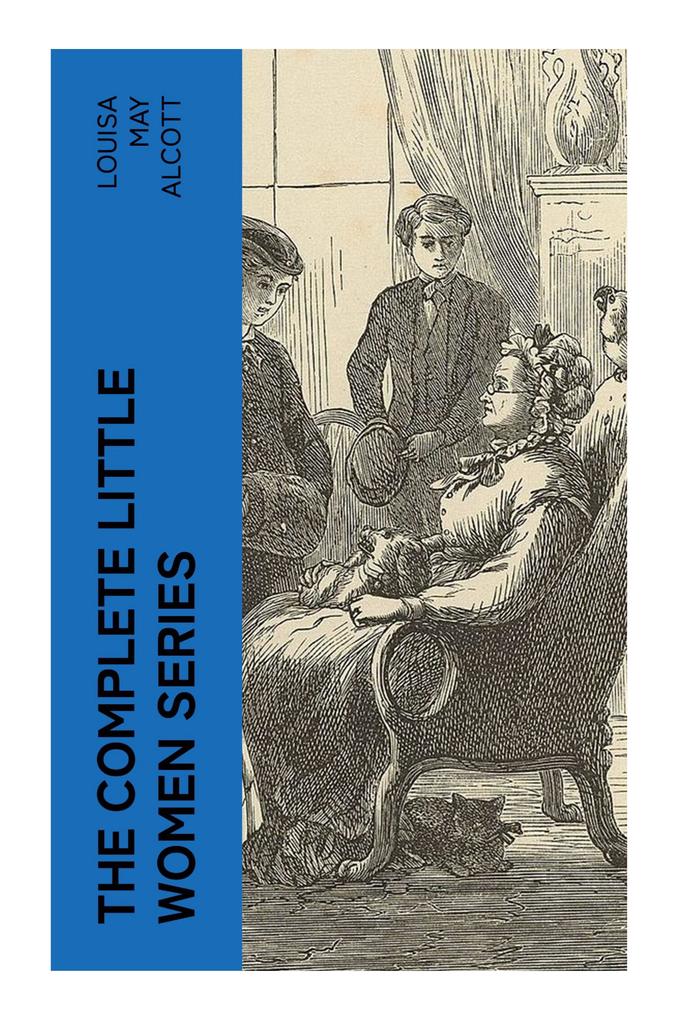
The Complete Little Women Series follows the March sisters from Civil War girlhood into adulthood, marriage, work, education, and moral self-fashioning, then extends their legacy through Plumfield School in Little Men and Jo's Boys. Alcott's prose combines domestic realism, sentimental fiction, comedy of manners, and the female bildungsroman, placing intimate household scenes within the larger nineteenth-century debates over gender, labor, reform, and authorship. Its enduring power lies in its nuanced portrayal of aspiration: Jo's literary ambition, Meg's domestic choices, Beth's spiritual gentleness, and Amy's artistic cultivation are treated as distinct, evolving forms of womanhood. Louisa May Alcott wrote from a life unusually rich in intellectual experiment and economic necessity. Raised among Transcendentalists-her father Bronson Alcott, Emerson, and Thoreau shaped her milieu-she also knew poverty, caregiving, and the pressure to earn by her pen. Her service as a Civil War nurse and her experience publishing sensational fiction sharpened both her realism and her understanding of constrained female agency. This series is recommended to readers seeking more than a beloved family classic: it is a foundational work of American literature, feminist cultural history, and ethical imagination, rewarding both first reading and scholarly return.