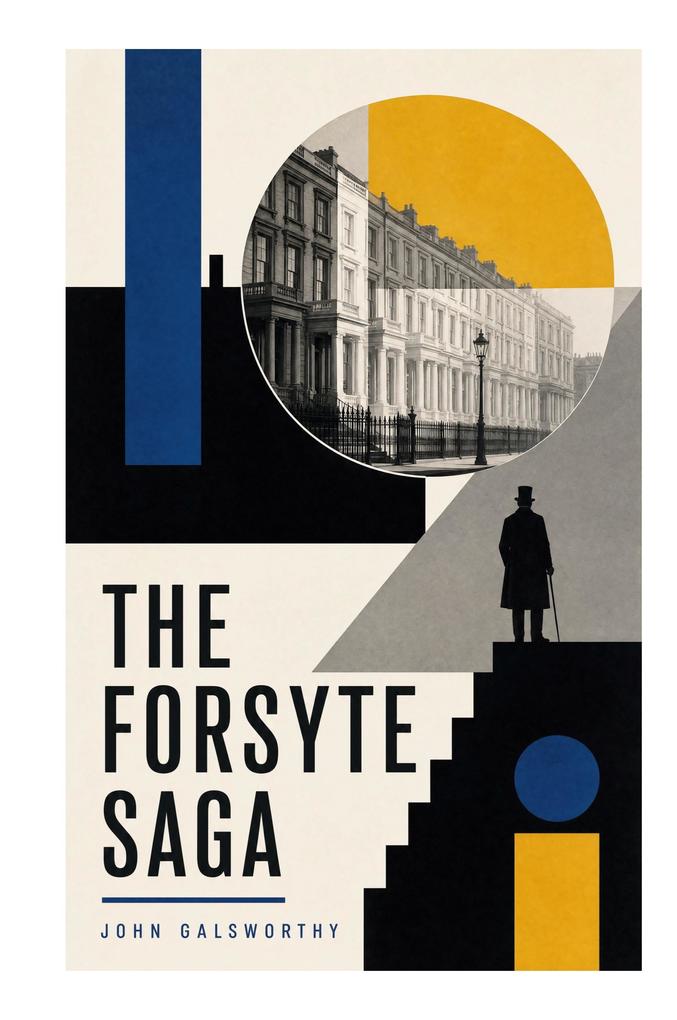
John Galsworthy's The Forsyte Saga chronicles the fortunes of a wealthy London family from the high Victorian age into the unsettled aftermath of the First World War. Through Soames Forsyte's possessive marriage to Irene and the clan's intricate disputes over property, inheritance, art, and respectability, Galsworthy exposes the moral limits of bourgeois security. Written in lucid, ironic realism, the saga extends the nineteenth-century social novel into modern psychological territory, making family history a critique of ownership and emotional repression. Galsworthy was himself born into the prosperous professional class he anatomized with such precision. Trained as a barrister and financially independent, he observed the manners, legalisms, and anxieties of English privilege from within, yet became increasingly critical of its complacencies. His sympathy for social reform, his concern with marriage law and women's autonomy, and his own complex emotional life all inform the novel's searching portrait of desire constrained by convention. This is an essential work for readers interested in family sagas, English realism, and the transition from Victorian certainty to modern disillusionment. Expansive yet exact, compassionate yet unsparing, The Forsyte Saga rewards patient reading with a richly layered study of how people mistake possession for love.