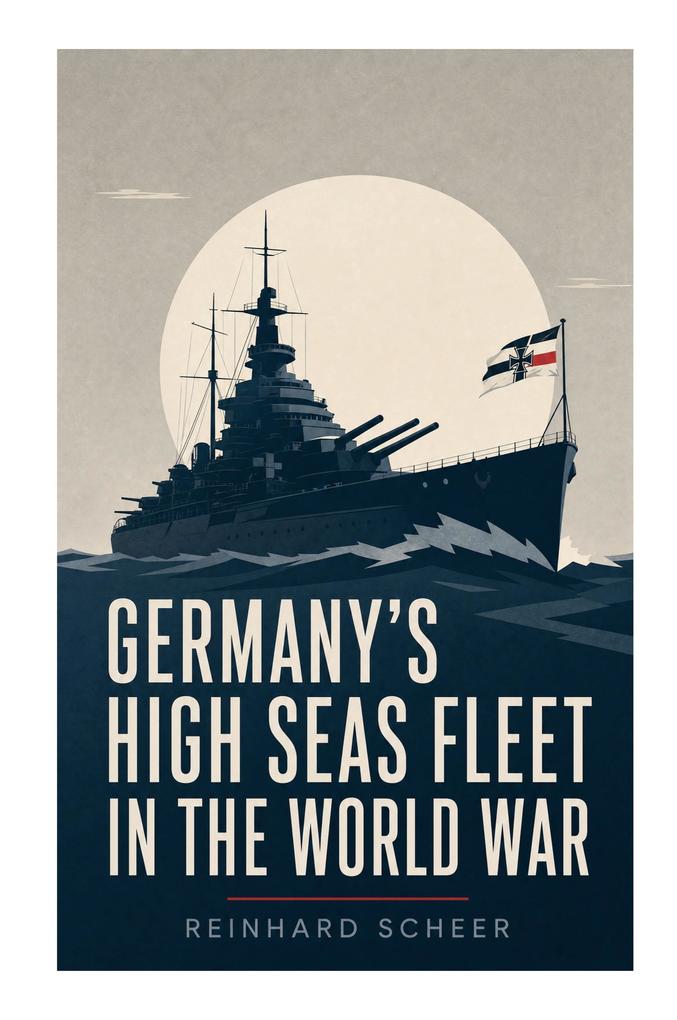
Germany's High Seas Fleet in the World War is both operational history and apologia, recounting the Imperial German Navy's struggle against British sea power from the perspective of its wartime commander. Scheer narrates the strategic constraints of blockade, sortie, mine warfare, submarine policy, and fleet action, culminating in the Battle of Jutland. Written in a sober, martial prose, the book belongs to the postwar literature of explanation and vindication, where defeated commanders sought to interpret decisions, justify risks, and preserve institutional honor. Reinhard Scheer, admiral of the High Seas Fleet from 1916, wrote from direct command experience and from the intellectual world of German navalism shaped by Tirpitz, Mahanian sea-power theory, and imperial rivalry with Britain. His career in battleships and staff command informs the book's emphasis on readiness, discipline, and strategic opportunity. The work also reflects the bitterness of Germany's defeat and the unresolved debates over unrestricted submarine warfare and fleet inactivity. This volume is recommended to readers of naval history, First World War strategy, and military memoir. It is indispensable not because it is impartial, but because it reveals how Germany's senior naval leadership understood its war, its limits, and its lost possibilities.