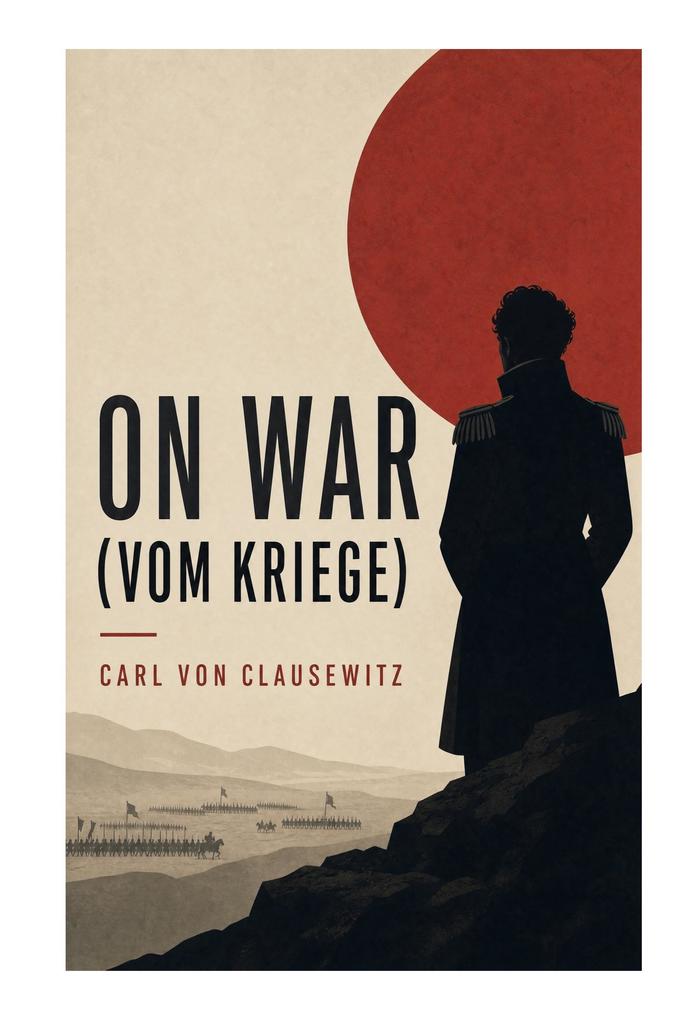
Carl von Clausewitz's On War (Vom Kriege) is the foundational modern treatise on the nature, theory, and practice of armed conflict. Written in a dense, dialectical style shaped by German idealist philosophy and Enlightenment military science, the work rejects simplistic formulas and instead examines war as a changing relation between violence, chance, and rational purpose. Its famous dictum that war is the continuation of politics by other means situates battle within the broader life of the state, while concepts such as friction, the fog of war, and the "remarkable trinity" remain central to strategic thought. Clausewitz was a Prussian officer whose intellectual formation was inseparable from the upheavals of the Napoleonic Wars. Having fought against revolutionary and imperial France, served in Russian ranks, and reflected deeply on Prussia's defeat and reform, he wrote from lived experience as well as rigorous study. His unfinished manuscript, edited after his death by his wife Marie von Clausewitz, bears the marks of both battlefield observation and philosophical inquiry. This book is indispensable for readers of military history, political theory, international relations, and strategy. Demanding but profoundly rewarding, it offers not a manual of victory but a disciplined way of thinking about conflict, power, uncertainty, and the political purposes that give war its meaning.