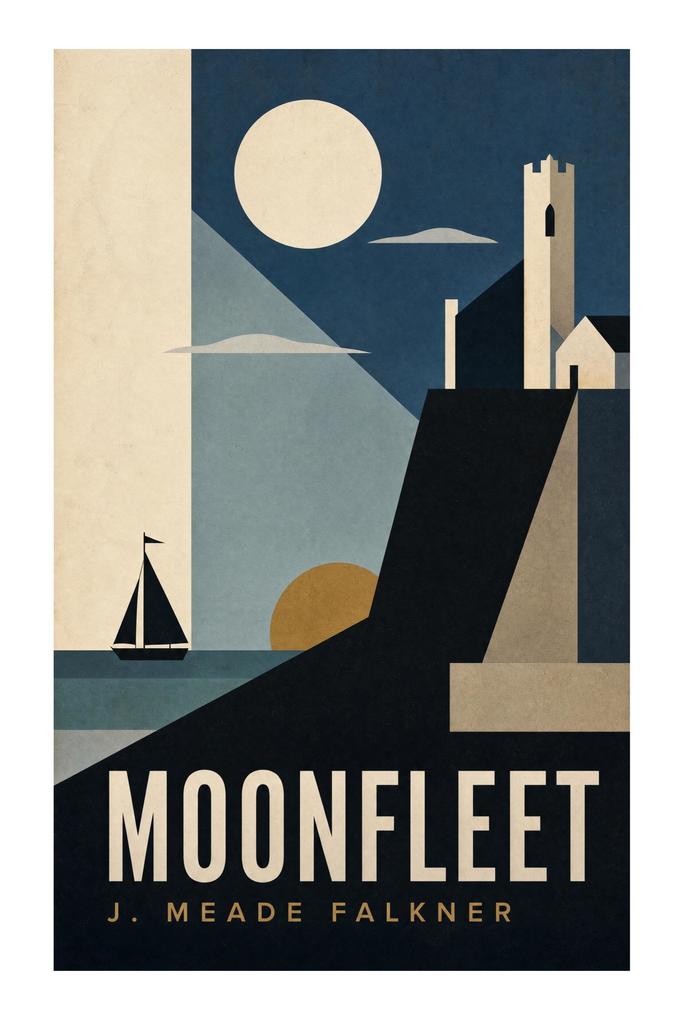
Set in the Dorset village of Moonfleet in the mid-eighteenth century, J. Meade Falkner's Moonfleet follows the orphan John Trenchard into a world of smugglers, crypts, shipwrecks, and the cursed diamond of the Mohunes. Its prose is lucid, atmospheric, and morally serious, combining the pace of boys' adventure with the shadowed architecture of Gothic romance. Published in 1898, it belongs to the late-Victorian revival of historical adventure associated with Stevenson, yet its elegiac sense of place gives it a distinctive depth. Falkner was not a prolific professional novelist but a scholar-antiquary, poet, and businessman whose imagination was deeply shaped by English topography, ecclesiastical architecture, and local legend. His fascination with old churches, inscriptions, family histories, and coastal communities informs the novel's texture: Moonfleet feels less invented than excavated from parish records, tombs, and seafaring memory. His practical life may also explain the book's sober interest in loyalty, risk, and worldly consequence. This is an ideal book for readers who admire classic adventure fiction with emotional gravity and historical resonance. It offers suspense and romance, but also a finely judged meditation on inheritance, temptation, courage, and forgiveness.