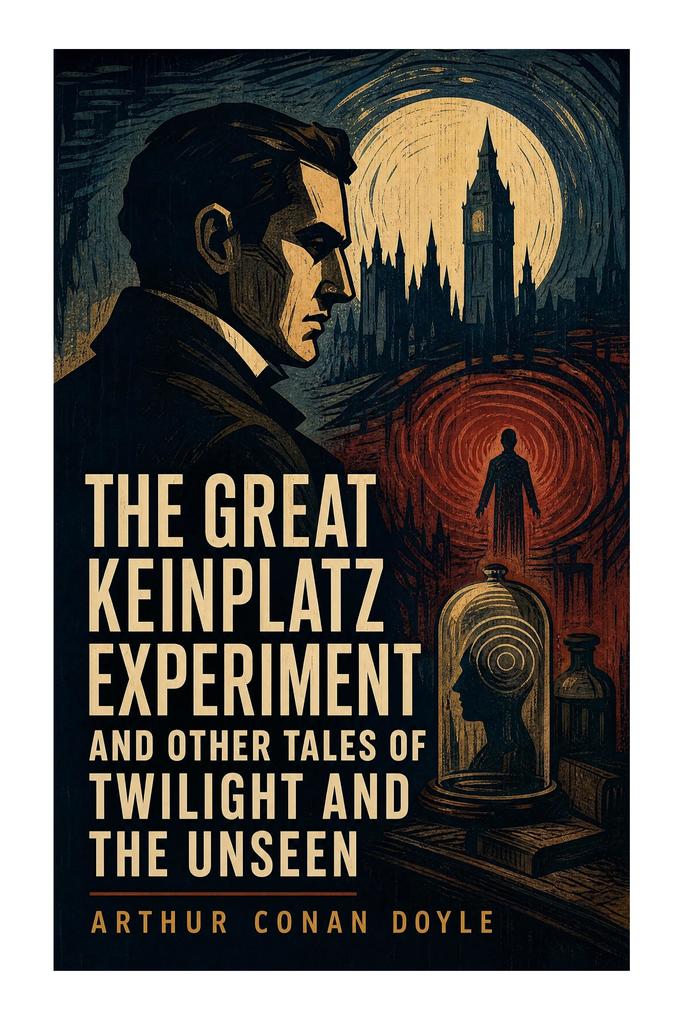
The Great Keinplatz Experiment and Other Tales of Twilight and the Unseen gathers Arthur Conan Doyle's excursions beyond rational detection into mesmerism, apparitions, uncanny psychology, and speculative science. Written with the narrative clarity that made Sherlock Holmes famous, these tales combine brisk plotting with Gothic unease and comic ingenuity. They belong to the late-Victorian and Edwardian fascination with psychical research, spiritual crisis, and the unstable boundary between scientific explanation and supernatural possibility. Doyle was not merely a maker of ingenious mysteries: he was a physician trained in observation, a popular historian, a creator of imperial adventures, and eventually one of Britain's most prominent advocates of Spiritualism. His medical education sharpened his interest in abnormal states of mind and body, while personal bereavements and the intellectual climate of his age deepened his attraction to the unseen. This collection reflects both the skeptical diagnostician and the believer in hidden realities. Readers drawn to classic supernatural fiction, early science fantasy, or the stranger margins of Doyle's imagination will find this volume especially rewarding. It is recommended not as a companion piece to Holmes alone, but as evidence of Doyle's broader literary ambition: to make wonder, fear, and metaphysical speculation vividly entertaining.