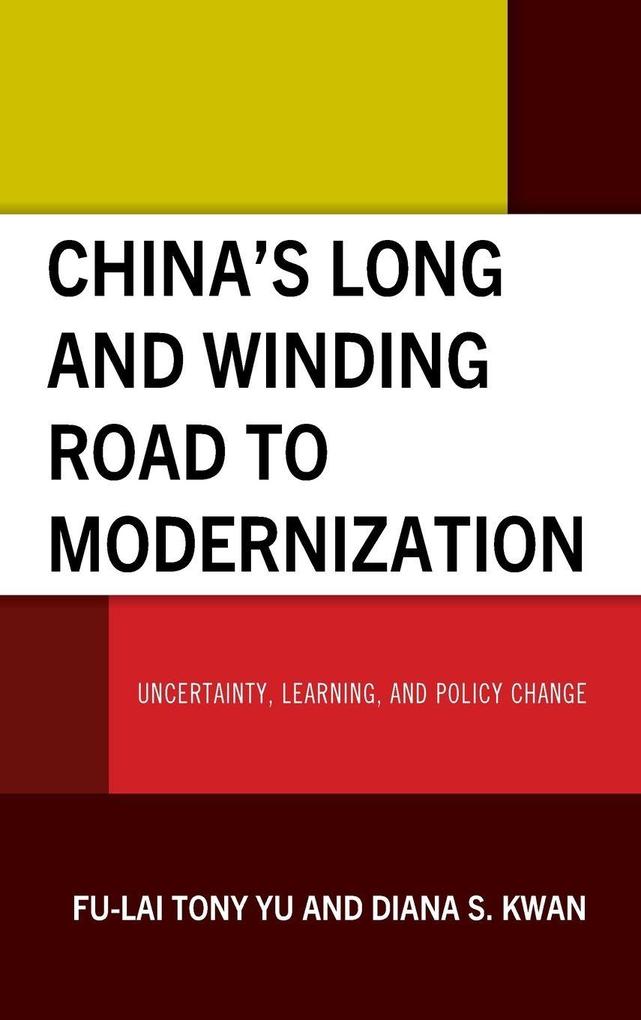
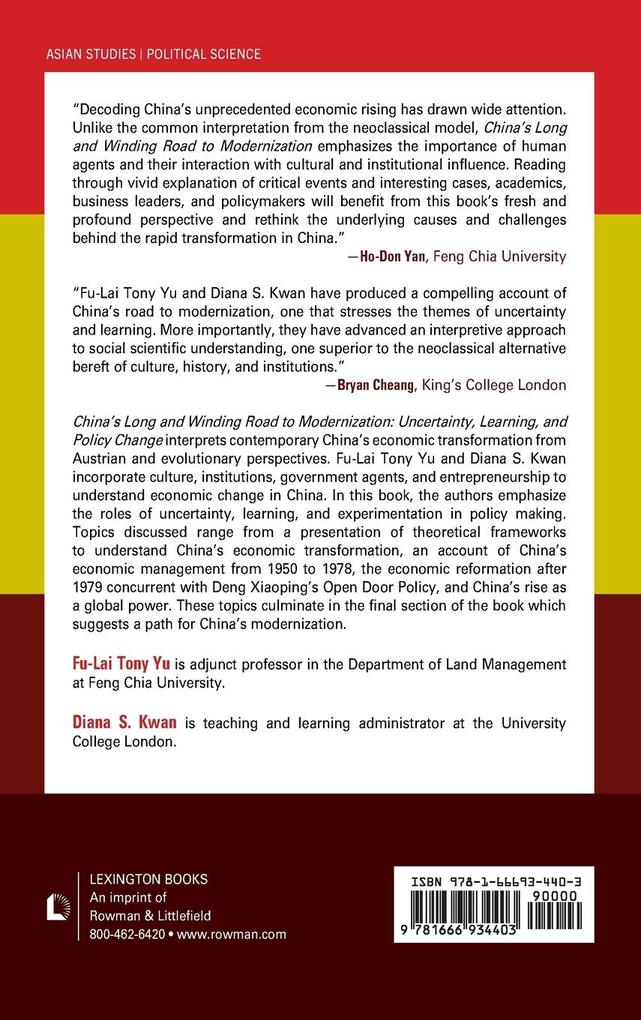
This book adopts Austrian and evolutionary approaches to interpret contemporary China’s economic transformation under uncertainty, learning and experimentation. It incorporates culture, institutions, government agents and entrepreneurship to understand policy making in China.
Inhaltsverzeichnis
Part I. Theoretical Framework
Chapter 1. Mainstream Neoclassical School versus Austrian Economics: Efficiency versus Coordination
Chapter 2. Interpreting Chinese History in Phenomenological Perspective
Chapter 3. Origins of Chinese Way of National Management: Confucianism, Absolute Monarchy and Patriotism
Part II. China's Economic Management during 1950-1978: Venturing into a Radical Socialist Regime
Chapter 4. An Overview of China's Economic Transformation in Evolutionary Perspective: Uncertainty, Experimentation and Policy Change
Chapter 5. The Cultural Revolution Revisited: Mao's Personality, Chinese Culture and Mentality
Chapter 6. Uncertainty and Policy Making for a Public Mega Project in Communist China: The Case of the Three Gorges Dam
Part III. Groping for Chinese Stones to Cross Turbulent Rivers: China's Economic Reform after 1979
Chapter 7. Leadership Selection and Power Succession: The Case of "Hu-Wen Team"
Chapter 8. From Low-end 'Shanzhai' to High-end Brand Models: The Case of China's