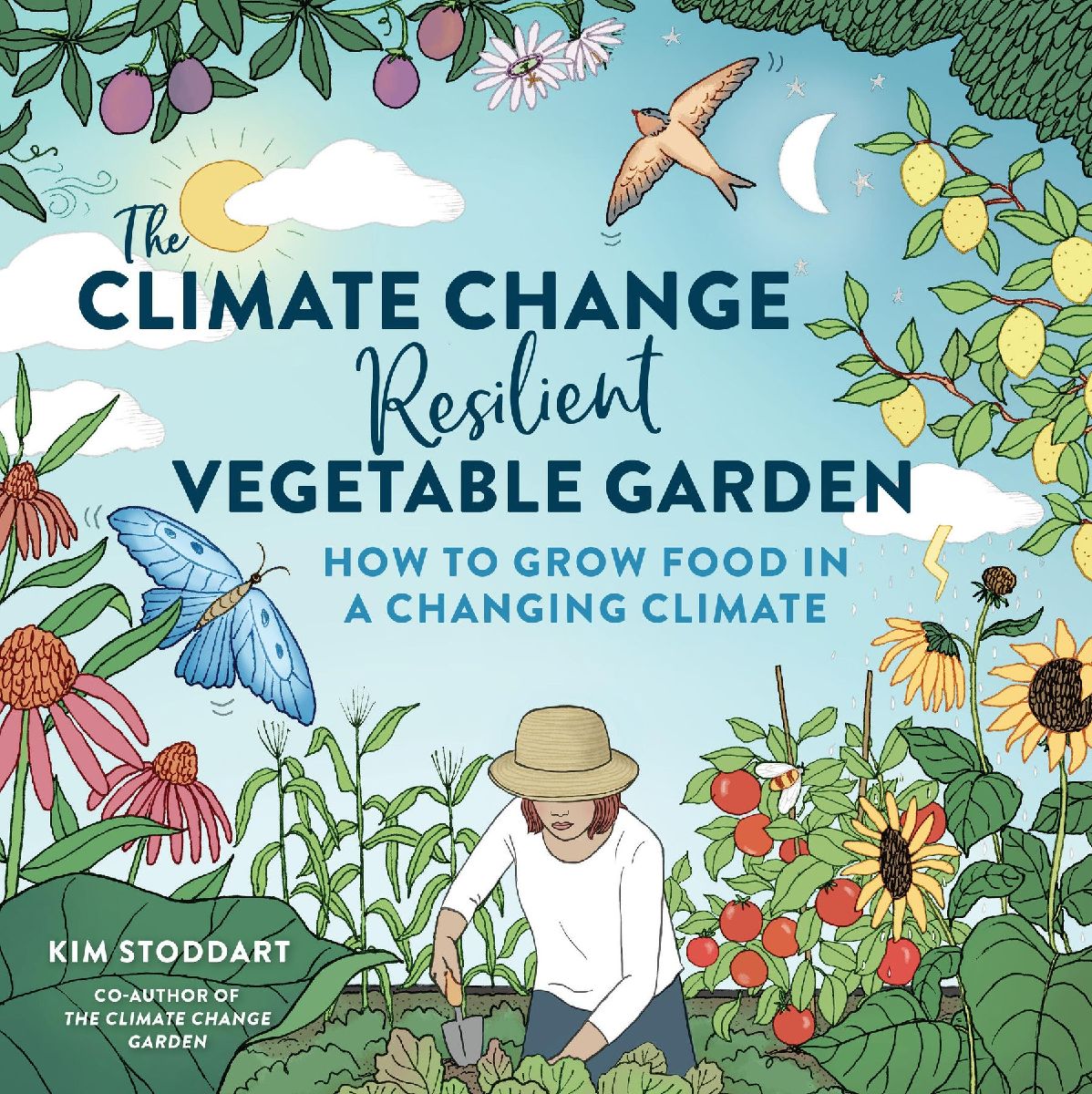
Discover tried and tested ways to grow food in our changing climate with multi-award-winning journalist, commentator, broadcaster, and gardening magazine editor, Kim Stoddart.
Whether it’s water-usage restrictions, extended heat waves, disastrous flooding, “super weeds,” or prolonged pest lifecycles, the coming years will be filled with daunting challenges for food growers around the world. What’s a gardener to do? In The Climate Change Resilient Vegetable Garden, Author Kim Stoddart outlines a clear path toward building resilience in your vegetable plants, your soil, and yourself.
This empowering, practical guide demonstrates dynamic and durable ways to grow food for less money—for people, plate, and planet. Learn to:
- Foster adaptation by selectively breeding your favorite veggie varieties for local growing conditions
- Nurture biologically active soils that are better able to support your plants
- Create bioswales, berms, and rain gardens to improve your garden’s flood tolerance
- Plant windbreaks, erect cold frames, and make mini hoop tunnels to protect plants from wind, snow, and surprise frosts
- Enhance biodiversity in your garden to increase pest predation and keep “bad” insects in check
- Discover intensive planting techniques to improve yields while protecting your soil and reducing water usage
- Select the most adaptable fruit and vegetable crops to grow and tend them in a climate change–savvy way
- Recycle rainwater, repurpose household items, and live lightly on the land for a more resourceful gardening life
Kim is on a mission to help gardeners grow fruit and vegetables effectively around the greater extremes of weather we now face. Her work has been featured widely in the media and online, everywhere from The Guardian and The Sun newspapers in the UK, to American Gardener magazine and Yale Climate Connections in the US. Kim has been repeatedly recognized for her work championing a sustainable way forward for gardeners, winning both the prestigious Practical Gardening Journalist of the Year, and Beth Chatto Environmental Journalist of the Year awards.
With actionable tasks and regenerative solutions, The Climate Change Resilient Vegetable Garden brings Kim’s expertise to your garden, helping you reduce resource use, support ecosystem health, and weather the storms of climate change with ease.
Inhaltsverzeichnis
Introduction - What climate challenges are we facing, and what’s to come?
1 How to Be a Resilient Grower
Why building resilience in the gardener is as important as building resilience in the garden itself. Plus, project ideas to gain confidence.
2 Building Resilience from the Ground Up
How to nurture biodiversity below ground, and why it matters.
3 Climate Change–Friendly Garden Design Ideas
Tips to protect against the extremes, including the risk of wildfires.
4 Saving Resources
How to reduce water use by capturing rainwater, layering plants, mulching properly, and irrigating in a more regenerative way.
5 Save Money While Saving the Planet by Recycling and Repurposing
How to transform waste into wonderous gardening materials.
6 Breed and Propagate Locally Resilient Plants
How to select the best, most resilient plant traits for your specific climate.
7 Climate Change SOS
Quick solutions for extremes of weather, from floods and droughts to wildfires and insect plagues.
8 Natural Pest Control in a Changing Climate
How to deal with introduced pests, encourage a diversity of “good bugs,” and create a balance so pests don’t become problematic in the first place.
9 Vegetable Garden Planting Guide
A crop-by-crop look at how to build resilience into your favorite edible garden crops—plus meet some untraditional crops that already come with resilience built in.
10 Plant Protection
Learn how to use structures and plant covers to protect your veggie plants from climate extremes.
11 Troubleshooting Guide
Helpful solutions to some of climate change’s biggest vegetable gardening challenges, including timesaving tips.
Conclusion
How to connect with and enjoy your vegetable garden in a changing climate.
Resources
Acknowledgments
About the Author
Index