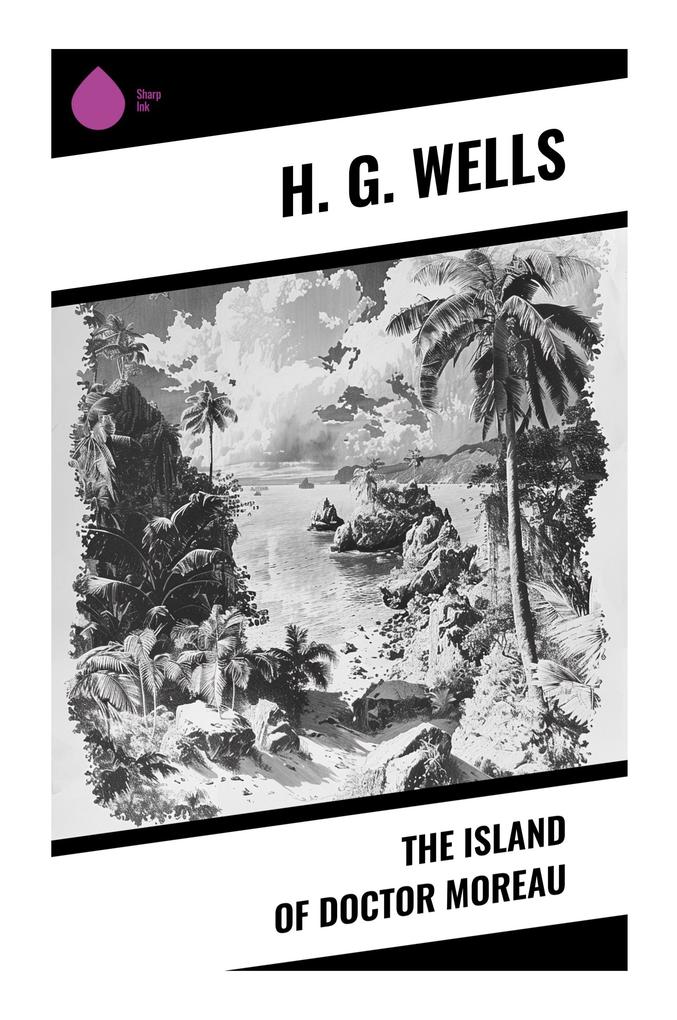
H. G. Wells's The Island of Doctor Moreau is a disturbing fin-de-siècle scientific romance that follows Edward Prendick, a shipwrecked gentleman who discovers an isolated laboratory where vivisection, evolution, and colonial domination converge. Written in a lucid yet Gothic-inflected style, the novel transforms Darwinian anxieties into a powerful fable of bodily instability and moral degeneration. Its island setting, at once exotic and claustrophobic, places it within late Victorian debates about science, empire, and the uncertain boundary between human and animal. Wells was trained in biology under T. H. Huxley, "Darwin's bulldog," and his scientific education deeply informs the novel's imaginative structure. A journalist, social critic, and pioneering writer of speculative fiction, Wells repeatedly used extraordinary premises to test the assumptions of modern civilization. Moreau's experiments reflect contemporary controversies over vivisection, evolutionary theory, and unchecked scientific authority, while also revealing Wells's skepticism toward claims of human superiority. This novel is essential reading for anyone interested in science fiction's intellectual origins, Victorian literature, or ethical questions that remain urgent today. Compact, unsettling, and philosophically rich, it rewards readers seeking both narrative suspense and profound reflection.