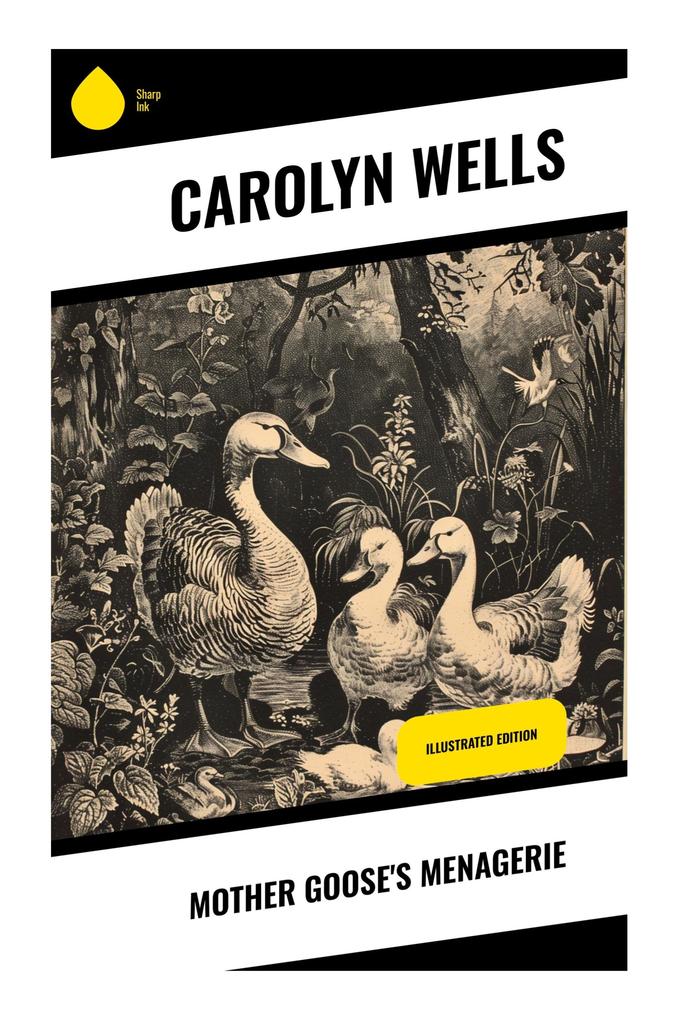
Mother Goose's Menagerie gathers the familiar energies of nursery rhyme into a lively procession of animals, treating the creatures of childhood verse not as background ornaments but as the book's true company. Its style is brisk, musical, and deliberately mnemonic: short lines, ringing rhymes, comic turns, and verbal surprises make it ideal for recitation. In the broader context of late nineteenth- and early twentieth-century children's literature, it belongs to the Anglo-American tradition of nonsense, moral lightness, and imaginative play associated with Mother Goose, Edward Lear, and Lewis Carroll. Carolyn Wells was an American author of remarkable range, remembered for mysteries, parodies, anthologies, and books for children. Her literary career shows a sustained fascination with wit, pattern, and the pleasures of verbal dexterity. That sensitivity to form helps explain Mother Goose's Menagerie: Wells understood that children's poetry depends not merely on subject matter but on cadence, repetition, and the comic logic by which language becomes play. This book is warmly recommended to readers interested in classic children's verse, nursery-rhyme culture, and the history of literary nonsense. It is especially rewarding for parents, teachers, collectors, and scholars seeking a charming example of how inherited rhyme traditions could be renewed with intelligence, humor, and affectionate craftsmanship.