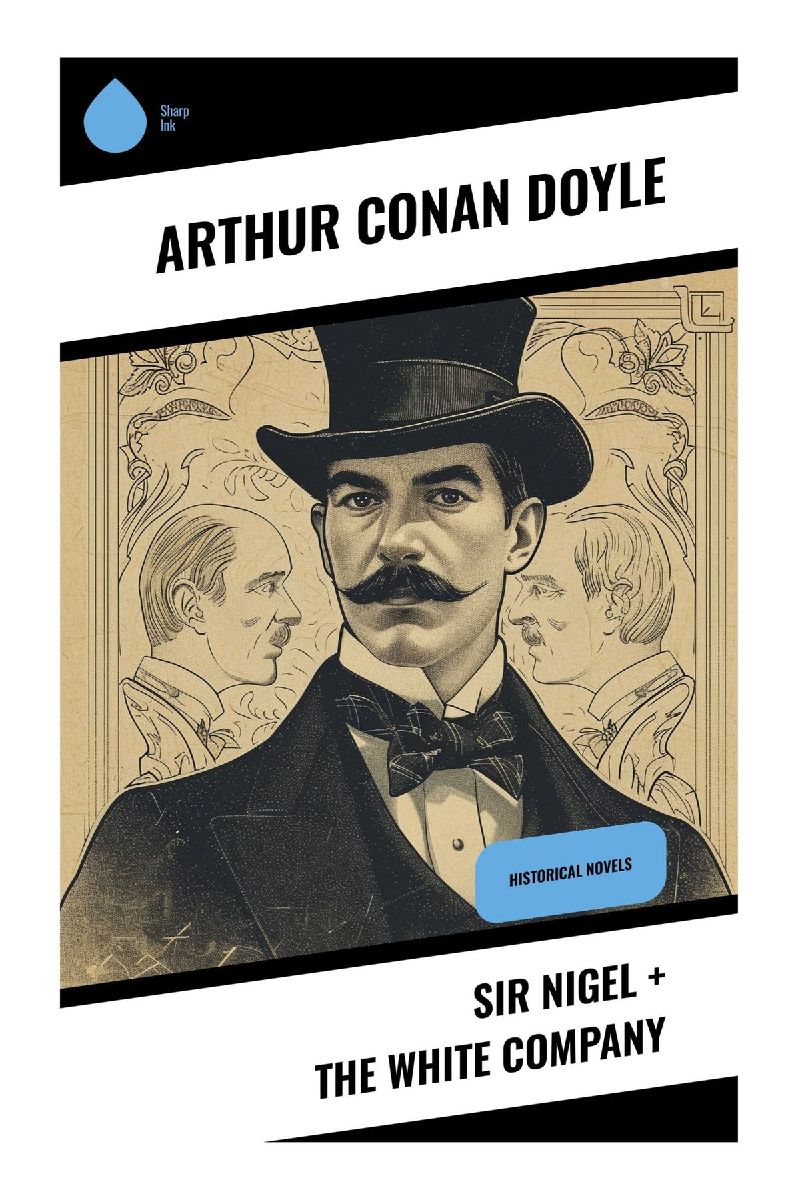
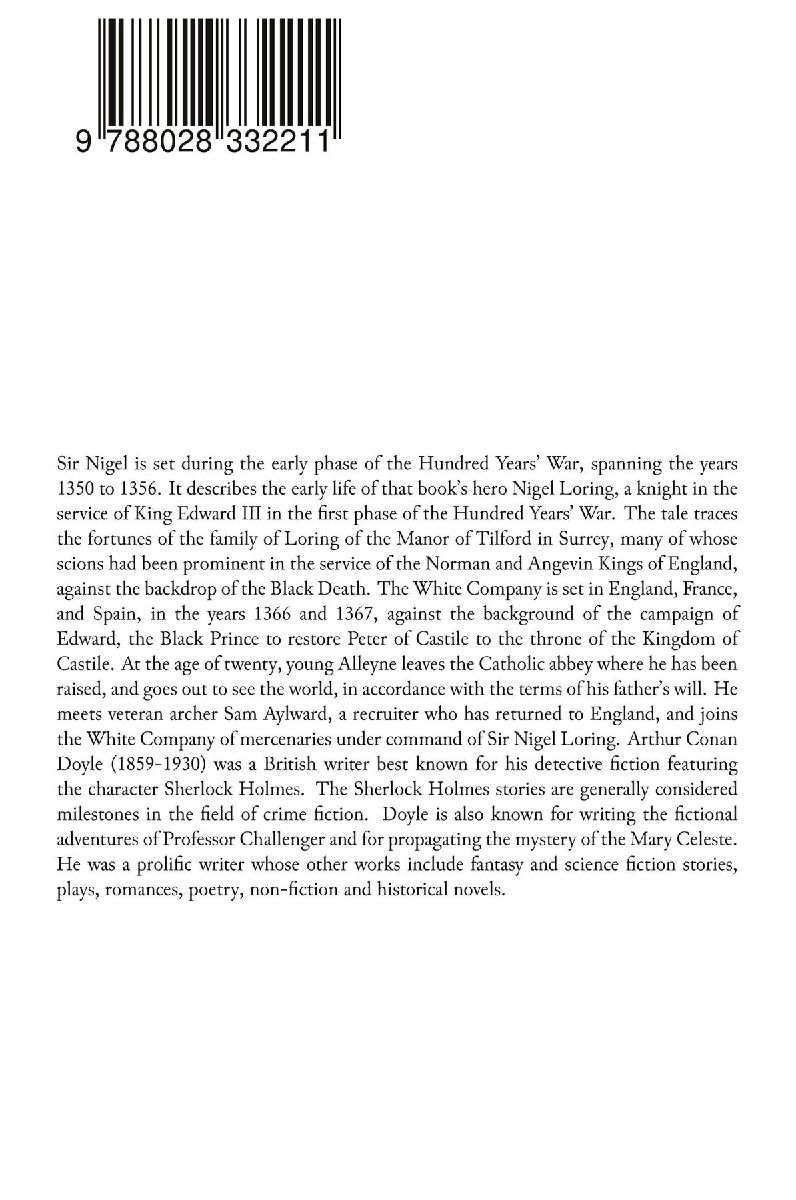
Arthur Conan Doyle's Sir Nigel and The White Company together form a richly imagined diptych of fourteenth-century chivalric adventure, set amid the campaigns and codes of the Hundred Years' War. Though written in reverse narrative order-The White Company first, Sir Nigel later-the works trace the youthful formation and mature exploits of Nigel Loring, blending romance, military chronicle, and moral comedy. Their style is vigorous, archaizing, and pictorial, indebted to Scott's historical fiction while animated by Doyle's gift for swift plotting and memorable characterization. Doyle, best known for Sherlock Holmes, considered his historical romances among his more serious literary achievements. His medical training, imperial milieu, and deep fascination with medieval warfare and honor all inform these novels. Writing at a moment when Victorian and Edwardian readers looked to the Middle Ages for ideals of courage, loyalty, and national identity, Doyle used the past to examine the ethical imagination of his own age. Readers interested in historical fiction beyond mere costume drama will find these books rewarding: spirited, learned, humane, and surprisingly reflective about valor, fellowship, and reputation.