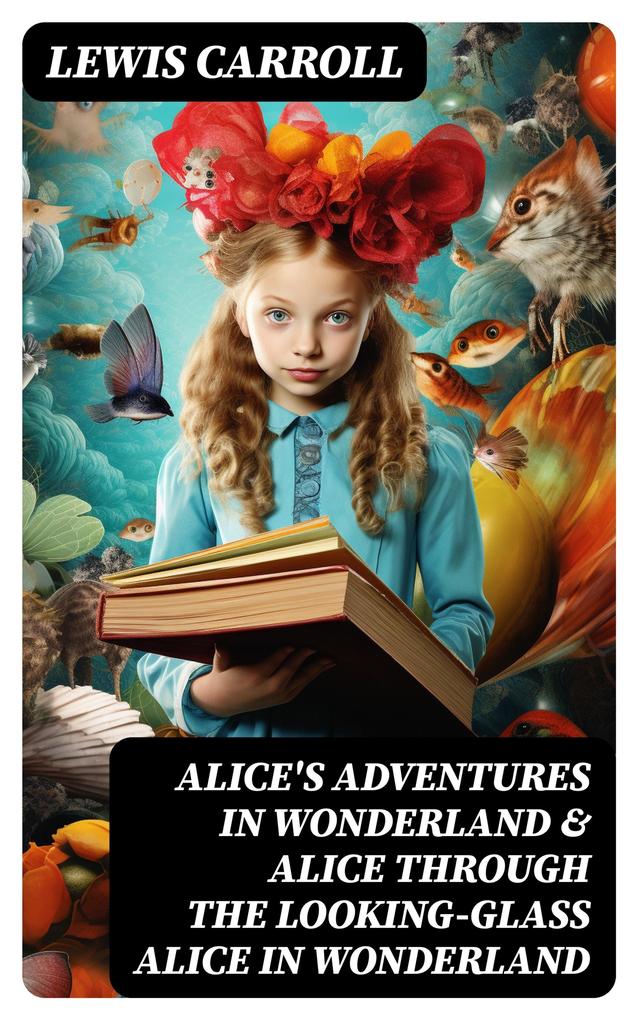
Lewis Carroll's "Alice's Adventures in Wonderland" and its sequel "Alice Through the Looking-Glass" represent an extraordinary confluence of whimsy, philosophy, and the absurd. Set within a fantastical framework that transcends conventional narrative structures, Carroll employs playful language, puns, and vivid imagery to challenge the very principles of logic and reason. These tales introduce readers to surreal characters-the Cheshire Cat, the Mad Hatter, and the Red Queen-who invite both children and adults to reflect on identity, time, and transformation against the backdrop of a whimsical yet nonsensical universe. This unique literary approach, rooted in the Victorian era, also reflects the period's cultural exploration of childhood and imagination. Charles Lutwidge Dodgson, better known as Lewis Carroll, was a mathematician, logician, and a photographer, with a profound affinity for language and storytelling. His mathematical training and keen interest in paradoxes deeply influenced his writing. The creation of Alice, inspired by real-life Alice Liddell, was not only a playful narrative venture but also reflected Carroll's deep-seated desire to articulate the complexities of the human mind through a childlike perspective, thus bridging the realms of rationality and absurdity. "Alice's Adventures in Wonderland" and "Alice Through the Looking-Glass" are essential reads for anyone interested in the intersection of literature and philosophy. Carroll's tales enchant through their imaginative landscapes while encouraging a profound inquiry into the nature of reality and perception. This duality makes the texts timeless treasures, appealing to all ages and ensuring their place as a cornerstone of English literature.
In this enriched edition, we have carefully created added value for your reading experience:
- A comprehensive Introduction outlines these selected works' unifying features, themes, or stylistic evolutions.
- The Author Biography highlights personal milestones and literary influences that shape the entire body of writing.
- A Historical Context section situates the works in their broader era-social currents, cultural trends, and key events that underpin their creation.
- A concise Synopsis (Selection) offers an accessible overview of the included texts, helping readers navigate plotlines and main ideas without revealing critical twists.
- A unified Analysis examines recurring motifs and stylistic hallmarks across the collection, tying the stories together while spotlighting the different work's strengths.
- Reflection questions inspire deeper contemplation of the author's overarching message, inviting readers to draw connections among different texts and relate them to modern contexts.
- Lastly, our hand-picked Memorable Quotes distill pivotal lines and turning points, serving as touchstones for the collection's central themes.