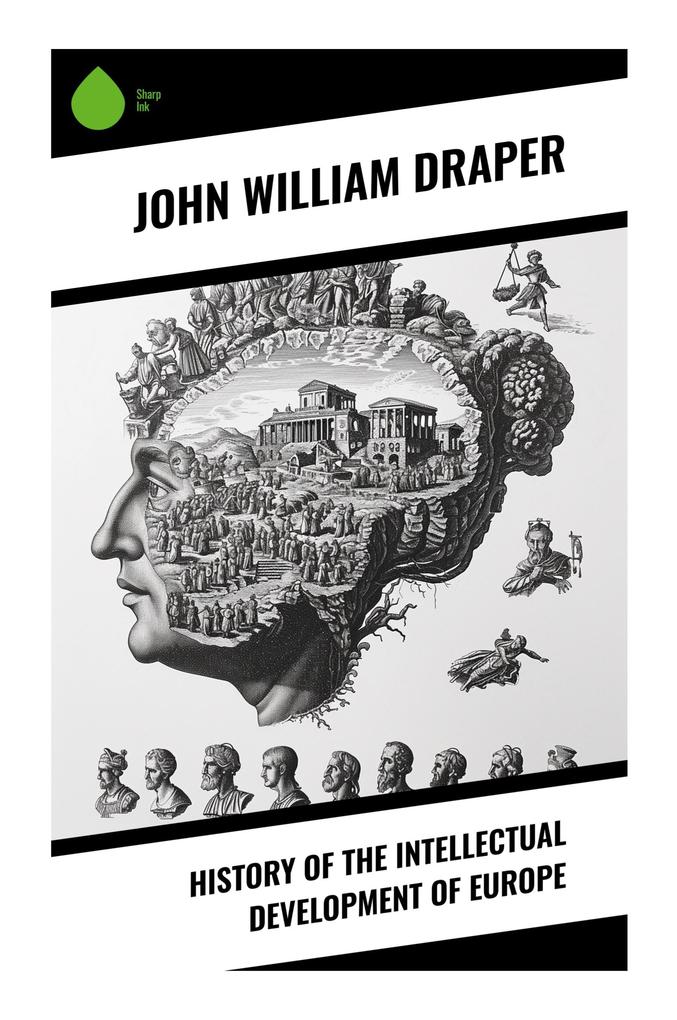
John William Draper's History of the Intellectual Development of Europe is a sweeping nineteenth-century synthesis of European civilization, tracing the movement of mind from classical antiquity through Christianity, Islam, scholasticism, the Renaissance, and modern science. Written in confident, analytical prose shaped by positivist historiography, the book reads intellectual history as an evolutionary drama in which inquiry, institutions, and belief contend for authority. Its grand scale anticipates Draper's later conflict thesis on science and religion. Draper was unusually equipped for such a project: an English-born American physician, chemist, photographer, and professor at New York University. His scientific training, experiments in light and physiology, and participation in America's expanding research culture encouraged him to interpret history through laws of development rather than providential design. Formed by both European learning and American institutional ambition, he viewed Europe's past as the precondition of modernity. This work is recommended to readers interested in the history of ideas, science and religion, or Victorian historiography. Though modern scholarship may question its determinism and Eurocentric scale, its energy, architecture, and interpretive boldness remain compelling. It rewards critical reading as a monument of liberal scientific humanism and an essential document in modern intellectual history.