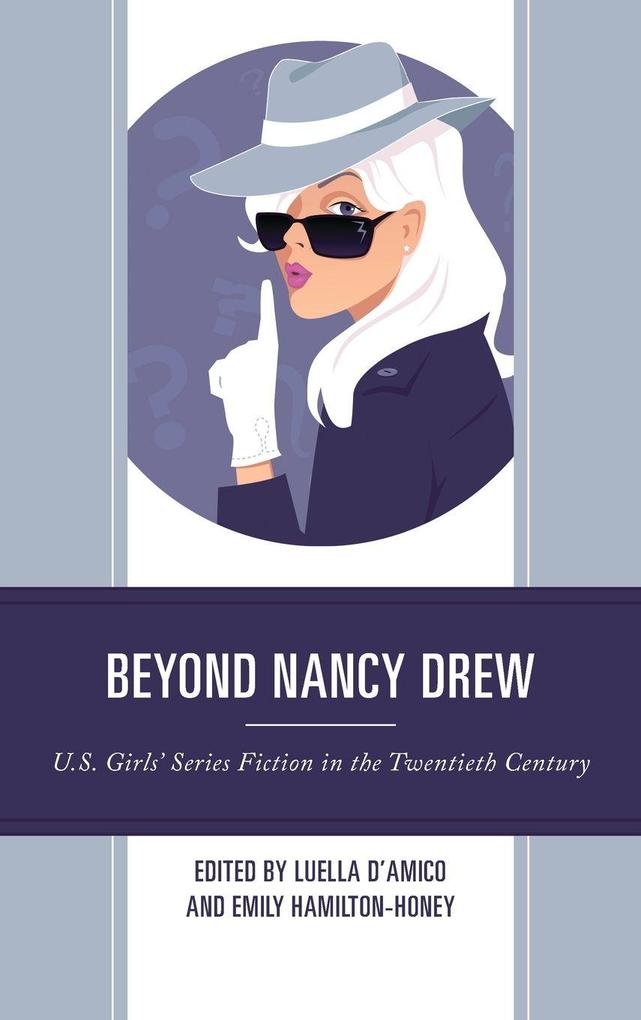
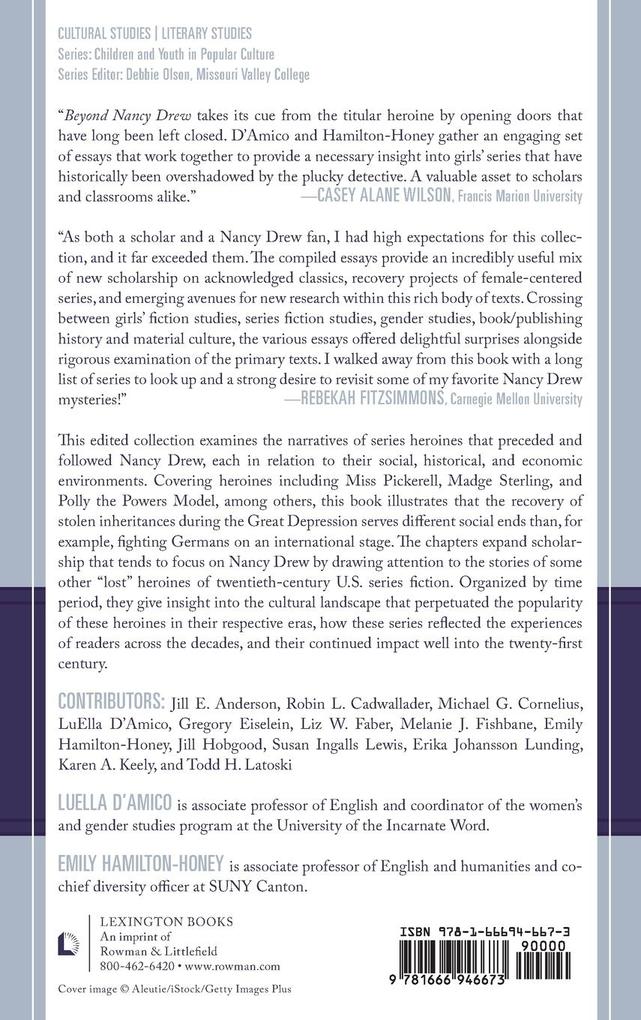
This edited collection recovers "lost" girls’ series fiction heroines of the twentieth century. The chapters examine the role the heroines’ sociohistorical contexts play in the narrative plot lines as well as the series’ popularity and relatability for readers.
Inhaltsverzeichnis
Introduction: Imperfect Adventures: 'Relatable' Heroines in Twentieth-Century Girls' Series Fiction
LuElla D'Amico and Emily Hamilton-Honey
Chapter 1: Betty Wales: From Series Book Heroine to Lifestyle Brand
Jill Hobgood
Chapter 2: Adventure, Mystery, and Fashion: On Fashion and the Modelling Profession in Polly the Powers Model: The Puzzle of the Haunted Camera
Erika Johansson Lunding
Chapter 3: Finding the Right Formula, or How The Madge Sterling Series Provided Mildred Wirt (Benson) with the Perfect Formula for Writing Children's Mystery Series
Todd Latoski
Chapter 4: Before Nancy Drew: American Girls' Series Fiction of the 1920s
Susan Ingalls Lewis
Chapter 5: On Being Glad: Pollyanna and Stoic Thought
LuElla D'Amico and Gregory Eiselein
Chapter 6: "To See If College Could Make Half the Woman of Me That It Made of My Mother": The Beverly Gray Series as a Mid-Century Return to Progressive Era Girls' Series Fiction
Emily Hamilton-Honey
Chapter 7: Maida Westabrook: Inez Haynes Gillmore Irwin's Little Lady Bountiful
Robin Cadwallader
Chapter 8: Miss Pickerell Tackles the Stereotypes: Gender, Science Education, and Mid-century Science Fiction
Liz W. Faber
Chapter 9: "More like Americans": Sydney Taylor's Queering of Historical Fiction Girls' Series Melanie J. Fishbane
Chapter 10: "To prove their worth in a man's world": Depicting and Encouraging White Women's Growing Professional Opportunities in Betty Baxter Anderson's 1940s Career Novels Karen Keely
Chapter 11: Inventing the Career Girl Narrative in Vicki Barr
Michael Cornelius
Chapter 12: Student Dancer: Education, Community, and Love in Regina J. Woody's Dance-Career Novels
Jill E. Anderson