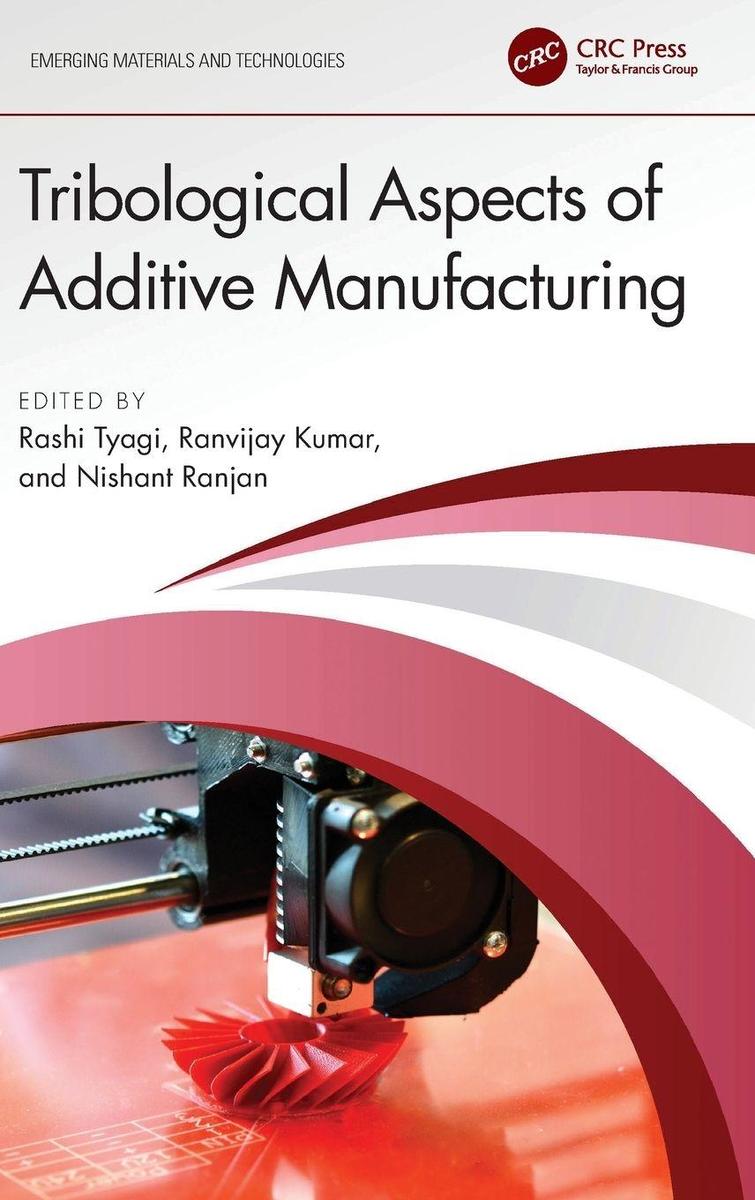
Tribological Aspects of Additive Manufacturing provides a technical discussion on the roles of the 3D printing process for processing polymeric-, metallic-, and ceramics-based additive manufactured products in order to improve the tribological properties. It explores design flexibility, waste minimization, and cost reduction.
Inhaltsverzeichnis
1. Tribological Study of 3D-Printed Thermoplastic Polymers. 2. Investigation on Tribology of Additively Manufactured Metal Part. 3. Tribological Properties of Polymer-Reinforced Matrix Composite Prepared by Additive Manufacturing. 4. Tribocorrosion Properties of Additively Manufactured Parts. 5. Future Trends in Laser Powder Bed Fusion Process for Tribological Applications. 6. Role of Natural Fiber-Based Composite on Wear and Friction Resistance. 7. Study on the Effect of Carbon Fiber-Reinforced Composites on Tribological Properties. 8. Impact of 3D Printing Process Parameters on Tribological Behaviour of Polymers. 9. Effect of the Tribological Properties on Structural Applications of 3D-Printed Thermoplastic Composites. 10. Effect of Surface Texturing on Tribological Behaviour of Additively Manufactured Parts. 11. Trends of Tribology in Biomedical Application of Additively Manufactured Parts. 12. Tribological Effect of 3D Printing in Industrial Applications. 13. Emerging Applications of 3D-Printed Parts with Enhanced Tribological Properties.