







Das eBook.de Hörbuch Abo - jederzeit, überall, für nur 7,95 € monatlich!
Jetzt entdecken
mehr erfahren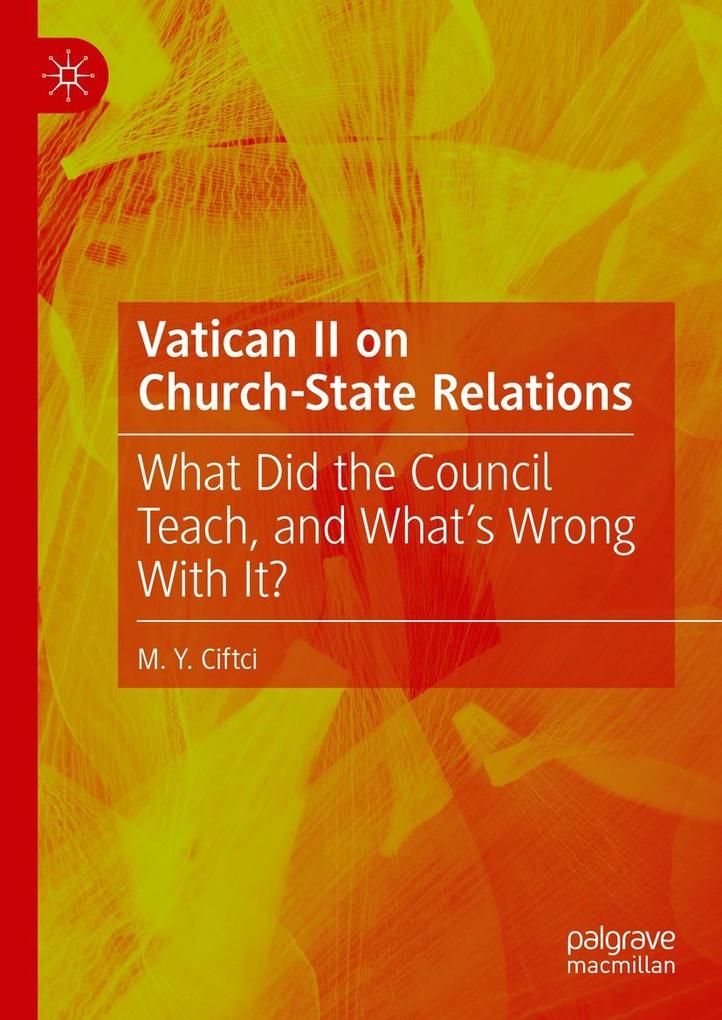
Should religion and politics be kept apart? What should be the relationship between the church and the state? M. Y. Ciftci answers these questions by studying the most important event in the recent history of the Catholic Church: The Second Vatican Council (1962-65).
The book provides a new interpretation of the Council's teaching on church-state relations to better appreciate its flaws and need for reform. By paying attention to the (often overlooked) importance given by the Council to the lay apostolate, it reveals how the Council did not reform, as is often thought, but retained a flawed conception of the laity's role in politics.
It then proposes a new framework for understanding church-state relations using the ressourcement method of returning to scripture and tradition, and by a critical dialogue with Oliver O'Donovan and various Protestant biblical scholars of the Powers in the New Testament. Ciftci shows how fruitful an self-consciously ecumenical approach can be for political theology. As most ressourcement theologians have overlooked political issues, and since ecumenical theology rarely touches on issues of church-state relations, this work makes an original contribution to the ressourcement project and to ecumenism.
Inhaltsverzeichnis
Vatican II on Church State Relations is a serious, original, and theologically ambitious monograph that reshapes the terms of debate. By refusing both liberal privatization and integralist nostalgia, and by recovering a missional, sacramental, and eschatologically tense vision of the Church s political vocation, Ciftci offers a compelling contribution to contemporary political theology. The book deserves careful attention from theologians, ethicists, and ecclesiologists seeking to think beyond the exhausted binaries that continue to frame postconciliar discussions of church and state. (Jan C. Bentz, Irish Theological Quarterly, May 20, 2026)
Ciftci cleverly succeeds in his two objectives: first, articulately presenting a survey of the Vatican II teaching on Church-State, and the inherent theological difficulties associated therein; and second, establishing the methodological and hermeneutical interventions for rectifying the errors of Vatican II, thus offering pathways for appreciating the close link between church and state. Overall, the book is an important contribution to church-state discourses. (Ignatius Nti-Abankoro, Reading Religion, readingreligion. org, August 5, 2025)
Es wurden noch keine Bewertungen abgegeben. Schreiben Sie die erste Bewertung zu "Vatican II on Church-State Relations" und helfen Sie damit anderen bei der Kaufentscheidung.