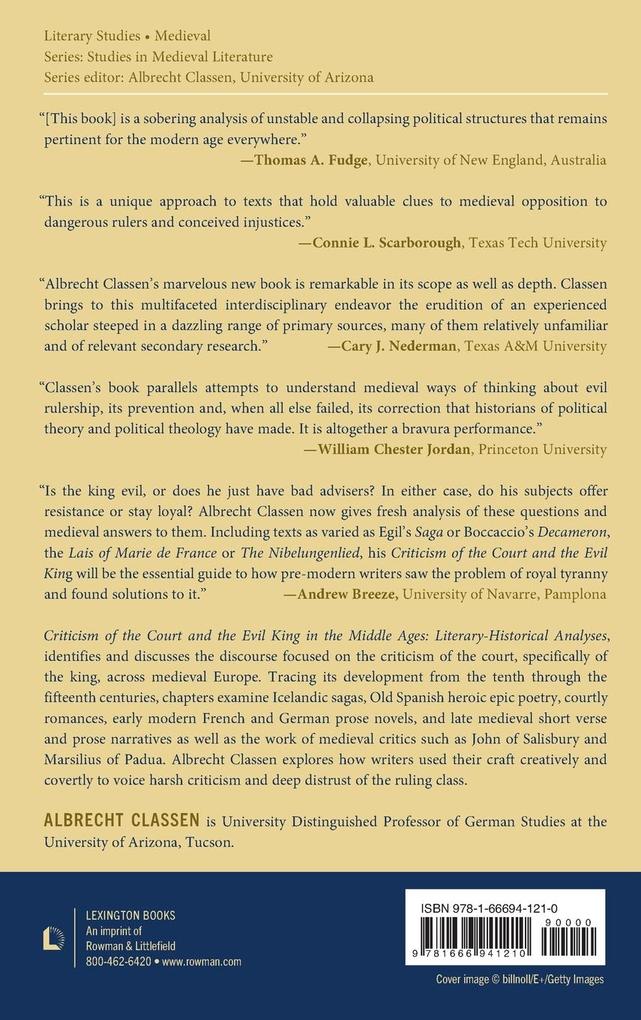
Examining literary narratives from the tenth through the fifteenth centuries, this book explores how writers used their craft to voice harsh criticism of the ruling class and unearths a deep distrust of kings and other authority figures during the Middle Ages.
Inhaltsverzeichnis
Introduction
Chapter One: The Medieval King, Monarchy, the Court, and Philosophical-Political Reflections. Unexpected Perspectives Toward a Critical Discourse: Political Reflections
Chapter Two: Waltharius: An Honest Warrior Fights Against an Evil King: Early Medieval Criticism of a Ruler
Chapter Three: The Neglectful, Ineffectual, Pathetic, and Useless King: Heinrich der Glîchezâre's Reinhart Fuchs and the Criticism of a Ruler. The Story of a Complete Failure
Chapter Four: Herzog Ernst and the Cruel Emperor: Criticism of an Unhinged Ruler
Chapter Five: Disappointment about the Fictional King: Criticism of the Royal Ruler in Marie de France's Lais
Chapter Six: A Tyrant King in the Viking World: Egil's Saga and Other Epic Poems
Chapter Seven: The Idealized King Proves to be a Miserable Creature: Political Criticism in the Old French Huon de Bordeaux
Chapter Eight: The Public Discussion of the King in Boccaccio's Decameron
Sacrosanct or Vile? The Banalization of Kingship in the Late Middle Ages
Chapter Nine: A Weak Husband, an Evil King, and a Miserable Character: The Downfall of Charlemagne in Late Medieval Prose Novels by Countess Elisabeth of Nassau-Saarbrücken and Others.
Königin Sibille and the Anonymous Malagis With an Interlude Focused on the Nibelungenlied
Epilogue
Bibliography
About the Author