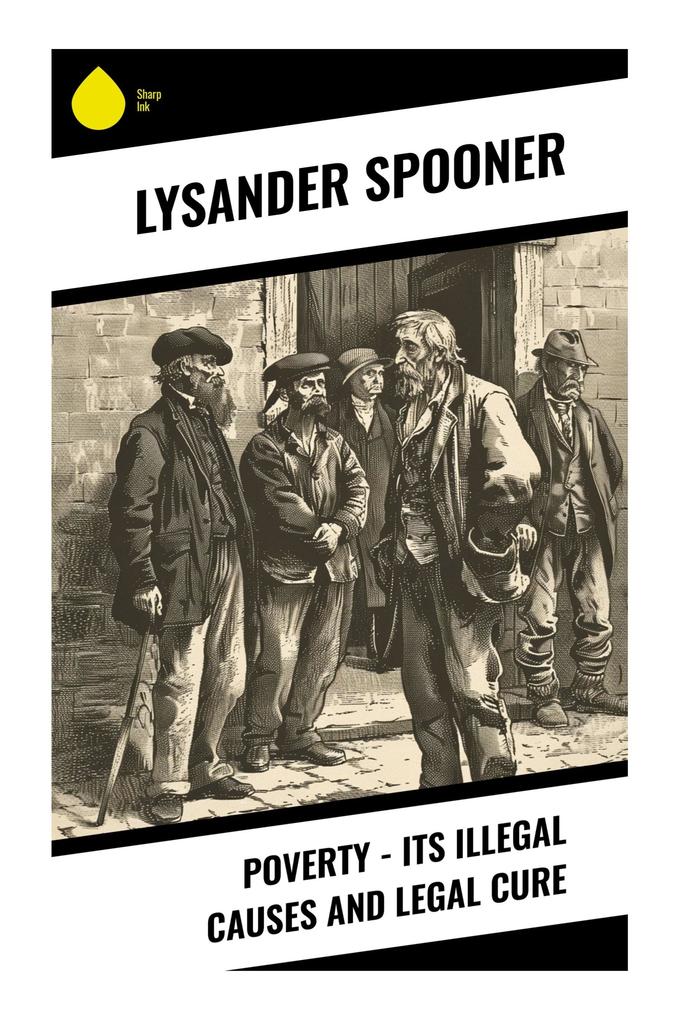
Poverty - Its Illegal Causes and Legal Cure is a forceful work of nineteenth-century political economy, arguing that widespread destitution is not a natural condition but the consequence of coercive legal arrangements. Spooner locates poverty in state-created monopolies-especially restrictions on credit, currency, and productive exchange-and proposes legal emancipation rather than charity as the remedy. Written in a lucid, prosecutorial style, the book belongs to the radical liberal tradition that joined natural-rights theory with economic critique. Lysander Spooner, an American jurist, entrepreneur, abolitionist, and uncompromising individualist, brought to this subject a lifelong suspicion of state privilege. His campaigns against slavery, postal monopoly, and constitutional authoritarianism shaped his conviction that law often protects entrenched interests while presenting itself as public necessity. His legal training and reformist temperament enabled him to treat poverty not sentimentally, but as an institutional wrong requiring structural redress. This book is recommended to readers interested in libertarian thought, legal history, and the moral foundations of economics. It remains valuable not because every proposal is contemporary policy, but because it asks a still urgent question: how many social miseries attributed to fate are actually manufactured by law?