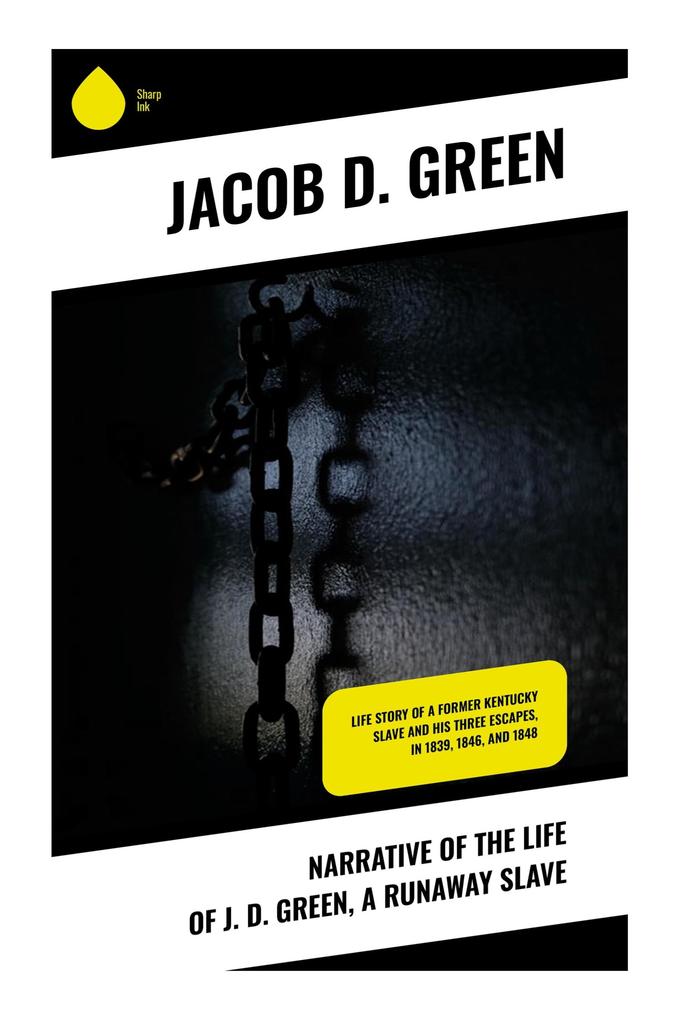
Narrative of the Life of J. D. Green, a Runaway Slave is a compact yet forceful slave narrative, tracing Green's experiences of enslavement, flight, pursuit, and self-emancipation. Written in the plain, urgent idiom characteristic of nineteenth-century abolitionist testimony, it combines personal recollection with moral indictment. Its episodic structure, emphasis on bodily danger, and appeals to Christian conscience place it within the transatlantic tradition of fugitive-slave narratives that sought to convert private suffering into public evidence against slavery. Jacob D. Green was himself a formerly enslaved man whose authority rested on lived experience rather than literary prestige. His movements across borders and his participation in abolitionist culture helped shape a narrative designed both to record survival and to persuade. Like many Black autobiographers of his era, Green wrote against systems that denied his personhood, literacy, mobility, and credibility. This book is recommended to readers interested in African American autobiography, abolitionist print culture, and the politics of witness. Brief but resonant, Green's narrative rewards close attention, not merely as historical documentation, but as a deliberate act of self-representation and resistance.