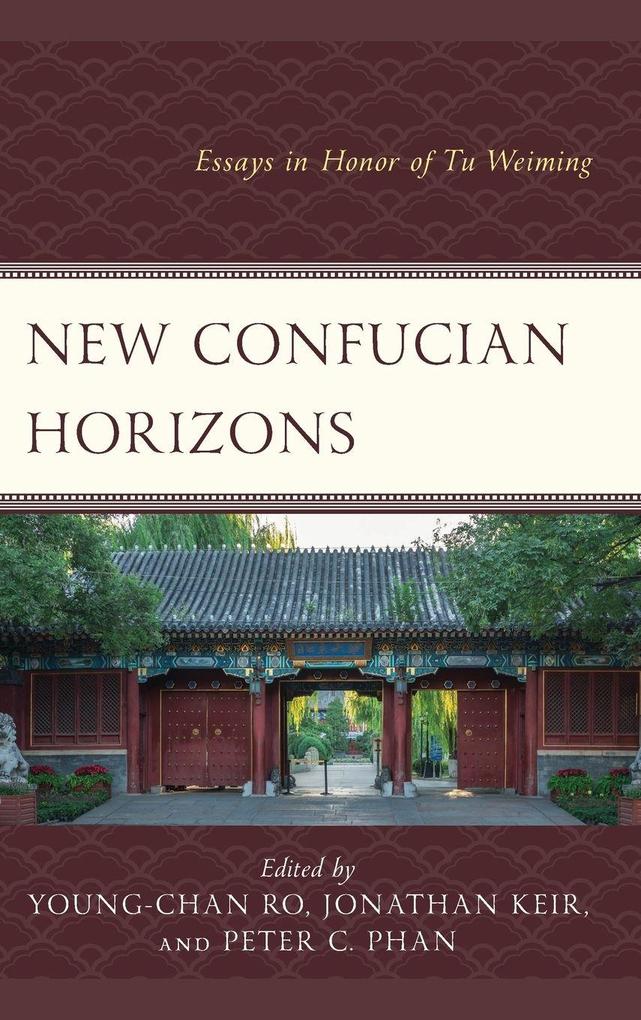
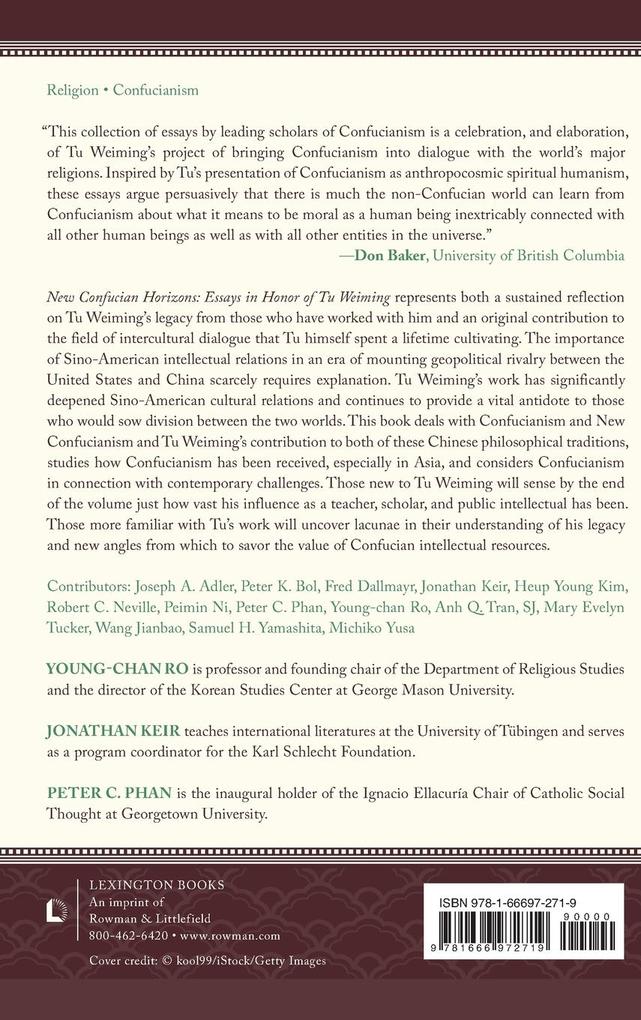
This book offers a reflection on Tu Weiming's legacy and deals with Confucianism and New Confucianism and Tu Weiming’s contribution to both of these Chinese philosophical traditions, studies how Confucianism has been received, especially in Asia, and considers Confucianism in connection with contemporary challenges.
Inhaltsverzeichnis
Introduction
Part I: Tu Weiming: A Confucian Life
Chapter 1: The Confucian Helicopter: An Overview of Tu Weiming's (Myriad) Affiliations and Innovations
Wang Jianbao
Chapter 2: Tu Weiming: In Lieu of an Intellectual Biography
Jonathan Keir
Chapter 3: Tu Weiming and Boston Confucianism
Robert C. Neville
Part II: Confucianism in Theory and Practice
Chapter 4: Confucianism and Democracy: Lessons from Tu Weiming
Fred Dallmayr
Chapter 5: Confucianism as a Religious Tradition: Linguistic and Methodological Problems
Joseph A. Adler
Chapter 6: As-If-Ism: A Confucian Model of Spirituality
Peimin Ni
Chapter 7: Reflections on Confucianism and Culture
Peter K. Bol
Part III: Historical Voyages
Chapter 8: Confucianism and Its Reception by Alexandre de Rhodes in Seventeenth-Century Vietnam
Peter C. Phan
Chapter 9: From Debate to Dialogue: Confucianism and Religious Pluralism in the Context of Christian-Confucian Relations
Anh Q. Tran
Chapter 10: Second Thoughts about Confucianism in Wartime Japan, 1937-1945
Samuel H. Yamashita
Chapter 11: D. T. Suzuki's Impressions of Chinese Buddhism (1934) as His Spiritual Journey
Michiko Yusa
Part IV: Future Challenges
Chapter 12: Confucian Cosmology and the Journey of the Universe
Mary Evelyn Tucker
Chapter 13: Advancing Humanity: Artificial Intelligence, Transhumanism, Confucianism, and Theo-Dao
Heup Young Kim
Chapter 14: Envisioning a New Humanity: Tu Weiming and Raimon Panikkar
Young-chan Ro
About the Contributors