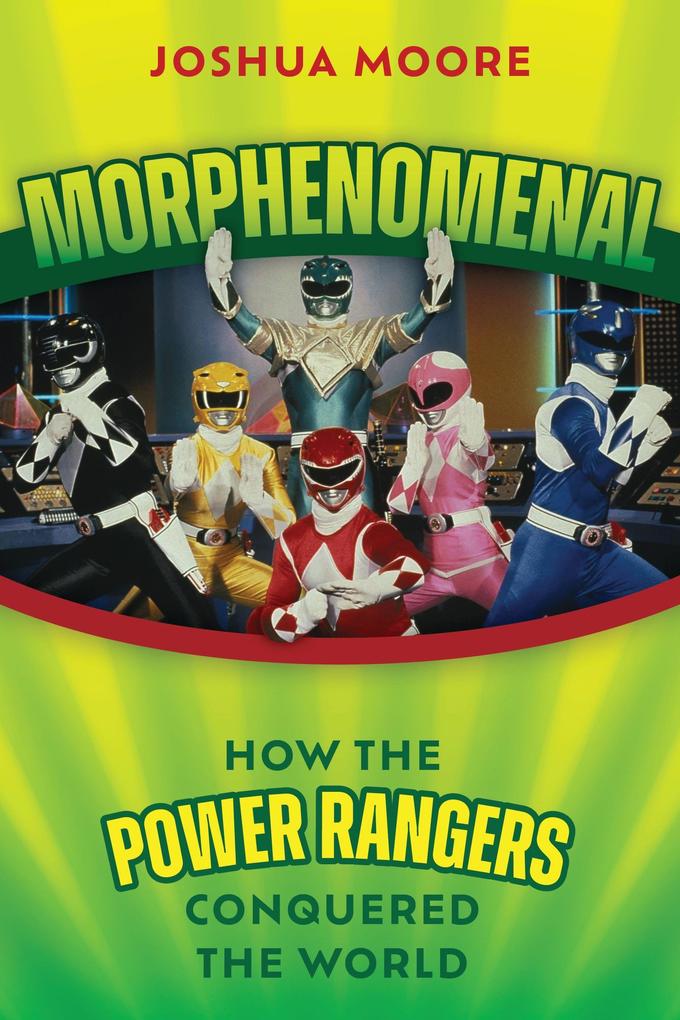
WHEN IT FIRST APPEARED ON AMERICAN TELEVISION SETS IN 1993, Mighty Morphin Power Rangers was like nothing else on TV. The brainchild of Israeli-American music producer Haim Saban, the show stitched together segments from the Japanese children's program Super Sentai with newly recorded live-action footage, and its unexpected popularity quickly cemented the Fox Kids Network's reputation as a pop-culture powerhouse. Garish, heartfelt, utterly strange, and bursting with irrepressible energy, the show was a dramatic departure from the animated fare that dominated kids TV at the time, and came closer than any program before-or since-to being a "live-action cartoon."
Three decades later, the Power Rangers are global icons and a billion-dollar business. In Morphenomenal, journalist and lifelong fan Joshua Moore delivers a deeply researched narrative history of Power Rangers-from its inception to today-and details milestone moments for the brand and show, as well as offering fresh looks at its thriving toy line and an adult fandom that can't get enough of those "teenagers with attitude." Drawing on original interviews, new research, and the kinds of insights that only a true devotee can bring, this is a bold and boisterous account of one of the most unusual and beloved franchises in pop-culture history.
Inhaltsverzeichnis
Contents< BR> A Note on Sourcing< BR> Introduction< BR> Chapter 1: The Rockstar< BR> Chapter 2: Day of the Dumpster< BR> Chapter 3: Teamwork< BR> Chapter 4: A Pressing Engagement< BR> Chapter 5: High Five< BR> Chapter 6: Green with Evil< BR> Chapter 7: A Pig Surprise< BR> Chapter 8: The Mutiny< BR> Chapter 9: A Monster of Global Proportions< BR> Chapter 10: The Power Transfer< BR> Chapter 11: Ninja Quest< BR> Chapter 12: Rangers in Reverse< BR> Chapter 13: Countdown to Destruction< BR> Chapter 14: A Parting of Ways< BR> Chapter 15: Fighting Spirit< BR> Chapter 16: One Last Second Chance< BR> Chapter 17: The Master Returns< BR> Chapter 18: Edge of Extinction< BR> Chapter 19: The End< BR> Chapter 20: Lightning Strikes< BR> Acknowledgements< BR> Interviews< BR> Bibliography