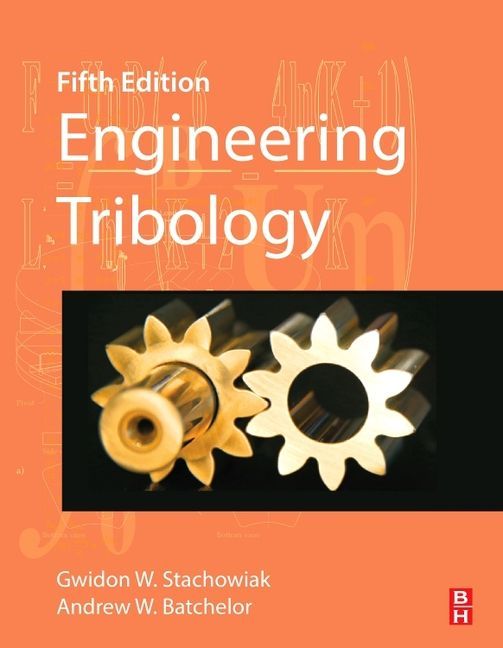
Engineering Tribology, Fifth Edition takes an interdisciplinary approach to key concepts and engineering implications of tribology, bringing together the relevant knowledge needed from different fields to achieve effective analysis and control of friction and wear. This edition has been updated to include new content on the computational evaluation of cavitation effects in hydrodynamic bearings, the electrical properties of lubricants, coverage of gas and foil bearings, local directional, fractal signature methods, tribochemistry and mechanical activation, removal of oxide films, models of mechanical activation, advancing tribology with artificial intelligence, modeling, and simulation, and much more.
Suitable as an introductory text, this book is also relevant for those working in applied chemistry and bioengineering.
Inhaltsverzeichnis
1. Introduction to Engineering Tribology< BR> 2. Physical properties of lubricants< BR> 3. Lubricants and their composition< BR> 4. Hydrodynamic lubrication< BR> 5. Computational hydrodynamics< BR> 6. Hydrostatic lubrication< BR> 7. Elastohydrodynamic lubrication< BR> 8. Boundary and extreme pressure lubrication< BR> 9. Solid lubrication and surface treatments< BR> 10. Fundamentals of contact between solids< BR> 11. Abrasive, erosive and cavitation wear< BR> 12. Adhesion and adhesive wear< BR> 13. Corrosive and oxidative wear< BR> 14. Fatigue wear< BR> 15. Fretting and minor wear mechanisms< BR> 16. Wear of non-metallic materials< BR> 17. Future directions in tribology< BR> 18. Appendix