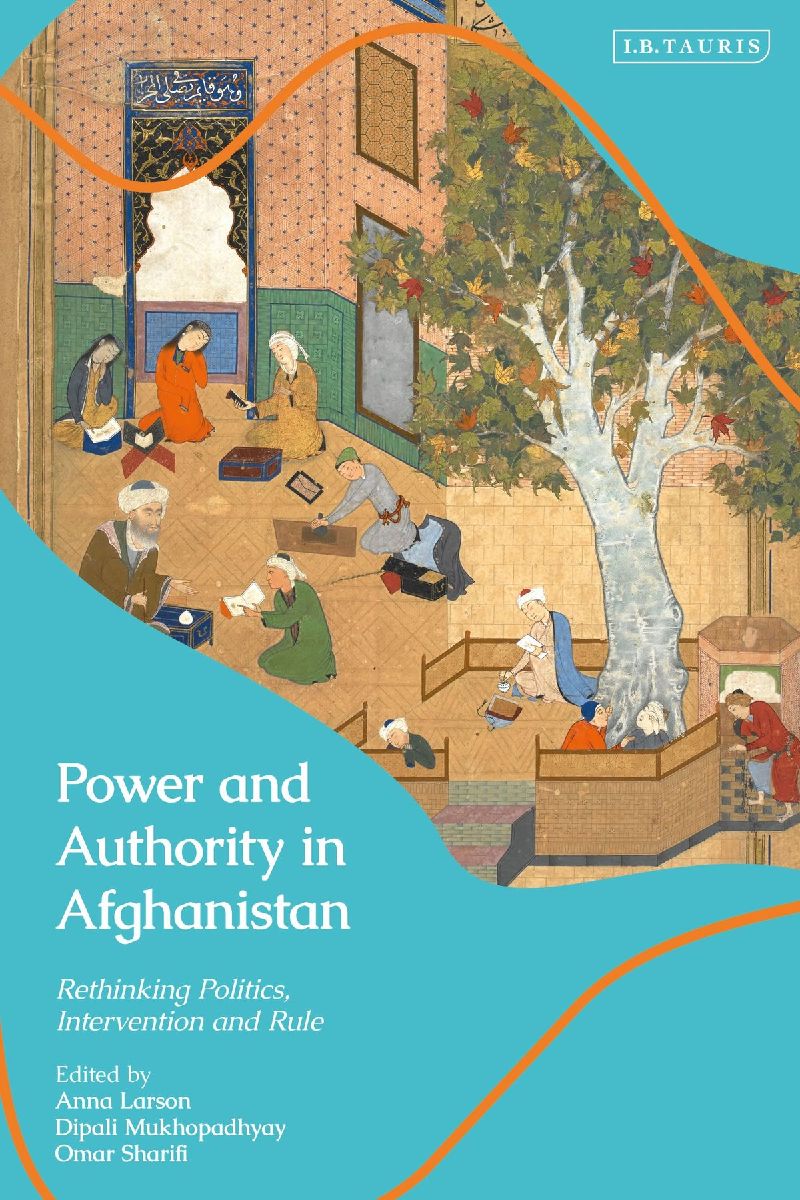
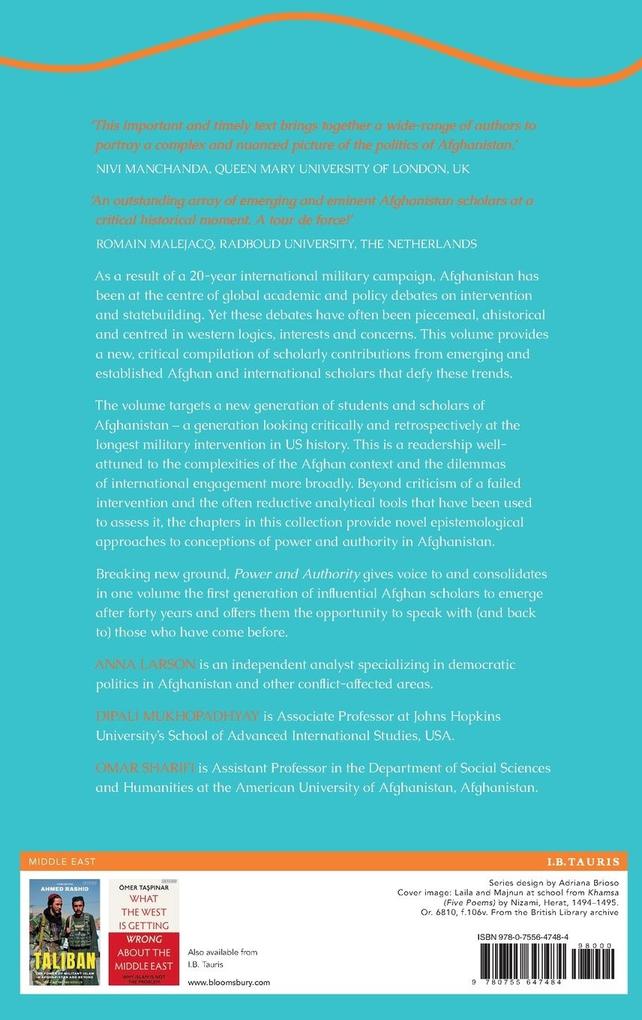
As a result of a 20-year international military campaign, Afghanistan has been at the centre of global academic and policy debates on intervention and statebuilding. Yet these debates have often been piecemeal, ahistorical and centred in western logics, interests and concerns. This volume provides a new, critical compilation of scholarly contributions from emerging and established Afghan and international scholars that defy these trends.
The volume targets a new generation of students and scholars of Afghanistan- a generation looking critically and retrospectively at the longest military intervention in US history. This is a readership well-attuned to the complexities of the Afghan context and the dilemmas of international engagement more broadly. Beyond criticism of a failed intervention and the often reductive analytical tools that have been used to assess it, the chapters in this collection provide novel epistemological approaches to conceptions of power and authority in Afghanistan.
Breaking new ground, Power and Authority gives voice to and consolidates in one volume the first generation of influential Afghan scholars to emerge after forty years and offers them the opportunity to speak with (and back to) those who have come before.
Inhaltsverzeichnis
List of Figures< BR> List of Contributors< BR> Acknowledgements< BR> Abbreviations< BR> General Maps< BR> < BR> < BR> Introduction: Rethinking Power and Authority in Afghanistan < BR> Anna Larson< BR> < BR> Section 1: Logics of Rule and Institutional (Dis-)Continuities < BR> < BR> 1. Stability as Strength in the Musahiban Era< BR> Thomas Barfield< BR> < BR> 2. The Taliban, Women and the Hegelian Private Sphere (previously published, 2003)< BR> Juan Cole< BR> < BR> 3. Legitimizing Power in Afghanistan< BR> Haroun Rahimi < BR> < BR> 4. Unlocking the Taliban Puzzle: Traditions and Fundamentalisms< BR> Mujib Abid< BR> < BR> 5. Neopatrimonial Perspectives on Political Structures in Afghanistan< BR> Zinab Attai, Maryam Jami and Boshra Moheb< BR> < BR> 6. Civil-Military Relations, Battlefield Performance, and the Disintegration of Afghanistan's Security Forces< BR> Basir Yosufi< BR> < BR> Section 2: Intervention and its Legacies < BR> < BR> 7. Ghost Schools: Imperial Debris and the Erasure of Educated Women< BR> Marya Hannun< BR> < BR> 8. Peace Building and State-building in Afghanistan (previously published, 2006)< BR> Barnett R Rubin< BR> < BR> 9. Afghan Subjectivities and U. S. Foreign Policy: Postcolonial Perspectives< BR> Nasema Zeerak< BR> < BR> 10. Leased Power and Vague Authority: The Political Culture and Economy of Rule in Afghanistan < BR> Nazif Shahrani< BR> < BR> 11. Legitimacy by Design< BR> Astri Suhrke< BR> < BR> 12. Brokerage, Business and the Continuities in Power< BR> Noah Coburn and Arsalan Noori< BR> < BR> 13. Power, Ideas, and the 'Taliban 2. 0' Myth< BR> William Maley< BR> < BR> < BR> Section 3: The Politics of Recognition and Resistance < BR> < BR> 14. The State, the Clergy, and British Imperial Policy in Afghanistan during the 19th and Early 20th Centuries< BR> Senzil Nawid< BR> < BR> 15. The Pushback against the Hazara Rise in Afghanistan< BR> Ali Yarwar Adili< BR> < BR> 16. Minority Games: Intergroup Power Imbalances in a Nation of Competing Identities< BR> Annika Schmeding< BR> < BR> 17. Inheriting Hegemonic Nobility: Urban Elite Lineage and Legitimacy< BR> Adam H. Dehsabzi< BR> < BR> 18. Failed Democracy in Afghanistan: Rethinking Deliberation and Pluralism< BR> Omar Sadr< BR> < BR> 19. Mujahidin Memory and the Legacies of Wartime Governance in Afghanistan< BR> Munazza Ebtikar< BR> < BR> < BR> Afterword< BR> Dipali Mukhopadhyay