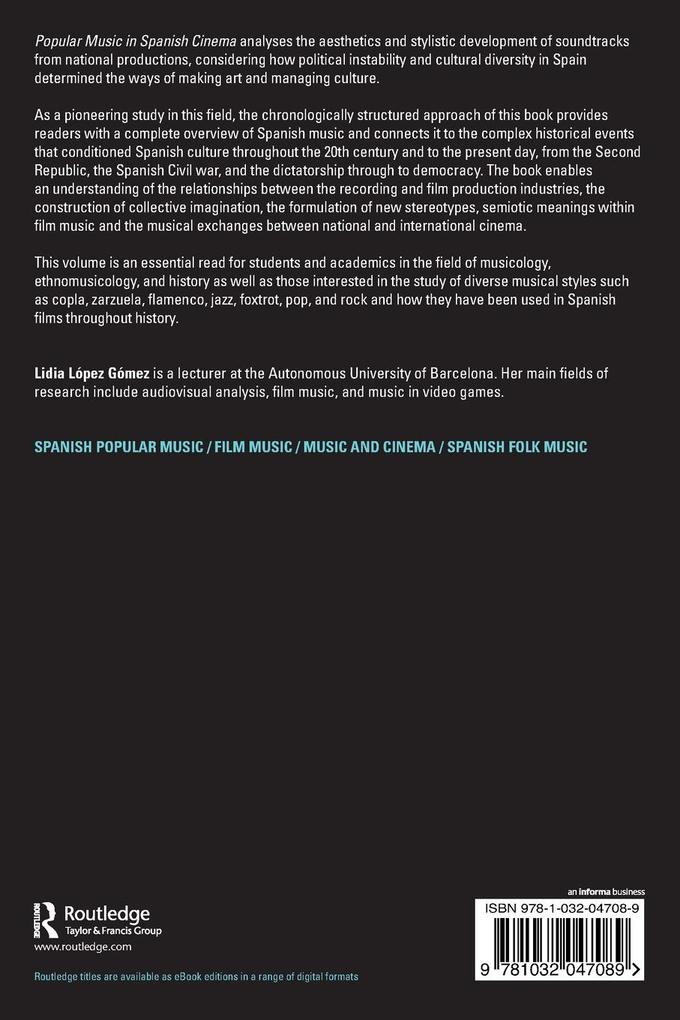
Popular Music in Spanish Cinema analyses the aesthetics and stylistic development of soundtracks from national productions, considering how political instability and cultural diversity in Spain determined the ways of making art and managing culture.
Inhaltsverzeichnis
List of figures
List of tables
List of Contributors
Introduction
The Second Republic: Spanish popular songs take to the screen.
- Cinema and National imaginary: the musical representation of Andalusia in films at the beginning of the 20th century.
- Copla and Flamenco in Spanish Republican cinema: the cantaor Angelillo and the director Luis Buñ uel in the film production company Filmó fono.
- Forces of Freedom: Carmen Amaya in La Hija de Juan Simó n (1935).
Evasion and entertainment. Jazz, Pop, and musical films during Civil war and Franco's Dictatorship years.
- From Spain to Germany (and back to Spain): songs in the Spanish musical films of the 1930s.
- Singing in Misery: Jazz and Popular Music in Spanish Postwar Comedies.
- Popular music and ideology in the Spanish musical films of the 1950s.
Building Bridges towards modernity. Copla and Flamenco revisited in the search for a Spanish national identity.
- Pop Music in the Spanish musical cinema of the 1960s.
- The kids take to the screen. A review of the formulas used in cine con niñ o and its main protagonists in 1960s musical cinema.
- Canció n españ ola in cinema: Manolo Escobar, between tradition and modernity.
Democracy and change of Century. New musical perspectives and nostalgia forgathered.
- From mythification to eroticism: copla on the big screen.
- The spirit of (almost) forgotten Spain: music and women in the early films of Pedro Almodó var
21st century Spain. Sonic influences and transmedia productions.
- Through the eyes of the new Century. Music and collective memory in contemporary films set in the Spanish Civil war.
- Pop songs in Spanish musical films during the 21st Century.
- Exploring transmedia storytelling through original songs in award-winning Spanish films.
Glossary
Index