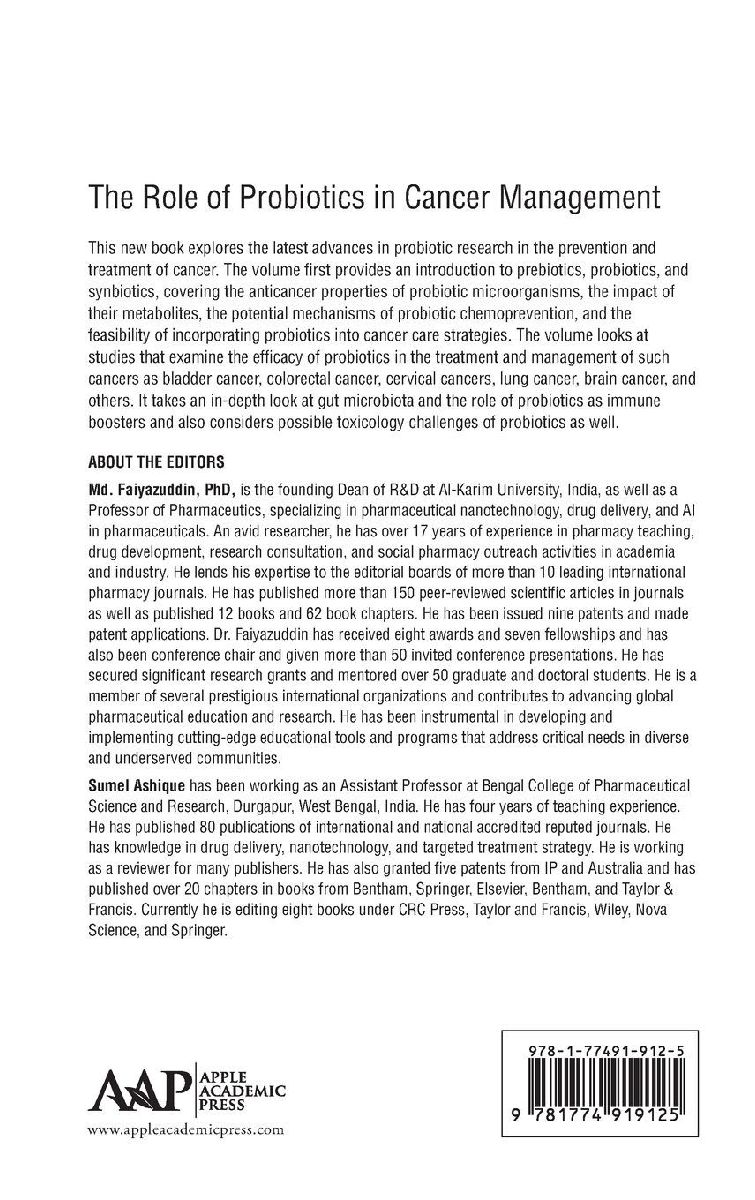
Discusses effectiveness of probiotics in preventing and supporting treatment of cancer. Examines use of probiotics in cancer prevention and support anti-cancer therapies. Covers introduction to prebiotics, probiotics, and synbiotics, anticancer properties of microorganisms, potential mechanisms of probiotic chemoprevention, and more.
Inhaltsverzeichnis
Introduction to Prebiotics, Probiotics, and Synbiotics 1. Probiotics and Their Potential Effects on Cancer Management 2. Probiotics as a Promising Candidate for the Management of Colorectal Cancer 3. Correlation Between Gut Microbiota and Cancer 4. Importance of Probiotics in Gut Microbiota for the Management of Cancer 5. Role of Prebiotics and Probiotics in Protection against Cervical Cancers 6. Probiotics for the Mitigation of Inflammation-Based Lung Cancer 7. Importance of Synbiotics for the Management of Colorectal Cancers 8. Correlation Between Reactive Oxygen Species (ROS), Inflammation, and Probiotics 9. Probiotics: The Nonpathogenic Microorganisms with a Functional Role in Bladder Cancer Management 10. Immune System Modulation by Probiotics: An Account of Brain Cancers 11. Functional Role of Probiotics in Cancer Prevention and Treatment as Well as Their Role as Immune Boosters 12. Toxicology of Probiotics: Challenges and Future Prospects 13. Impact of SARS-CoV-2 on Cancer Patients and the Role of Probiotics for Management and to Boost the Immune System