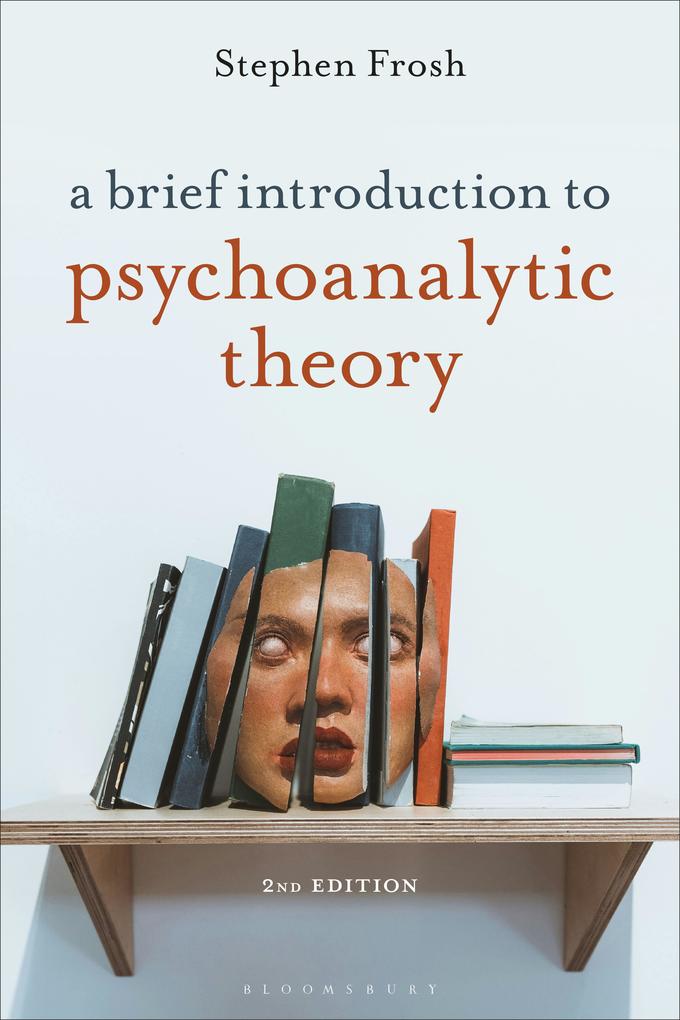
Psychoanalytic theory remains hugely influential to our understanding of the mind and human behaviour. It provides a rich source of ideas for therapeutic practice while offering dramatic insights for the study of culture and society, with applications that extend across film, literature and politics. Taking you step-by-step through Freud's original ideas and their evolution, this book explores the birth of psychoanalysis and provides a clear account of fundamental psychoanalytic concepts.
New to this edition:
· A new chapter on class, gender and race
· Expanded sections on neuropsychoanalysis, relational theory and trauma
· Updated throughout to offer a succinct exploration of the history, development and current standing of psychoanalysis
Written by a highly respected authority in the field, this updated edition is essential reading for trainees in counselling and psychotherapy, as well as for students across the arts, humanities and social sciences.
A Brief Introduction to Psychoanalytic Theory is also available in audiobook format from audiobook retailers.
Inhaltsverzeichnis
Preface to the Second Edition< BR> < BR> PART ONE: FREUDIAN THEORY< BR> Chapter 1: The Appeal of Psychoanalysis< BR> Chapter 2: Main Schools of Psychoanalysis< BR> Chapter 3: What Freud was Trying to Do< BR> Chapter 4: The Freudian Unconscious< BR> Chapter 5: Sex, aggression, life and death< BR> Chapter 6: Repression and Other Defences< BR> Chapter 7: The Structure of the Mind: id, ego, superego. < BR> Chapter 8: Oedipus, Masculinity, Femininity< BR> Chapter 9: Psychopathology: What Makes Us Sad (and Mad)< BR> < BR> PART TWO: DEVELOPMENTS IN PSYCHOANALYTIC THEORY< BR> Chapter 10: Psychoanalysts after Freud< BR> Chapter 11: Attachment, Mentalisation and Neuropsychoanalysis< BR> Chapter 12: The Principles of Object Relations Theory< BR> Chapter 13: Mourning, Melancholia, Loss and Trauma< BR> Chapter 14: The Paranoid-Schizoid Position and Other Extremes< BR> Chapter 15: Projection and Psychosis< BR> Chapter 16: Imaginary, Symbolic and Real: Lacanian psychoanalysis< BR> < BR> PART THREE: THEORY OF THERAPY < BR> Chapter 17: Interpretation and Transference < BR> Chapter 18: Countertransference and Intersubjectivity < BR> < BR> PART FOUR: WIDER APPLICATIONS< BR> Chapter 19: Psychoanalysis, Film and Literature< BR> Chapter 20: Politics and Society< BR> Chapter 21: Class, Gender and Race< BR> < BR> Conclusion< BR> Recommended Reading