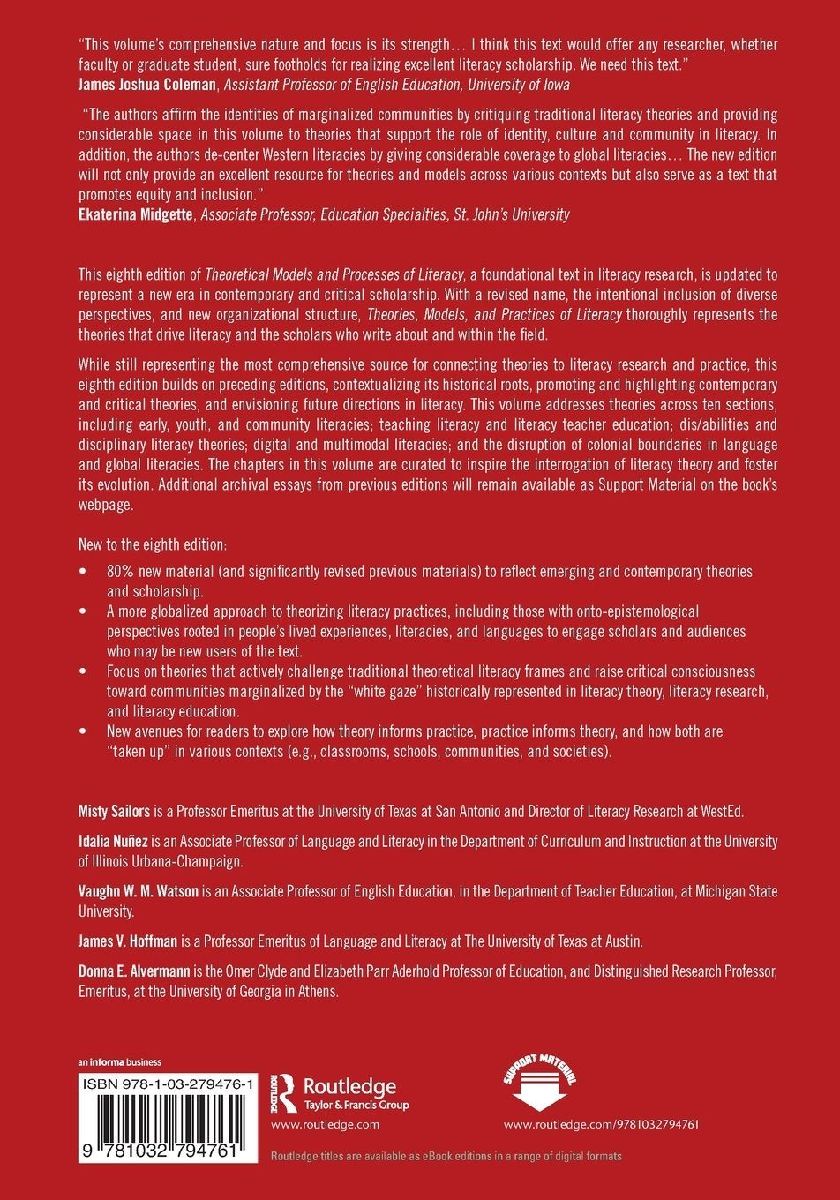
The 8th Edition is updated to represent a new era in contemporary critical scholarship. With a revised name, the intentional inclusion of diverse perspectives, and new organizational structure, Theories, Models, and Practices of Literacy represents the theories that drive literacy and the scholars who write about and within the field.
Inhaltsverzeichnis
Section 1: Disrupting Colonial Boundaries Through Theories of Languaging 1. Complicating Postcolonial Logics: Toward Transraciolinguistic Justice in Literacy Instruction 2. Anchoring Translanguaging Theory in Our Own Testimonios 3. Untapped Possibilities: Intersectionality Theory, Literacy Research, Teacher Education, and Teaching Section 2: Young Children's Literacies 4. Rethinking (Il)literate Bodies: Critical Posthumanism and Minoritized Children's Literacies 5. Play as the Literacy of Children: Imagining Otherwise in Constrained Classrooms 6. The Simple View of Reading is Not So Simple: Fundamental Problems and Suggested Alternatives Section 3: Youth Literacies 7. Afrofuturist Literacies and the Textual Geographies of Black Futures 8. Supporting Youth's Culturally Relevant & Sustaining Peer Interactions in Literacy Teaching and Learning 9. Playing with(in) Platforms: A Sociomaterial Perspective on Literacy and Video Games 10. Positioning Youth: Contemporary Waves of Theory Building in Writing and Writing Development Section 4: Disciplinary Literacy 11. Noticing for Equity in Disciplinary Literacy Instruction 12. Reimagining Science Literacies with Performing Arts Practices: The Salience of the Body 13. Broadening Theories of Disciplinary Literacy to Include Young Children Section 5: Home and Community as Sites of Critical Literacies 14. From las Semillas to el Á rbol: Cultivating a Borderlands Biliteracies Framework 15. The Creative Artistry of Home as Fugitivity 16. A Communal Pedagogy of Resistance and Its Communal Organizing Literacies: Theorizing the Practices of Latine/x Immigrants' Organizing Section 6: Literacy Teaching to Literacy Teacher Education: Personal and Professional Journeys into Theory and Practice 17. Radically Reimagining Teacher Education Through Embodiment and Improvisation 18. Coalitional Counternarratives: Advancing Justice-Oriented Literacy Teacher Preparation Through CRT Methodologies and Action Research in Collective Spaces 19. Third Space, Boundary Crossing, and Hybrid Space as Theoretical Frameworks for Research into Transformative Literacy Teacher Preparation Section 7: Introduction: (Re)Theorizing: Reading Disabilities 20. A Historical Perspective on Theoretical Frameworks for Reading Disability 21. Neurological Queerness: A Guiding Theoretical Framework for Justice-Oriented Dis/ability and Literacy Research 22. Meaning-Making at the Margins: DisCrit in and Through Early Literacy Research and Practice Section 8: Futuring, Pasts, and Presence: Digital Lives, Worlds, and Literacies 23. Black Girls, Blogs, and Books: Toward an Urban Digital Literacies Framework 24. Envisioning and Enacting Rightful Literary Presence with Immigrant Youth as Everyday Teaching Practice 25. Caught Up in the Moment: Seeking Magic in Literacy Research Section 9: Transglobal, Multimodal Lives, Texts, and Literacies 26. To Play as One Does: Affirming Affective Positionalities to Address Social Justice Issues 27. Thinking Together: Unsettling Knowledge Hegemonies Through Intentional Epistemic Partnerships in Literacy Research and Practice 28. African Orality and Storytelling as Theoretical Framework and Approach in Literacy Research and Education Section 10: Global Literacies 29. Advancing Theoretical Perspectives on Transnationalism in Literacy Research: Theorizing Inside the Racial Turn and Postsecondary Education 30. Critical Literacy, Pedagogy, and Democratic Education 31. Precarity: Theorizing Practices of Critical Media Literacy for a More Just Future