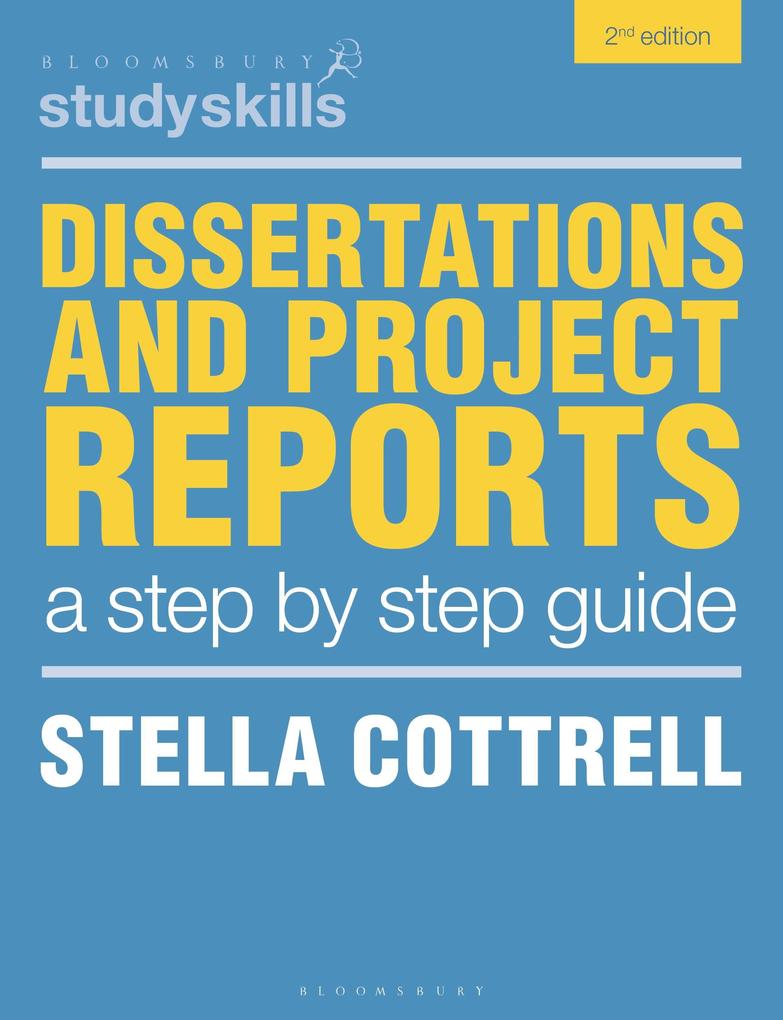
Bestselling author Stella Cottrell taps into her tried and tested formula for learning and brings students the essential guide to producing top-quality dissertations and project reports.
The book breaks down this process into manageable chunks and covers everything from preparation and planning through to conducting research and writing up the finished article. Packed with dozens of hands-on activities and quotes from real students, this book demystifies dissertations and project reports and helps ensure that the process is an enjoyable and rewarding experience. The second edition has been updated to provide guidance on working effectively with AI tools as part of the research process. It also features additional material on delivering presentations and preparing for an oral exam. Recognising that the process of completing a research project can be stressful, the second edition contains a brand new chapter on self-care and managing wellbeing.
This is an invaluable resource for students of all levels embarking on a dissertation, project report or other piece of extended writing. Its interdisciplinary approach means it is the ideal companion for students, regardless of the subject they are studying.
Inhaltsverzeichnis
Introduction < BR> < BR> Part 1. Preparation and planning < BR> 1.'Where do I start?' < BR> 2. What skills will I need? < BR> 3. What makes a good dissertation or research project? < BR> 4. Project manage your dissertation < BR> 5. Managing yourself for the task < BR> 6. Self-care: managing wellbeing and stress < BR> 7. Using time effectively < BR> 8. Working with your supervisor < BR> < BR> Part 2. Developing your proposal < BR> 9. Understanding the assignment brief < BR> 10. Ethical considerations < BR> 11. Using AI tools for research assignments < BR> 12. Choosing your topic and title < BR> 13. Literature search and review < BR> 14. Principles of good research < BR> 15. Methodological approaches < BR> 16. Writing your research proposal < BR> < BR> Part 3. Conducting your research < BR> 17. The evidence base < BR> 18. Working with participants < BR> 19. Experiments < BR> 20. Observations < BR> 21. Surveys and questions < BR> 22. Interviews < BR> 23. Case studies < BR> 24. Interpreting your findings < BR> < BR> Part 4. Writing up and presenting your findings < BR> 25. Your writing strategy < BR> 26. Getting the structure right < BR> 27. Fine-tuning your writing < BR> 28. Making a presentation < BR> 29. Preparing for an oral exam