









Das eBook.de Hörbuch Abo - jederzeit, überall, für nur 7,95 € monatlich!
Jetzt entdecken
mehr erfahren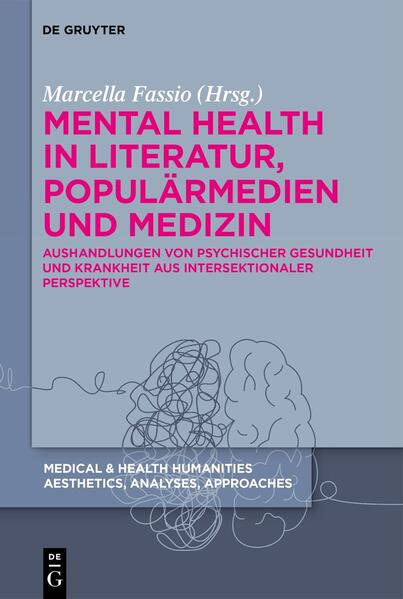
Over the last decades, the medical and health humanities have established themselves as vibrant interdisciplinary fields. Responding to these developments, the series seeks to encourage further innovation by stressing three points.
First, in looking at health and illness as a spectrum of cultural practices, it sets out to spotlight both individual and collective experiences. With that, it draws attention to the questions of inequality and social justice and expands the purview of current research to include more-than-human subjects, entanglements, and perspectives.
Second, it aims to broaden the current cultural and geographical scope beyond Western cultures and Western medicine to address different cultural and medical imaginaries as they can be found, for instance, in the Global South and Eastern Europe.
Third, it emphasizes the historical and aesthetic dimensions of the expression of illness experience. With this, it draws attention to a variety of forms and media used in this context and decidedly goes beyond the narrow focus on illness narratives. This attention to the aesthetic dimension of medical and health humanities has significant consequences on the methodological level, since it opens up new spaces for conversations between media analysis, artistic practice, and empirical research.
Encompassing monographs, edited collections, and critical explorations either in English or German, the peer-reviewed series offers ground-breaking interventions into the field, well-focused multidisciplinary dialogues as well as in-depth, methodologically and theoretically innovative studies.
Der Band nimmt die Aushandlung und Repräsentation von Mental Health und Mental Illness in Literatur und Medizin aus intersektionaler Perspektive in den Blick. Dabei wird der Fokus insbesondere auf die Verbindung von Mental Health zu Gender, Klasse, Rassismus und Alter gelegt. Neben der historischen Perspektive auf literarische Auseinandersetzungen mit psychischen Erkrankungen berücksichtigt der Band zudem gegenwärtige Verhandlungen von Mental Health und Illness. Der Band widmet sich dabei u. a. folgenden Fragen: Wer erzählt und spricht und aus welcher Position? Welche politische Dimension hat die literarisch-medizinische Verhandlung von Mental Health? Wie ist das Verhältnis von Selbstdiagnose und (medizinischer) Fremddiagnose in den Texten? Welche Auswirkungen hat die Textsorte, das Genre bzw. Medium auf das Erzählen von Mental Health? Welche Topoi, Motive, Erzählverfahren werden verwendet? Neben fiktionalen und autobiografischen Erzähltexten sowie medizinischen und aktivistischen Schriften nehmen die Beiträge des Bandes Lyrik, Filme und digitale Spiele in den Blick. Der Band nähert sich den hier aufgerufenen Fragestellungen aus einer interdisziplinären Perspektive, wobei einerseits literatur- und medienwissenschaftliche Betrachtungsweisen und andererseits medizin- und geschlechterhistorische Perspektiven im Fokus stehen.
Es wurden noch keine Bewertungen abgegeben. Schreiben Sie die erste Bewertung zu "Mental Health in Literatur, Populärmedien und Medizin" und helfen Sie damit anderen bei der Kaufentscheidung.