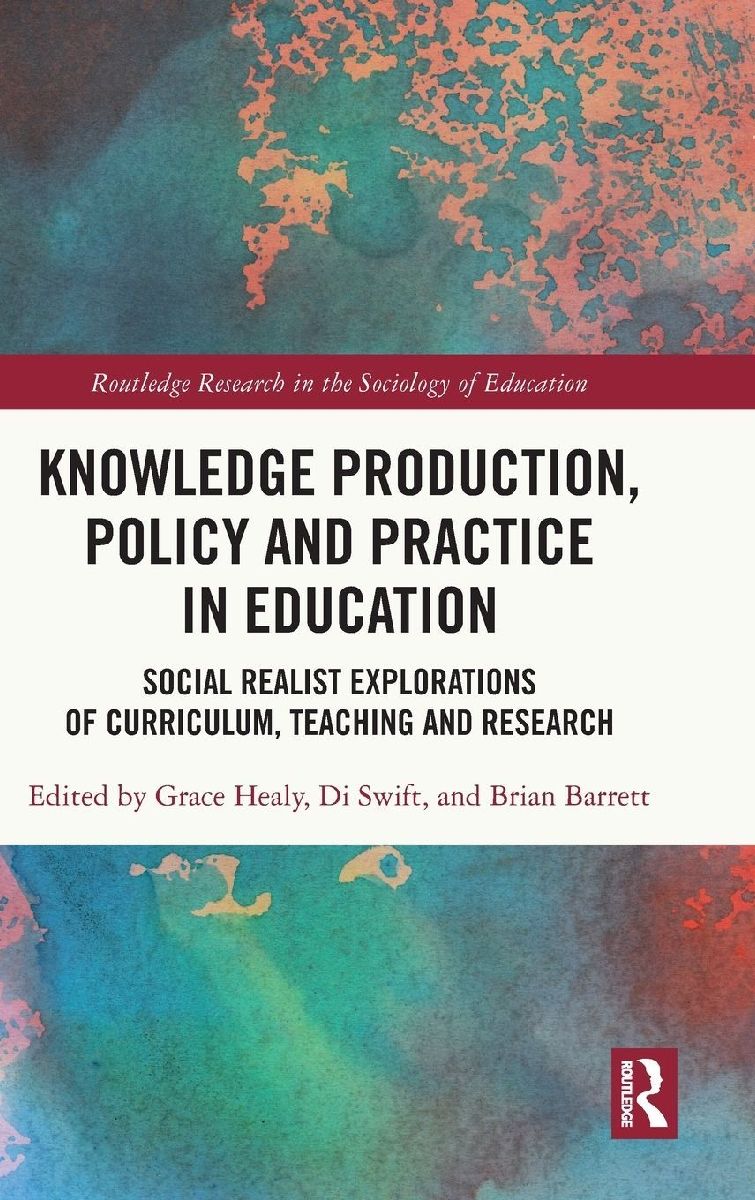
This book brings together theoretical and empirical enquiries into curricula, pedagogy and assessment, informed by the influential traditions of social realism and Basil Bernstein's sociology of education. It provides tools for understanding persistent educational inequalities and approaches to inclusive educational systems.
Inhaltsverzeichnis
1 Introduction: Mapping the explorations
Grace Healy, Di Swift and Brian Barrett
Part I: Knowledge production and practice
2 Against the closing of educational thought: Open concepts and educational research
Brian Barrett and Jim Hordern
3 Exploring Bernstein's conception of 'framing' for researching students' epistemological access in digitally-mediated learning environments
Lara Karassellos
4 Developing recognition for teachers' intellectual work: A view on recontextualisation that starts from the teacher
Grace Healy
Part II: Knowledge and the curriculum
5 Can history textbooks be a source of 'powerful knowledge'?: The case of Jerzy Popie¿uszko in Poland
Dobrochna Hildebrandt-Wypych and Daria Hejwosz-Gromkowska
6 Re-imagining the curriculum: A case study of the knowledge turn in New Zealand and Flanders
Jasper Nijlunsing, Elizabeth Rata, Astrid Geudens, Tim Surma, Daniel Muijs and Claudio Vanhees
7 An analysis of the pedagogic discourse in a Brazilian curriculum proposal for Portuguese language teaching
Cláudia Valentina Assumpção Galian and Émerson de Pietri
Part III: Knowledge in professional contexts
8 Challenging genericism: What is at stake for curriculum and teacher development?
Christine Counsell and Grace Healy
9 Finnish primary teachers amidst the power struggles of the pedagogic device
Amna Khawaja
10 Roles of vocational teachers and teacher educators in knowledge production and exchange
Gavin Moodie and Leesa Wheelahan
11 Pedagogy, pedagogic relations and professionalisation in teacher education
Di Swift
Part IV: Conclusion
12 Furthering our explorations of knowledge production policies and practices
Grace Healy, Di Swift and Brian Barrett