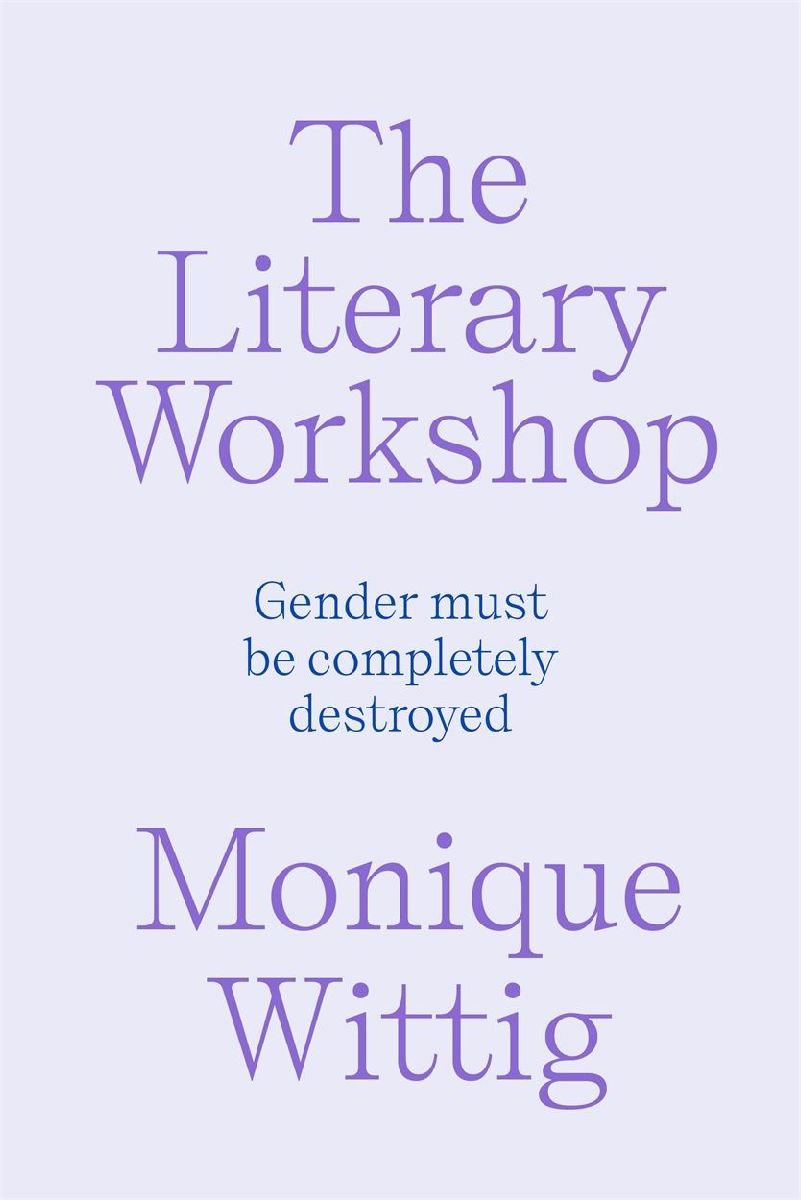
The Literary Workshop takes readers inside Monique Wittig’s creative process, unlocking the practice of writing both in material and political terms. Wittig provides her most complete account of how literature and politics work together. Part of the generation that revolutionized French literature, Wittig reveals the secret of her craft: that the work a writer does with language is itself a form of resistance.
Born and raised in France, Monique Wittig (1935–2003) was a driving force in second-wave feminism and one of the most brilliant authors of her generation. A provocative thinker, she famously declared that lesbians are not women and introduced women into a materialist framework by treating them as a class. Wittig is the author of, among other titles, The Straight Mind, Les Guérillères, and The Lesbian Body. Her debut novel, The Opoponax, won Le Prix Medicis.
Inhaltsverzeichnis
FOREWORD by Sande Zeig< BR> NOTE ON THE TRANSLATION by Ann Jefferson< BR> < BR> THE LITERARY WORKSHOP< BR> INTRODUCTION< BR> Proposition 1< BR> On The Heterogeneity and the Instability of the Components Present< BR> Proposition 2< BR> On the Materiality of Language< BR> Proposition 3< BR> On the Effect of Abstract Philosophical Categories on Social Reality< BR> Proposition 4< BR> On the Various Effects of Physical Language< BR> THE LITERARY WORKSHOP< BR> THE SOCIAL CONTRACT< BR> PRE-EXISTING FORMS: LITERATURE< BR> WORK ON LANGUAGE< BR> 1. From Conventional Words to Raw Words< BR> 2. Material Words< BR> 3. Signifieds< BR> PHILOSOPHICAL CATEGORIES: THE EXAMPLE OF GENDER< BR> < BR> CONCLUSION< BR> < BR> THE MAKING OF WITTIG’ S WORKSHOP by Christine Planté