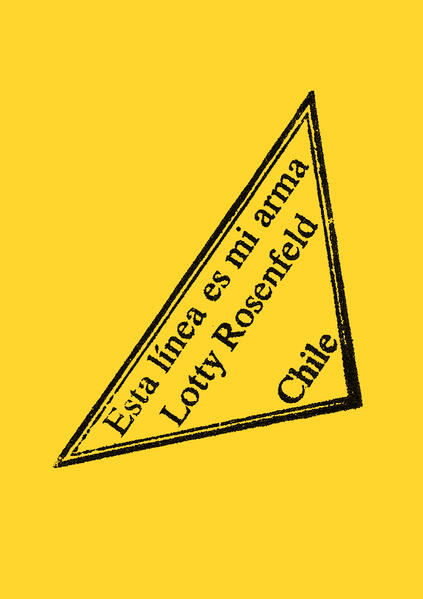
"Lotty Rosenfeld. Esta línea es mi arma" for the first time provides insights into the personal archive and family history of the Chilean concept artist, feminist, and political activist Lotty Rosenfeld (1943-2020). Influenced by her family's life in exile, growing up in the shadow of loss and resistance, she developed a radical artistic practice under the Pinochet dictatorship in the 1970s. Using the simplest of resources-adhesive tape, lines, and crosses-she transformed streetscapes into places of protest and collective memory. Her "symbolic file of disobedience" brought into question the visual logic of power and transformed art into an instrument of political involvement. The publication combines personal memories with public statements and traces the Rosenfeld family's journey from a bourgeois Jewish life in Breslau through exile to a new beginning in Chile-and shows why her white line was more than just a symbol: it was a weapon of resistance. "Lotty Rosenfeld. Esta línea es mi arma" eröffnet erstmals den Blick in das persönliche Archiv und die Familiengeschichte der chilenischen Konzeptkünstlerin, Feministin und politischen Aktivistin Lotty Rosenfeld (1943-2020). Geprägt vom Exil ihrer Familie und dem Aufwachsen im Schatten von Verlust und Widerstand, entwickelte sie in den 1970er-Jahren unter der Pinochet-Diktatur eine radikale künstlerische Praxis. Mit einfachsten Mitteln - Klebeband, Linien und Kreuzen - verwandelte sie Straßenräume in Orte des Protests und des kollektiven Gedächtnisses. Ihre "symbolischen Akte des Ungehorsams" stellten die visuelle Logik von Macht infrage und machten Kunst zum Instrument politischer Teilhabe. Die Publikation verbindet persönliche Erinnerung mit öffentlicher Geste und zeichnet den Weg der Familie Rosenfeld vom jüdisch-bürgerlichen Leben in Breslau über das Exil bis zum Neubeginn in Chile nach - und zeigt, warum ihre weiße Linie mehr war als ein Zeichen: eine Waffe des Widerstands.