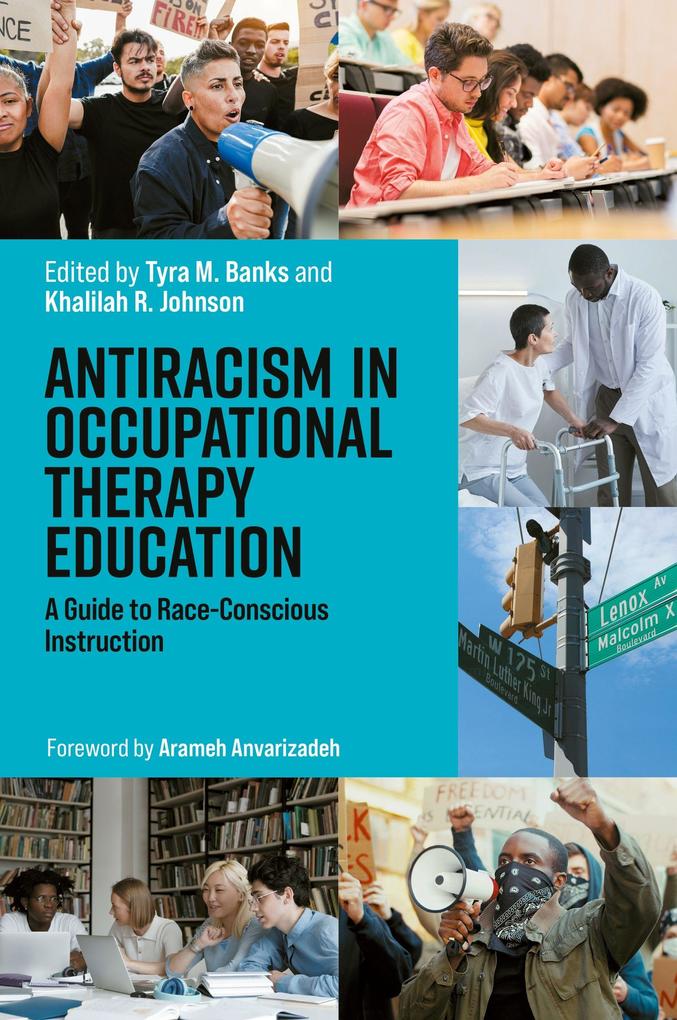
Now, more than ever, occupational therapy educators are being forced to confront the foundational truth that education is not neutral. This groundbreaking, multi-contributed book addresses the inherent political nature of education, offering a comprehensive guide on decolonizing occupational therapy curricula and expanding the reader's understanding of global epistemologies.
A distinctive feature of this text is its exploration of theoretical perspectives amongst Indigenous, African, South American, SWANA, and Asian cultures through a critical race lens. In doing so, it masterfully engages with the systemic complexities of whiteness whilst also decentring white experiences as universal, preparing students for diverse and culturally rich professional landscapes.
Each chapter engages in a range of philosophies, constantly interrogating the construction of knowledge and consistently showcasing the urgent need for cultural humility and culturally responsive care. Beyond theory, this resource offers educators with practical strategies, reflection prompts, discussion questions, and guidance on how to audit syllabi to create anti-racist, equitable learning environments. It also offers supplementary digital resources including a sample syllabus, reading list, and checklists, as well as downloadable PowerPoint slides.
Inhaltsverzeichnis
Foreword Arameh Anvarizadeh
Unit I
Chapter 1 Anti-racism and occupational therapy education: An introduction
Khalilah R. Johnson
Chapter 2 Whiteness, power, and privilege
Musharrat Ahmed-Landeryou and Rebecca Parkin
Chapter 3 Racism, bias and OT Education
Tyra M. Banks, Shanteria Carr Watson, and Selena Washington
Chapter 4 Epistemic justice and injustice in education: A pragmatist perspective
Rodolpho Morrison and Ryan Lavalley
Chapter 5 Decoloniality, racism, and the occupational therapy classroom
Isla Emery-Whittington
Chapter 6 Using an Anti-Racist Lens in Fieldwork Education
Efekona Nuwere and Ida Koraitem
Chapter 7 Faculty development for critical race consciousness
Hakeem Leonard and Tyra M. Banks
Chapter 8 Student performance: Assessment and evaluation through a critical race lens
Stacy West-Bruce and Grayson Owens
Unit II
Module 0 Introduction to culturally-informed technologies and pedagogical practices
Adrienne Smiley
Module 1 Hip Hop as instructional media
Jian Jones
Module 2 Ubuntu
Mapheyeledi Sibindlana, Elelwani Ramugondo, and Sivuyisiwe Toto
Module 3 Locating and respecting indigenous epistemologies
Angie Phenix, Tara Pride, and Kaarina Valavaara
Module 4 Revealing South America's racism denial through education as a rebellious act
Lisette Farias, Aline Godoy Vieira, and Michelle Lapierre
Module 5 Caribbean epistemologies in occupational therapy education
Nardia Aldridge and Diana Honorat
Module 6 Everyday forms of resistance as a pedagogical tool for social change: Lessons learned from SWANA
Juman Simaan
Module 7 Centering East Asian ways of knowing in anti-racist pedagogy in OT education
Karen Park and E. Mariko Yamazaki-Sanchez
Module 8 Southeast Asian cultures: transforming and decolonizing education
Luis de Leon Arabit, Terry Peralta- Catipon, Allen Romero Espelita
and Uyen Nguyen
List of online resources