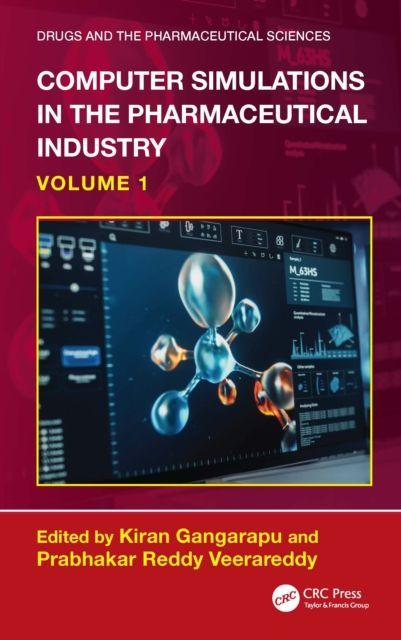
The application of computational modeling and simulation has extended beyond PK/PD prediction of clinical trial outcomes, by defining regulatory strategy as well as optimization of therapeutic candidates. Further, regulatory agencies are accepting modeling and simulations for approval in special populations, drug-drug interactions, and dosing regimen changes. This volume provides a comprehensive coverage of drug design, chemoinformatics, molecular modeling, and computer-aided formulation development. Computer simulations play a crucial role in the pharmaceutical industry, accelerating drug discovery and development by predicting drug behavior, optimizing systems, so reducing the need for animal testing.
Key Features
- Illustrates how computer simulations play a crucial role in the pharmaceutical industry, accelerating drug discovery and development.
- PK/PD simulations play a crucial role in optimizing dosing regimens and understanding the time course of drug effects.
- Depicts the role of computers in drug research development both in clinical and preclinical stage by citing examples of approved FDA drugs.
- Provides case studies detailing the step by step process for using software such as Python for programming in pharmaceutical industry; Gromacs, Data warrior, Autodock and Biovia.
- Discusses how artificial intelligence and machine learning can be used to optimize and refine simulation models.
Inhaltsverzeichnis
List of Contributors. Editor/Author Bios. Chapter 01: Computers in the Pharmaceutical sciences. Chapter 02: Chemoinformatics. Chapter 03: In Silico Prediction of Solubility, Permeability and Metabolism. Chapter 04: Molecular Dynamics Simulations of Drugs and Excipients. Chapter 05: Computer based formulation development. Chapter 06: Nanoinformatics in Pharmaceutical Development. Chapter 07: In Silico Predictions for ADME and Toxicology. Chapter 08: Pharmacokinetic and Pharmacodynamic stimulations. Chapter 09: Python Programming in Pharmaceutical Industry. Chapter 10: In silico Toxicokinetics. Chapter 11: Case Studies on In Silico Solubility and Permeability. Index.