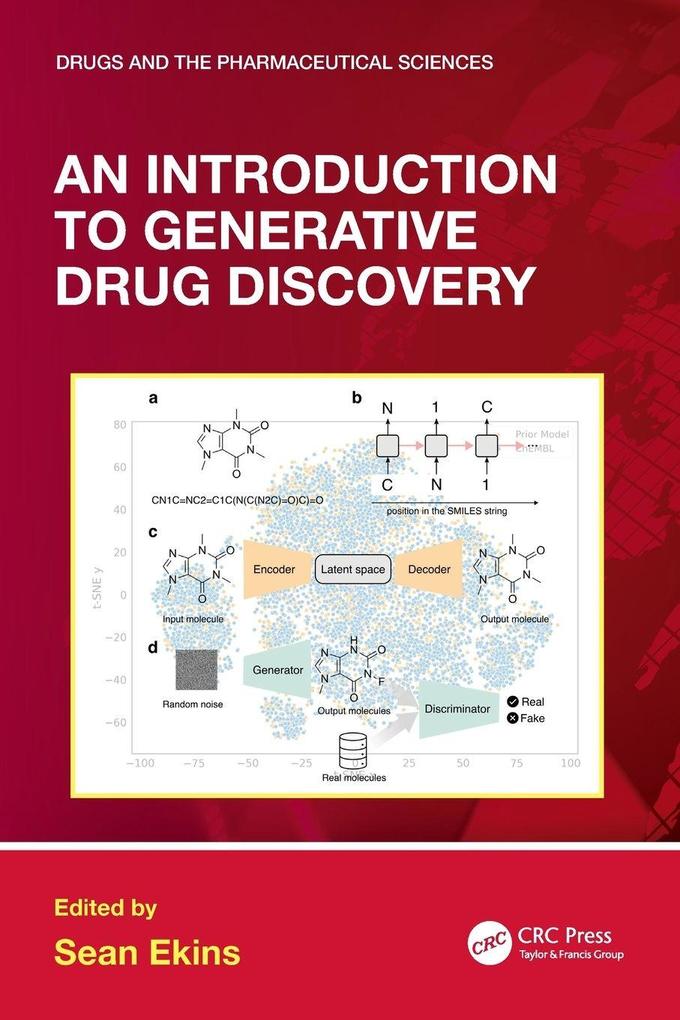
This book describes the state¿of¿the¿art methods and applications for de novo design of drug candidates using generative chemistry models as well as the ethical aspects of this technology. It will provide a foundation for those new to the field as well as those that may already have some experience of its utility. With contributions from scientists in both academia and industry 'Introduction to Generative Drug Discovery' may represent one of the earliest if not the first book to focus on this topic.
- This book focuses on the latest advances in computational de novo drug discovery methods, also known as generative drug discovery
- This book will describe different state of the art applications of generative molecule design.
- The book describes ethical aspects of generative drug discovery technology.
- The mix of academic and industrial authors provides an array of applications of generative drug discovery.
- A future perspective of where these generative technologies may take us in drug discovery is described included self-driving labs.
Inhaltsverzeichnis
Front Pages. List of Contributors. Preface. Acknowledgments Part I - Introduction to Generative Chemical DesignGoing Beyond Serendipity: Generative Artificial Intelligence for Drug DiscoveryGenerative Drug Discovery Part II - Generative Chemical Models Based on Language ProcessingDe novo Drug Design by Chemical Language Modeling Part III - Generative Models and Synthetic AccessibilitySynthesis-based design - A Practical and Generalizable Approach to de novo Molecular DiscoveryA Medicinal Chemistry Perspective on Generative AIMegaSyn for Generative Molecule Design Part IV - From Models to PracticeGenerative Topographic Mapping of Chemical Space in de novo DesignIn Silico ADME/Tox in the Generative AI ParadigmThe Dark Side - Dual Use Implications of Generative Drug Discovery Part V - The FutureFuture Labs - Generative Approaches in Self Driving LabsThe Future of Generative Drug Discovery. Index.