Agatha Christie (1890-1976) is the most widely published mystery writer in history-hailed as the Queen of Crime and the defining voice of the Golden Age of Detective Fiction. With over two billion copies sold worldwide, Christie's work has shaped the modern mystery genre, influencing generations of writers and establishing many of the conventions readers still love today: the closed-circle suspects, the fair-play puzzle, and the final revelation that redefines every clue.
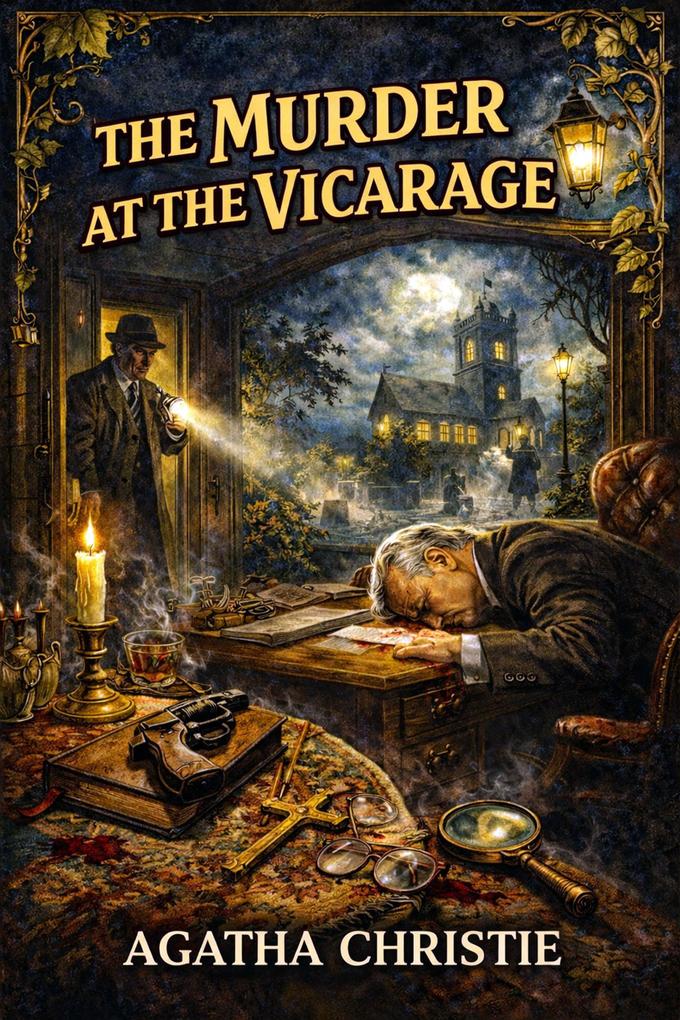
While her famous Belgian detective Hercule Poirot made her an icon, Christie's creation of Miss Jane Marple-a seemingly unassuming village spinster with a mind like a scalpel-expanded her legacy in a new direction. With the publication of The Murder at the Vicarage in 1930, Miss Marple made her full-length debut, introducing readers to St. Mary Mead, a quiet English village where human nature is studied as closely as evidence. Christie used Marple's gentle manner and sharp instincts to explore the complexities of gossip, morality, and the dark undercurrents running beneath polite society.
Christie's genius lies not only in her plotting, but in her ability to observe character with precision and wit. Her mysteries are as much about people as puzzles, and her skill at balancing charm with danger has made her novels a staple in libraries, classrooms, and private collections around the world. Today, she remains the standard against which all traditional whodunits are measured.
The Murder at the Vicarage stands as a turning point in her career: the birth of one of literature's most beloved detectives and the start of a series that continues to captivate readers seeking classic British mystery, village-set intrigue, and timeless fair-play detective fiction.