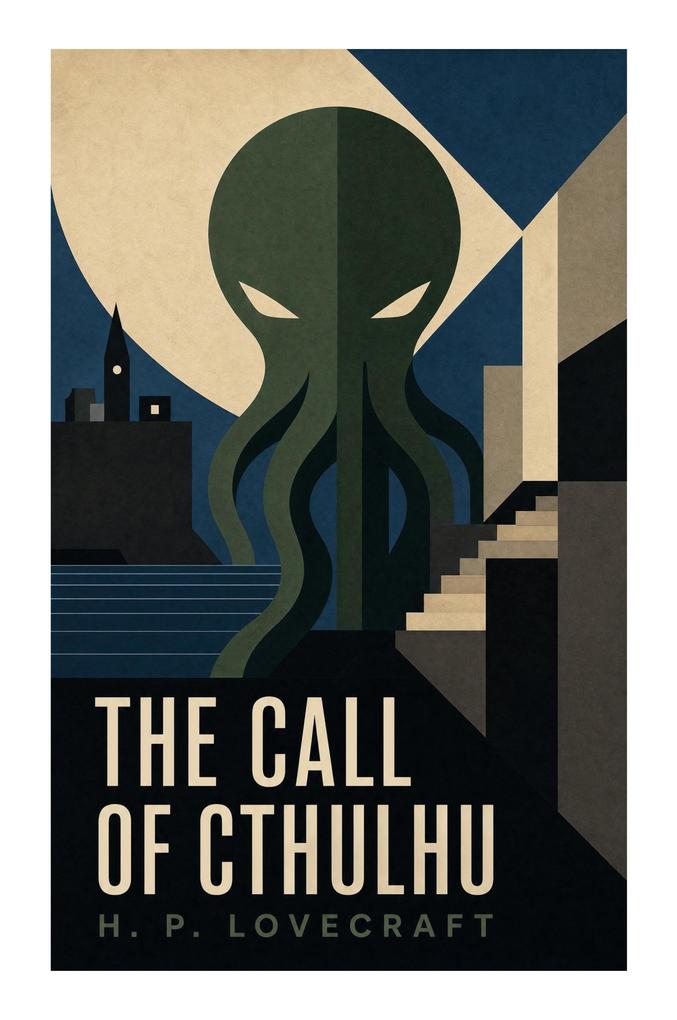
"The Call of Cthulhu" is Lovecraft's seminal articulation of cosmic horror, unfolding through a dossier-like structure of manuscripts, testimonies, dreams, and archaeological reports. Its fragmented, quasi-scholarly style lends documentary authority to an impossible revelation: humanity is not central, but negligible before ancient, indifferent powers. Published in the pulp milieu of Weird Tales, it refines Gothic inheritance into modernist dread, replacing ghosts and moral terror with epistemological collapse. H. P. Lovecraft, the Providence writer whose imagination fused antiquarian learning, scientific materialism, and profound anxiety about modernity, found in this tale a defining vehicle for his philosophy of "cosmicism." His fascination with lost civilizations, forbidden knowledge, astronomy, and inherited memory shaped the story's atmosphere. So too did his limitations and prejudices, which remain part of the historical context through which his work must be critically read. This is essential reading for anyone interested in horror's evolution, speculative fiction, or literature of the uncanny. Compact yet immense in implication, it rewards readers who appreciate atmosphere, intellectual terror, and mythic invention over conventional plot resolution.