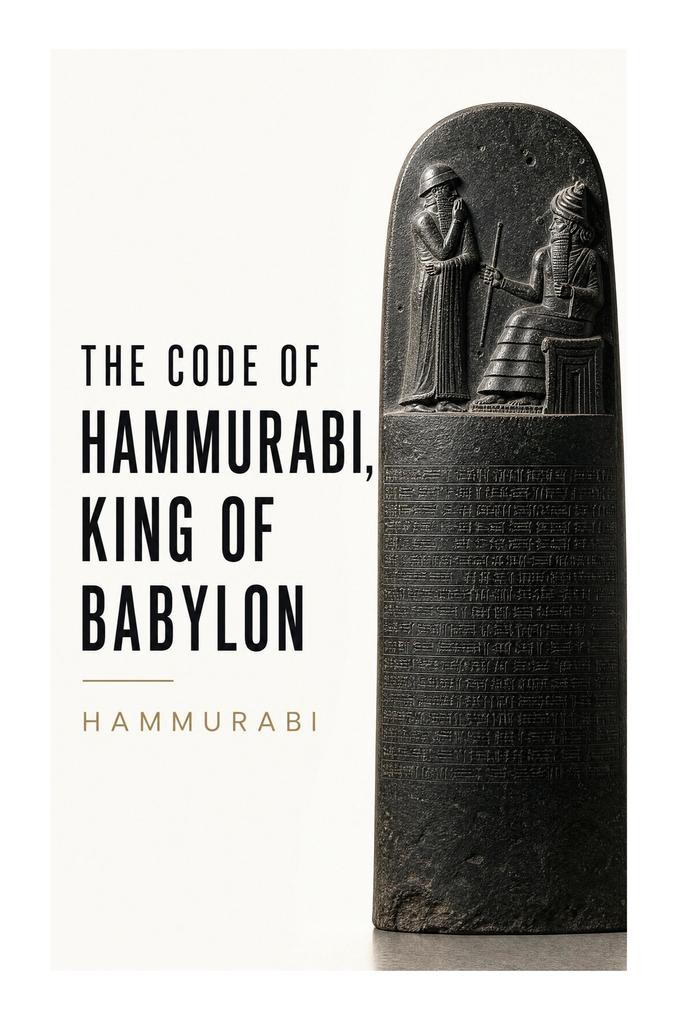
The Code of Hammurabi, King of Babylon is among the most significant legal monuments of the ancient Near East, preserving nearly three hundred provisions on property, commerce, family relations, labor, injury, slavery, and royal justice. Framed by a grand prologue and epilogue in elevated royal rhetoric, its central laws employ the concise, conditional style of casuistic judgment: if a circumstance arises, then a penalty or remedy follows. The work belongs to a broader Mesopotamian tradition of royal lawgiving, yet its scope, severity, and literary self-presentation make it uniquely influential. Hammurabi, sixth king of Babylon's First Dynasty, ruled in the eighteenth century BCE and forged a powerful kingdom from competing city-states. His code reflects the administrative needs of imperial consolidation as well as the ideological claim that the king, chosen by the gods, existed to protect order, the vulnerable, and the stability of society. This book is essential for readers interested in law, history, political authority, or ancient literature. It rewards close attention as both a practical legal archive and a crafted statement of kingship, justice, hierarchy, and civilization's enduring struggle to regulate human conduct.