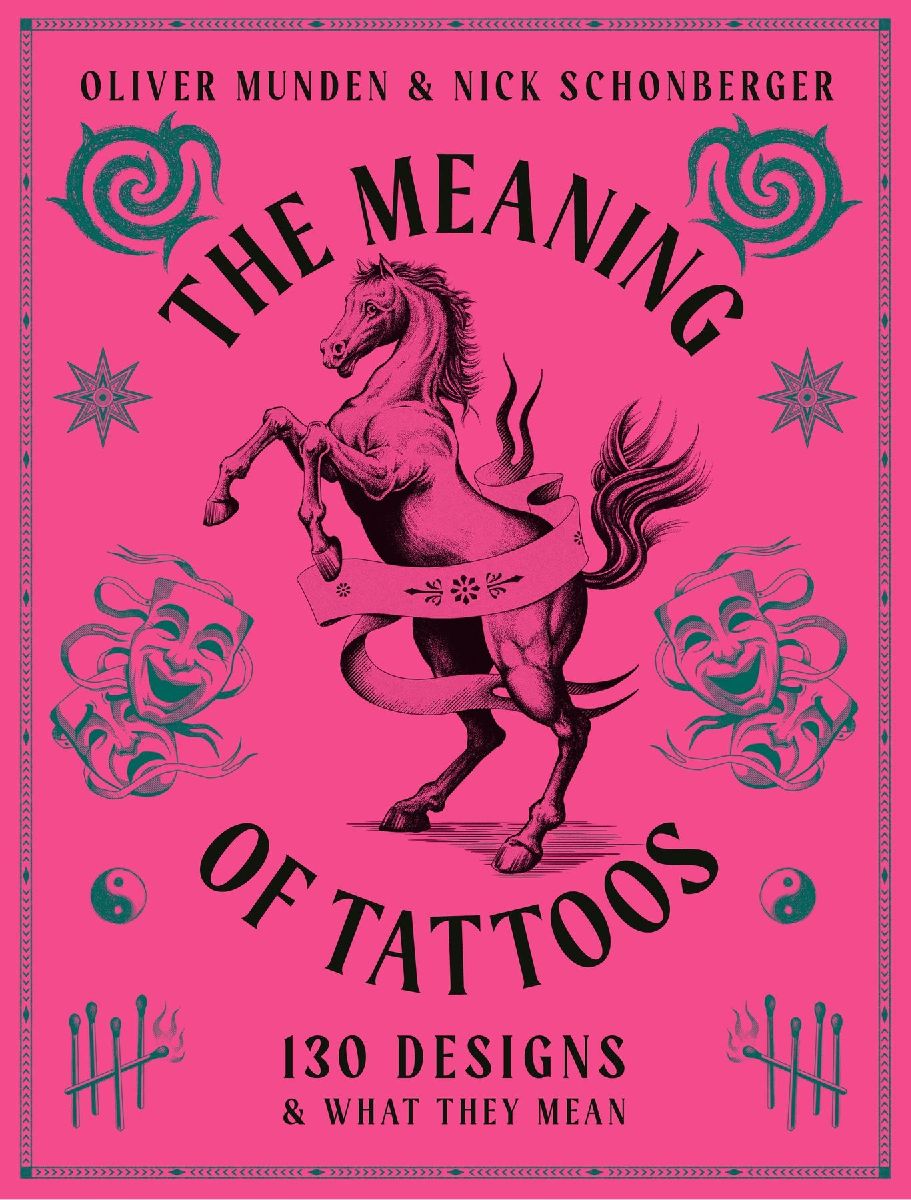
Discover the stories behind 130 iconic tattoo designs in this illustrated deep dive into the language of body art.
Following the success of the bestselling The Language of Tattoos, this compelling volume features entirely new tattoo motifs, revealing how they communicate themes from rebellion and adventure to folklore, Greek gods, cosmic psychedelia, and rock ’n’ roll.
Renowned tattoo artist Ollie Munden brings every symbol to life with specially commissioned illustrations that blend fine-line precision with bold, Japanese-inspired aesthetics, while tattoo historian Nick Schonberger uncovers the cultural origins and evolving symbolism behind each image.
Whether you’re searching for inspiration for your next tattoo, interested in the stories behind iconic designs, or simply captivated by the artistry, this book is a must-have.
Beautifully designed and endlessly browsable, it’s an essential reference—and a standout gift—for tattoo lovers and anyone curious about the deeper meaning behind the marks we choose to wear.
Inhaltsverzeichnis
Introduction
Chapter 1
New beginnings
The decision to get tattooed often coincides with a major moment or life change. Motifs related to new beginnings naturally speak to shifts. These can be literal, such as scissors representing cutting past ties or a shell representing growth. Or, as is the case with some spiral-based geometric images, the design can speak to perpetual renewal.
Chapter 2
Courage
Given the natural intersection between tattooing and military ranks, themes of courage have been represented in Western traditional tattooing for centuries. For example, the classic navy tattoo: the pig and the rooster. Tattoos related to courage are simultaneously bold and subtle, driven by story, and delivered with an intentional study of the chosen motif.
Chapter 3
Danger
Knives, blades and various blunt weapons all fit into the theme of danger. Danger is visceral, best relayed by motifs that speak about potential harm. Several tattoo symbols in this chapter are also grounded in fantasy: B-movies provide a campy version of danger, Pin-ups dressed as pirates are playfully dangerous, and there are plenty of frightful mythological figures.
Chapter 4
Power
Power sits differently depending on the symbol. There are the obvious markers of authority: a crown, a goddess of war, King Tutankhamun. Chess pieces hold power in a strategic mindset. Rock ’n’ roll iconography brings an electric glamour. Animals and spirits bridge the gap between toughness and protection
Chapter 5
Adaptability
This chapter is filled with resilient animals. From the flamingo to the octopus, creatures with tactics for defying environmental challenges are depicted across Western traditional, Japanese and fine line styles. One idea of adaptability suggests that some animal designs portray that the wearer can ‘go with the flow’. Pliable creatures are great examples. Another thought suggests resilience by highlighting a capability for rejuvenation.
Chapter 6
Duality
Classic Western traditional tattoo designs playfully investigate duality, focusing on a clear juxtaposition. Good vs evil. Winning vs losing. Life vs death. Think of the flip-flop: beauty on one side; the devil on the other. Another fun way of representing duality in a tattoo design is when contrasting an image and text. For example, brass knuckles framed by the words ‘Love thy neighbour’ balance openness and protection.
Chapter 7
Spirituality
Mother Mary, Hindu symbols and sacred geometry are included. Elements of several religious practices and the relation these have to tattoo styles are addressed. Across the globe, tattoos honouring spiritual connection have become more broadly selected. Some of the designs might not be tattooed as markers of the observance of a particular religion, but rather speak to ideas honoured by the images themselves.
Chapter 8
Union
Through recorded history, the symbolism of union – familial, fraternal, social – has been prominent in tattoo designs. In this chapter, the idea of union focuses on connection and community. There are odes to classic Victorian iconography and subcultural signals, fighters and lovers and professional associations.
Chapter 9
Mythology
While mythological iconography fits into several themes of tattooing, this chapter highlights elements of foundational narratives. Gods across time and religion as well as mystical animals prevail. Fortune, power and wisdom are held within the figures. Another way myth shifts over time is when absorbed into entertainment. Several mythological figures are employed as characters of Japanese anime and video games.
Chapter 10
Pop Culture
Symbols that reach a state of cultural ubiquity meet the criteria of pop. The motifs have meaning, but those meanings are pulled from mass use, mass understanding and mass media. Cartoons, the peace sign and the smiley face fit into pop because they permeate so many segments of society. The designs are at once deeply symbolic and delightfully watered down. Each makes for a playful – if not unserious – tattoo.
Index