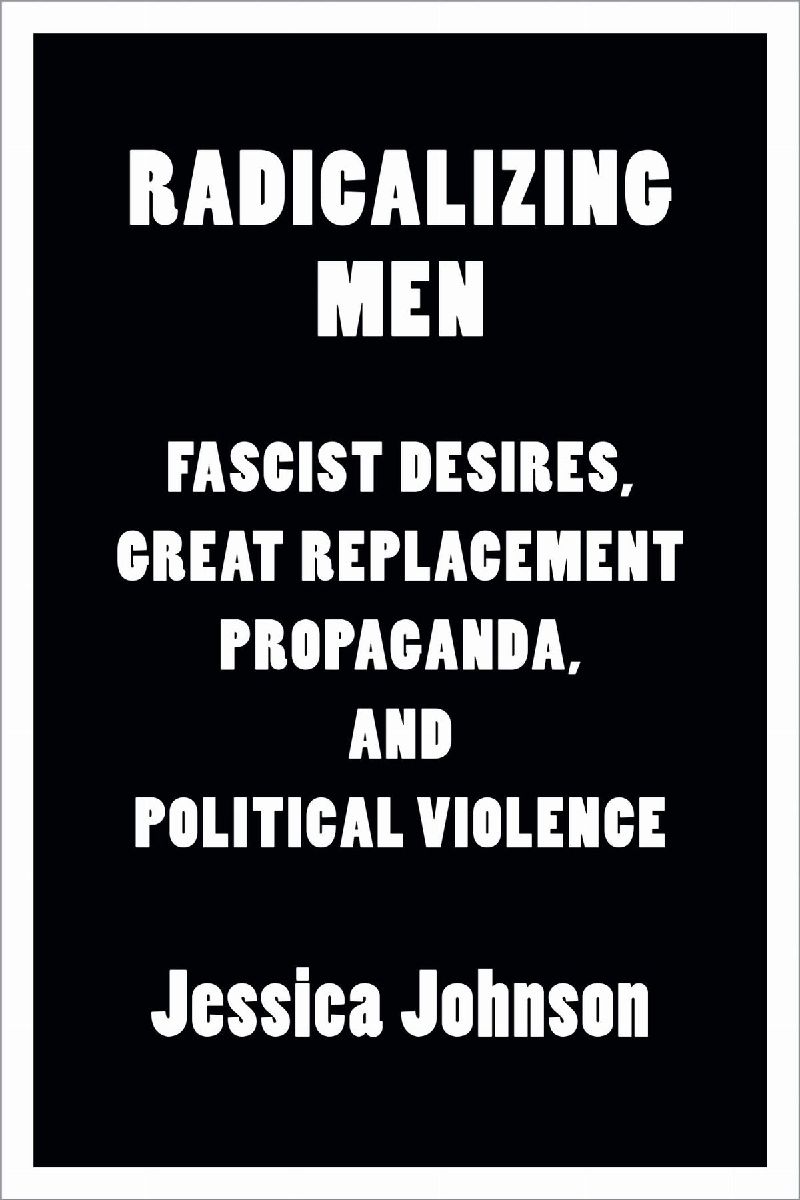
Ideological terms such as "Christian nationalism" or "far right" serve as shorthand for religious and political extremism but do not offer insight into why some men perpetrate political violence while others do not. Radicalizing Men analyzes radicalization as a social process, the networking of fascist desires, imaginaries, and feelings through great replacement propaganda enacted in sermons, during school board meetings, on campuses, and on digital platforms through algorithms, rhetoric, and memes. Jessica Johnson considers the affective-bodily, sensory, and emotional-processes of radicalization constitutive of political subjectivity and collective action to reassess medias, technologies, shootings, and policies that create and target racialized, religious, and gendered threats to imaginary white Christian homelands. Johnson explores how fascist desires move bodies in decentralized yet coordinated ways by examining the socioeconomic, infrastructural, and affective connections between neoliberal capitalism and militarized nationalism that proliferate citizen-soldiers and inspire them to commit transnationally linked acts of political violence as multiracial, multiethnic, and multifaith antifascist coalitions emerge to fight them.
Inhaltsverzeichnis
Introduction 1
1. The Radicalizing of Pastor Mark Driscoll 27
2. Leaderless Resistance: Transnationally Connected Political Violence 60
3. The Western Chauvinists: Proud Boys Online and Offline 101
4. Radicalizing Schools 124
5. Radicalizing on Campus 159
Conclusion 201
Acknowledgments 229
Notes 231
Bibliography 259
Index