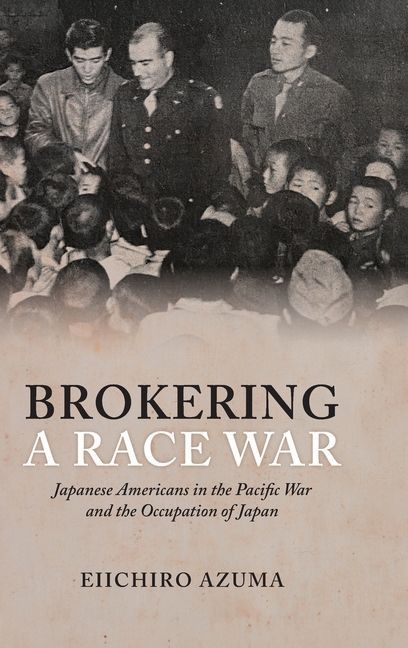
During the years of the Pacific War and occupied Japan, more than ten thousand second-generation Japanese Americans (Nisei) served in the US armed forces and their campaigns in combat theaters and subsequently occupied enemy land in the Asia-Pacific region. By birthright US citizenship and acculturation, these young men and women of Japanese ancestry considered themselves to be American, but by blood ties and heritage culture they tended to be identified with their ancestral land of Japan. American-born residents of Japan were similarly recruited into the role of experts on the enemy according to presumptions about the special cultural capital they possessed due to their American upbringing.
Brokering a Race War traces the complex experiences of Nisei soldiers and civilian linguists framed in a trans-imperial context. It examines the interactions between the United States and Japan as well as Japanese Americans' complicated relationships to white Americans and Japanese nationals. With a focus on Nisei's interstitial positions and brokering roles, it analyzes the changing meanings of race, citizenship, and culture among these groups and in transpacific power relations. In doing so, it reveals how these minority American soldiers came to appreciate the power of their birthright citizenship in the context of the total war against and the subsequent domination of the enemy who shared the same ancestry. Nisei's work in occupied Japan turned them into the frontline executors of US imperial power under the guise of spreading colorblind democracy to the Cold War Asia-Pacific and beyond.
Based on new bilingual archival sources, Brokering a Race War offers a nuanced perspective on the oft-celebratory representations of minority US servicemen as an embodiment of America's disavowal of racism and a paragon of its multicultural democracy.
Inhaltsverzeichnis
- Introduction: Minority Soldiering, Imperial Citizenship, and Cultural Brokers
- Part I Propadanga War and the Transpacific Genealogies of Nisei Cultural Brokers
- 1: Nisei as Model Imperial Subjects and Japan's Race War Propaganda
- 2: America Speaks Back through Nisei Soldiers
- Part II Military Occupation and the Duplicity of Minority Citizenship
- 3: Military Governance and Japanese Americans in Occupied Japan
- 4: Nisei Occupation Troops and Minority Imperial Citizenship
- Part III Nisei Military Heroism And Japan's Rearmament
- 5: Mythologizing Japanese American Soldiers in Defeated Japan
- 6: Nisei and the Cultural Politics of Remilitarization
- Epilogue: Postwar Careers of the Japanese American War Heroes