Named a 2024 Choice Outstanding Academic Title
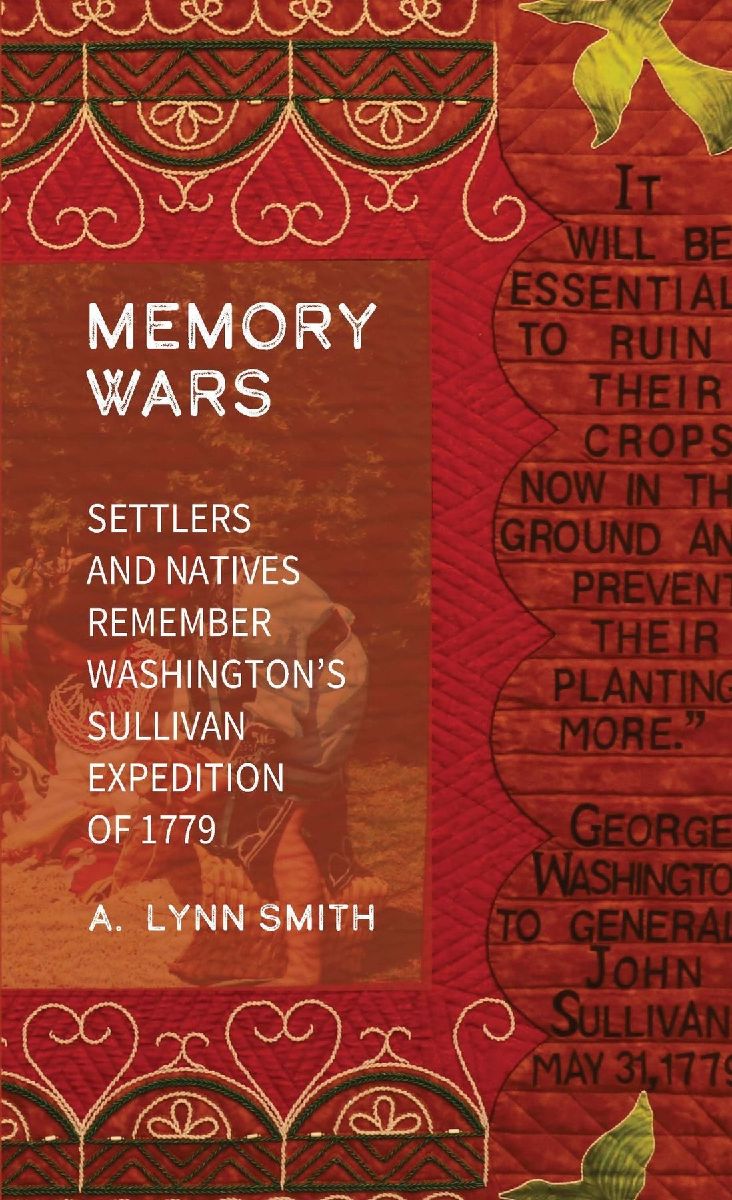
Memory Wars explores how commemorative sites and patriotic fanfare marking the mission of General John Sullivan into Iroquois territory during the Revolutionary War continue to shape historical understandings today. The 1779 expedition was planned and ordered by General George Washington. It was a massive enterprise composed of four forays involving thousands of men who were sent on a scorched-earth campaign, obliterating nearly sixty Iroquois and other Native villages, including homes, crops, and stored foodstuffs. For Indigenous residents it was a brutal invasion. For settlers who eventually moved onto razed village sites, it meant land and fortunes beyond measure.
The Sullivan Expedition has long been fixed on the landscape of Pennsylvania and New York by a cast of characters, including amateur historians, newly formed historical societies, and local chapters of the Daughters of the American Revolution. Asking how it is that people continue to "celebrate Sullivan" in the present day, Memory Wars underscores the symbolic value of the past as well as the dilemmas posed to contemporary Americans by the national commemorative landscape.
Inhaltsverzeichnis
List of Illustrations< BR> List of Maps< BR> Acknowledgements< BR> Terminology< BR> Introduction: The Stories We Tell< BR> Part I: Origins: Settler Colonial Public Memory< BR> Pennsylvania: In the Shadow of Wyoming< BR> 1. Yankee Insurgency and the Battle of Wyoming< BR> 2. Patriotic Women Celebrate Sullivan< BR> 3. Pennsylvania’ s 1929 Sullivan Series< BR> New York: Replacement through Just Warfare< BR> 4. Ambivalent Festivities and the Newtown Centennial of 1879< BR> 5. Inventing “ Sullivan-Clinton” for New York< BR> 6. Celebrating Sullivan in Indian Country< BR> 7. The 1929 “ Pageant of Decision” < BR> 8. A Tale of Two States< BR> Part 2: Reverberations: The Revolutionary Past in Contemporary America< BR> 9. Dueling Celebrations< BR> 10. Pennsylvania< BR> 11. New York< BR> 12. Changing the Narrative< BR> Part 3: Interventions: Indigenous Histories of Settler Colonialism< BR> 13. Haudenosaunee Historical Consciousness< BR> Epilogue< BR> Bibliography< BR> Notes< BR> Index