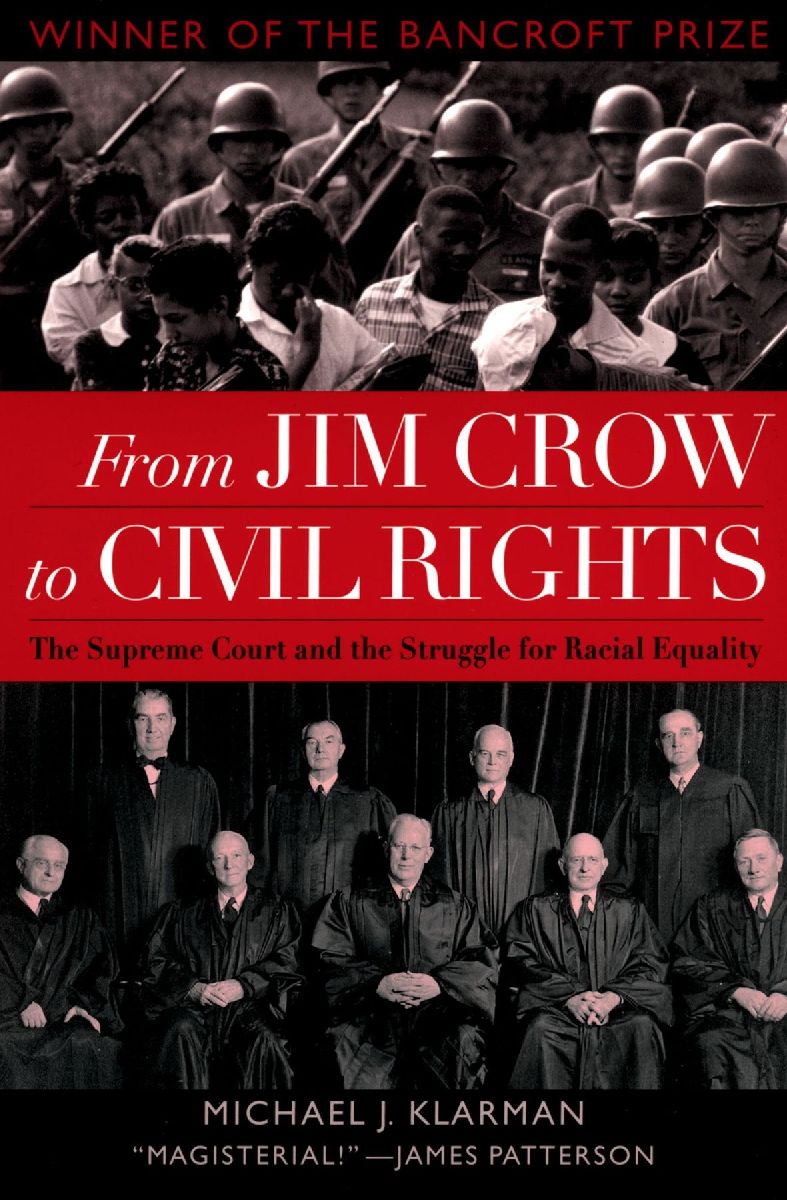
"Michael J. Klarman's monumental book--undertaking a sweeping exploration of the causes and consequences of all of the Supreme Court's race decisions from Plessy v. Ferguson to Brown vs. Board of Education--is likely to become the definitive study of the Supreme Court and race in the first half of the twentieth century. As a narrative history of the Court's actions on the broad array of constitutional issues relevant to racial equality--from criminal procedure to voting rights to desegregation--the book is an invaluable resource."--Reviews in American History"Klarman's scholarly text is unique in that it encompasses not only the decision itself, but also the events before and after."--Elaine Cassel, author of The War on Civil Liberties"This luminous study explores the relationship between the Supreme Court and the quest for racial justice.... a sweeping, erudite, and powerfully argued book that, despite its heft, is unfailingly interesting."--Wilson Quarterly"Michael Klarman's authoritative account of constitutional law concerning race--from the late 19th century through the 1960s--is brilliant, both as legal interpretation and as social and political history. While the book deals with a wide range of racially charged issues--criminal procedure, peonage, transportation, residential segregation, and voting rights--it focuses with especially keen insights on the Brown v. Board of Education case of 1954. From Jim Crow to Civil Rights is a magisterial accomplishment." --James T. Patterson, Bancroft Prize-winning author of Grand Expectations: The United States, 1945-1974 (Oxford, 1996)"Michael Klarman's exhaustively researched study is essential reading for anyone interested in civil rights, the Supreme Court, and constitutional law. Accessible to ordinary readers, students, and scholars, Klarman's book presents a challenging argument that places the Supreme Court's civil rights decisions in their social and political context, and deflates